Most UGC videos lose viewers before the message lands. Not because the product is wrong or the creator is inexperienced because the opening signals advertisement before trust has been established.
Spend enough time on TikTok and something happens without you realizing it you get faster at knowing when something is an ad. Not from reading the caption or waiting for the product to appear. Just from the first frame. The lighting looks too even. The background is too clear. The person holds themselves like someone being recorded rather than someone talking. That recognition happens in under a second and the thumb moves before any conscious decision does.
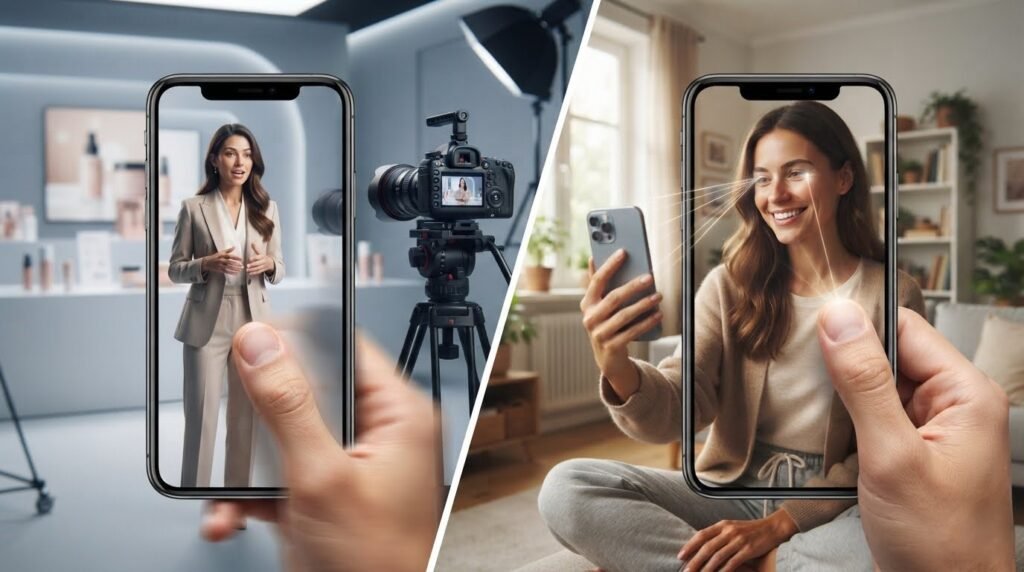
Authentic-looking UGC video transitional hooks clips bypass that reflex. Phone camera energy, natural environments, real reactions, slightly imperfect delivery these signals read as personal content rather than promotional content. how to use instagram also helps in hooks.The viewer’s guard drops. The message lands on someone who’s actually listening rather than someone actively filtering.
The authenticity isn’t accidental. The best UGC creators deliberately produce specific filming decisions, specific delivery choices, specific editing approaches that make content feel genuine even when it’s commissioned. Understanding those decisions changes how every UGC hook gets made.
What Makes a Great UGC Hook?
Authenticity over perfection is the foundational principle. A slightly shaky camera, an imperfect background, a momentary verbal pause these elements communicate real rather than produced. Real triggers trust. Trust keeps viewers watching past the opening.
Real human reactions outperform scripted presentations consistently. A genuine expression of surprise, satisfaction, or recognition creates emotional mirroring in the viewer before any product claim has been made. The emotional response lands before the rational evaluation begins, which is the order that keeps people watching.
Immediate context matters more than setup. Dropping the viewer into a moment already in progress mid-reaction, mid-use, mid-situation removes the setup phase where most UGC videos lose viewers. Context can come second. The moment has to come first.
Natural camera movement handheld, slightly unsteady, repositioning mid-shot communicates presence rather than production. A perfectly stabilized, tripod-mounted shot reads as produced even when everything else signals authenticity. Some movements are more convincing than none.
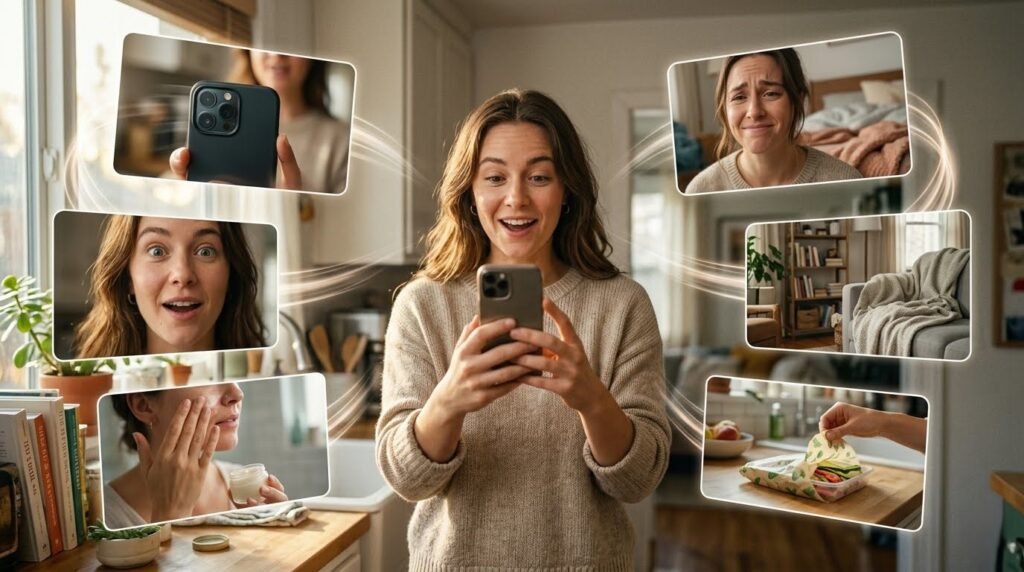
Emotional connection at the opening means starting on a feeling rather than a fact. The feeling creates identification before the content establishes relevance. A skincare creator opening on visible frustration with their skin creates identification with everyone who’s felt that way, which is most of their audience before any product appears.
There’s a version of curiosity that works and a version that backfires. “You won’t BELIEVE what this did to my skin” promises something the video rarely delivers, and the viewer feels misled when it doesn’t. “I genuinely didn’t think this was going to do anything” does something different it implies a result worth seeing while also signaling that the creator had the same skepticism the viewer probably has right now. That combination holds viewers more reliably than a dramatic claim the content then has to justify.
UGC Hook Styles That Keep Viewers Watching
Reaction openings lead with a genuine response before the cause is shown. A face registering surprise, disbelief, or satisfaction as the first frame creates emotional pull that works on cold audiences before any product context exists. Works best for beauty, skincare, and supplement content where visible reactions imply visible results. Edit the reaction tight one to two seconds maximum then cut directly to what caused it.
First-person storytelling hooks work because they start on a feeling rather than a product. Something like “I’ve been dealing with this for three months” said directly to the phone, in a real room, like someone venting to a friend creates instant identification. The viewer who has felt that specific frustration connects before any solution has been mentioned. The trick is that it actually has to sound like venting. Run the line a few times until the scripted version disappears and something that sounds like a real complaint comes out instead.
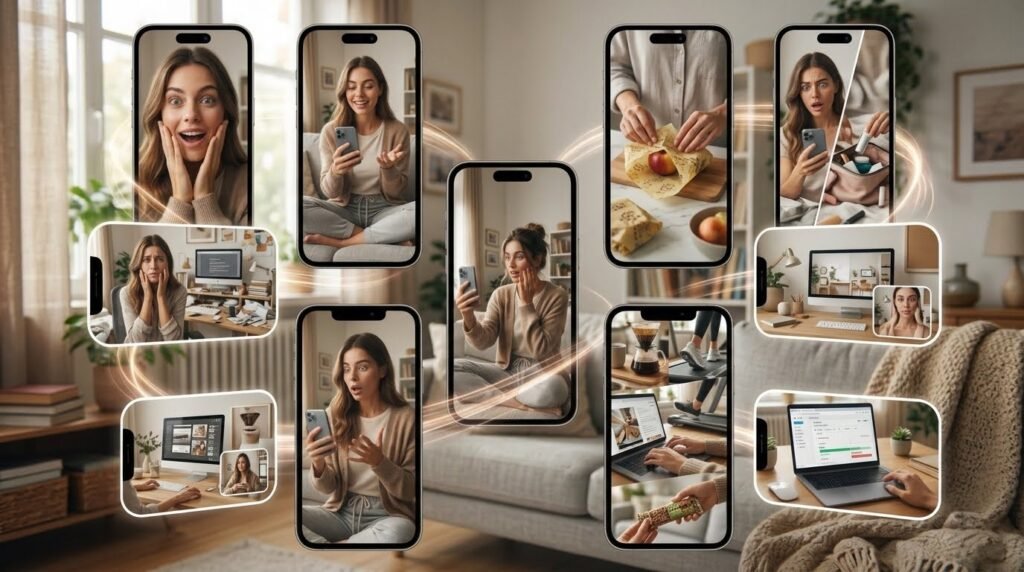
That shift in delivery quality is the difference between a transitional hooks that holds and one that reads as content. Holding something while talking about it in a real environment implies use rather than demonstration. The product is just there, as it would be if this weren’t a commissioned video. Works for ecommerce, beauty, and food content. Mistake to avoid: holding the product toward the camera in a way that reads as presentation. Hold it the way someone holds something they’re actually using.
Problem-First Hooks When Open
Problem-first hooks open on the frustration before introducing the resolution. A screen recording showing a slow, broken, or frustrating workflow works better for SaaS content than any product introduction. The viewer who has experienced that specific frustration identifies with the problem before they’ve been asked to consider the solution. Works particularly well for software, productivity tools, and service content. Keep the problem segment short the viewer identified it quickly; they don’t need it belabored.
Before-and-after reveals work by showing the after immediately. Jump to the result at frame one the skin texture after treatment, the design before and after the tool, the metric before and after the strategy. The after creates desire. The before creates context. That order is more effective than the chronological sequence. Works across beauty, fitness, ecommerce, and educational content.
Unexpected results hooks open on an outcome that contradicts expectations. A strategy that looked unlikely, producing a result that looks impressive. A product the creator was skeptical about, working better than expected. The contradiction between expectation and outcome creates stronger curiosity than a straightforward positive result. Works especially well for supplements, tools, and techniques where the viewer has prior assumptions to challenge.
Fast lifestyle transitions work for content where the product fits naturally into daily activity. A quick cut sequence of real moments morning routine, mid-day activity, evening wind-down with the product appearing naturally within rather than being presented. Works for wellness, beauty, and lifestyle categories. Edit these tight, three to four cuts maximum in the first two seconds, to maintain the energy.
Screen recording openers work for SaaS, productivity, and digital product content. Opening on an actual screen showing a real workflow not a demo, an actual working environment creates credibility that a talking head introduction doesn’t. The realness of the interface implies the product is actually being used rather than being sold.
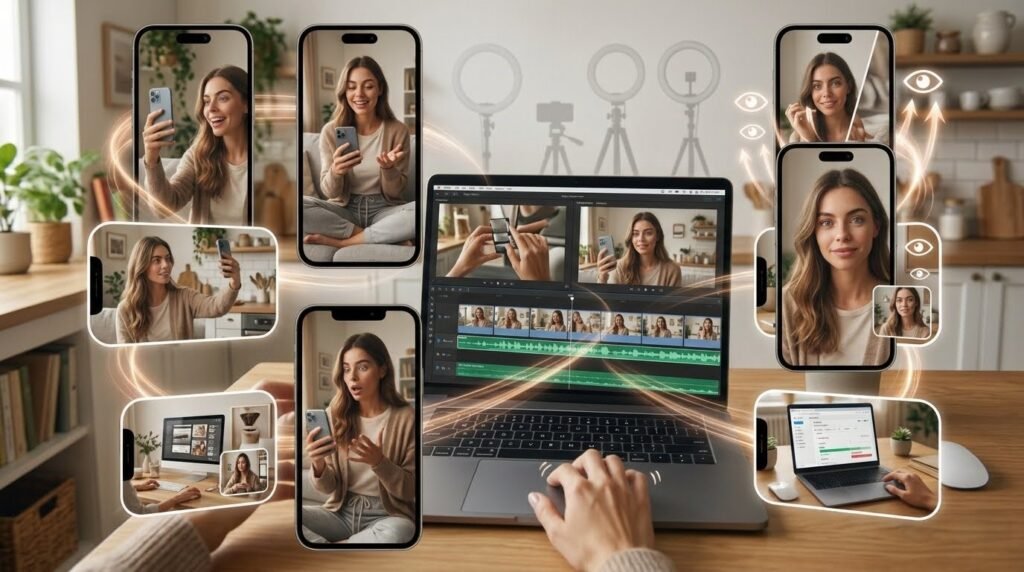
How to Film UGC Hooks That Feel Natural
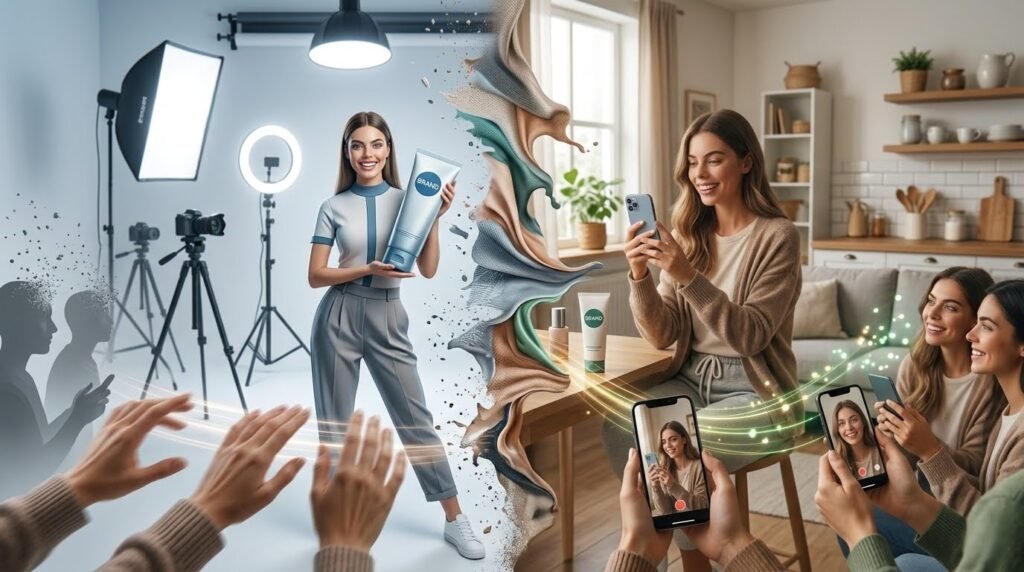
- Camera angles should favor natural over optimal. Eye level or slightly below reads as casual conversation. Above reads as content creation. Use a phone held naturally, not a phone on a mount at a calculated angle. The imperfection in angle is part of what communicates authenticity.
- Lighting should come from a real source. A window, a lamp, and outdoor daylight create the slightly uneven, directional light that distinguishes genuine environment filming from studio or ring-light production. Ring lights specifically read as content creation equipment and undermine the authentic signal.
- Background selection matters significantly. A real room slightly lived-in, not perfectly arranged communicates real life. A clear, uncluttered background with nothing identifiable reads as a shooting setup. Real environments include the details that make them real: things on shelves, visible furniture, natural textures.
- Framing should be slightly loose rather than perfectly composed. Leave some headroom, allow slight shoulder cuts, let the frame be imprecise in a way that implies the creator was focused on what they were saying rather than on achieving optimal composition.
- Body language should be relaxed and natural. Lean slightly toward the lens when making a point. Look away occasionally as someone does in natural conversation. Avoid the rigid stillness of someone trying to hold a pose for a camera.
- Eye contact with the lens creates intimacy but shouldn’t be constant. Looking away briefly and returning creates the rhythm of natural conversation rather than the intensity of a performance.
- Audio quality should be clean but not studio-treated. Built-in phone microphone audio in a real room, some natural room sound, slight ambient noise reads as more authentic than processed, noise-cancelled audio that sounds like a recording booth.
- Natural delivery comes from under-scripting rather than no scripting. Over-scripting is what kills the delivery, not the lack of preparation. Going into a UGC hook with a full word-for-word script produces speech rhythms that don’t sound like real speech. Too even, too clean, pauses in the wrong places. Going in with three rough points and no exact wording forces the brain to construct the sentences in real time, which is exactly what happens in natural conversation. The slight stumbles, the sentence that gets restructured mid-delivery, the pause before the right word arrives these aren’t flaws to edit out.
Editing UGC Hooks for Better Retention
Hook duration for UGC content should run two to three seconds maximum before cutting to the main content. Longer than that and the viewer has time to identify the format and make a skip decision. Shorter requires the transitional hooks to work very fast.
Jump cuts within the hook section add energy without breaking authenticity. A single jump cut in the opening removes dead space while maintaining the single-camera, personal content feel. Two or more jump cuts in two seconds starts to feel edited in a way that undermines the raw signal.
Transitional hooks a fast cut or zoom landing right as the hook line finishes add visual momentum without breaking UGC authenticity when done subtly. A heavy zoom or dramatic whip pan breaks the personal content feel. A clean cut on beat keeps the energy while maintaining the format.
Caption placement should sit in the safe zone for each platform’s UI overlay but not compete with the face for visual attention. Captions that cover the speaker’s face or mouth undermine the personal delivery that makes UGC hooks work.
Audio timing should align music or sound effects with cuts rather than running underneath continuously from the start. Music that begins at frame one signals production. Music that enters on the first cut reads as natural pacing.
Pattern interruption within UGC hooks can be subtle: a slight jump cut at the start, an unexpected audio moment, a quick change in camera angle. Full pattern interrupt effects break the authentic signal. Subtle versions create the attention effect without signaling production.
Common Mistakes That Make UGC Feel Like an Advertisement
Scripted delivery is the most common and most damaging mistake. Word-for-word scripting produces delivery rhythms that don’t match natural speech too even, too precise, too clearly rehearsed. Viewers identify it within seconds and the authentic signal disappears.
Over-editing removes the imperfections that make UGC convincing. Color-grading to brand standards, adding motion graphics, syncing cuts to a musical beat each of these signals production effort in ways that undermine the personal content feel.
Generic openings “Hey guys, I want to talk about something I’ve been loving lately” don’t create curiosity or identification. They signal the format of the content before giving any reason to watch it. Start on the moment or the feeling, not on the introduction.
Showing the product too early positions the content as advertising before trust has been established. The product should appear after the problem, the feeling, or the reaction has created a reason to care about it.
Corporate language breaks the authentic signal instantly. “This product features an advanced formula” sounds like a press release. “I didn’t expect it to actually do anything” sounds like a real person. Use the language someone would use in a text message to a friend.
Slow pacing in a UGC hook costs retention fast. Even authentic content needs to move. A natural, slightly fast conversational pace works. Long pauses, slow sentence construction, or elaborate setup sequences don’t.
Excessive branding in the opening frame logos, brand colors, product packaging prominently displayed signals advertisement. The brand element can appear naturally as part of the content. It shouldn’t dominate the opening visual.
HookTransition.com or transitional hooks.com has a library of UGC-ready hook video clips and transitional hooks built for short-form vertical content assets that match the authentic energy that UGC formats require rather than the polished production quality that undermines it. Worth browsing when the opening needs a tested asset rather than starting the filming process from scratch.
Polished Production UGC Content
Polished production doesn’t win in UGC content. Real moments, natural delivery, and authentic environments win because they bypass the skip reflex that viewers apply to anything that reads as advertising.
The opening three seconds carry everything. Get the hook right and the rest of the video gets watched. Get it wrong and the content never reaches the viewer who would have bought, shared, or followed.
Film it like a text to a friend. Edit it like you’re removing dead space. Let the real moment lead. The results show up in watch time before they show up anywhere else.


