When videos underperform, the algorithm gets blamed first. Wrong timing, wrong hashtags, wrong day to post. So the posting schedule changes. The hashtags change. The format changes. Retention graphs look the same.
The algorithm isn’t usually the problem. The opening is. Looked at enough underperforming videos across different accounts and niches to notice the pattern clearly. The drop-off almost always concentrates in the first two to three seconds. Not mid-video where the content loses energy. Not at the end where viewers finish without engaging. Right at the start, before the content has delivered anything worth evaluating.

The opening fails and the rest of the video never gets seen. Strong content sits behind a door that didn’t open. Fixing retention problems almost always starts in the same place: diagnosing exactly what happens in those first three seconds and replacing whatever isn’t working with something that creates a genuine reason to stay. That’s not a creative instinct problem. It’s a structural one, and structural problems have specific solutions.
What Happens in the First Three Seconds?
Viewers on TikTok, Instagram Reels, and YouTube Shorts make decisions about content faster than they make almost any other decision in their day. The decision to stay or swipe happens before conscious evaluation. The thumb is already moving when the video starts playing.
Two things determine whether that thumb stops. The first is pattern interruption, something in the frame that breaks the visual rhythm of whatever the viewer was scrolling past before. The second is attention before interest. Attention is involuntary. Interest is deliberate. A stop the scroll video earns involuntary attention first, then converts it into deliberate interest through the content that follows. The opening only needs to do the first job.
Motion triggers involuntary attention faster than any other visual element. A video already in motion at frame one a transition mid-execution, an action already underway, a camera already moving catches the eye before any scroll decision forms. Static visuals require the viewer to choose to look. Moving visuals don’t give the viewer that choice.

Platforms measure this window explicitly. TikTok and Reels both track two-second view rates and early retention curves. A steep drop in the first three seconds signals low hook quality to the algorithm, which responds by pulling back on distribution. The platform doesn’t explain why reach dropped. The video just stops reaching people. how to use instagram hooks easily.
The first frame is the most valuable frame in any short-form video. It carries all the weight of stopping the scroll before anything else has had a chance to contribute. Whatever appears at frame one either earns the next second or concedes it.
The Most Common Reasons People Swipe Away
Slow intros are the most consistent retention killer. A video that eases into its point setting context, warming up, building toward something assumes a patient viewer. Short-form audiences aren’t patient. Not being inside the content yet is enough reason to swipe.
Talking before showing anything compounds the problem. A creator opening on a static frame, speaking their first sentence into a still camera, gives the viewer nothing visual to track. The eye has no movement to follow and the brain hasn’t received a signal worth staying for.
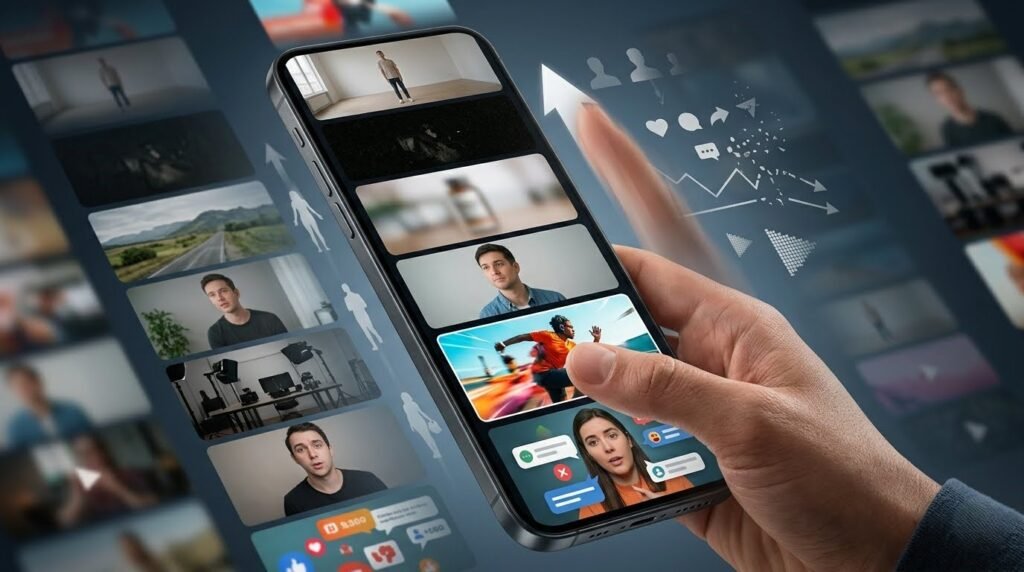
Weak first visuals dark, blurry, poorly framed, or visually uninteresting footage communicate low production effort in the first half-second. Viewers make quality judgments that fast. A weak first visual doesn’t get the benefit of the doubt.
Generic stock footage triggers an immediate category problem. Wide, slow, cinematic footage at the opening reads as background filler rather than content. The viewer identifies it as filler and moves on before the actual content begins.
Delayed payoff building toward a point rather than starting at or past it trains the viewer that the value is coming later. On short-form platforms, later doesn’t get watched.
Poor lighting in the opening frame signals low production quality before anything else gets evaluated. A dark, flat, or harshly lit opening creates a first impression that the rest of the video has to overcome. Empty pauses, dead air, static frames, a creator visibly about to say something create an exit point before any content reason to leave has occurred. The pause itself is enough.
Mismatched captions create confusion. When the text overlay describes something different from what the visual shows, the brain spends cognitive effort resolving the mismatch rather than engaging with the hook transition.
How to Create a True Stop-the-Scroll Opening
Transitional hooks combine a compelling opening moment with a visual cut or motion that removes the natural exit point. A fast cut landing right as the first line delivers, a zoom pushing in on the most important word, a whip pan from the hook setup to the content, these create continuous momentum that carries the viewer past the first three seconds before any decision to leave forms.
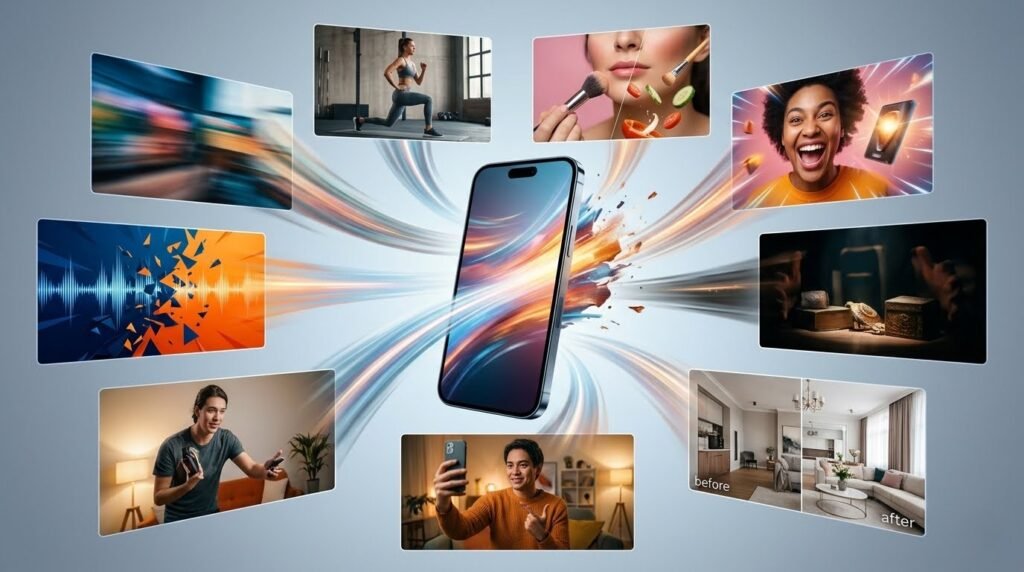
- Mid-action starts to drop the viewer inside something already happening. A fitness creator already mid-rep. A beauty creator is already mid-application. A chef already mid-technique. The viewer scrambles for context and keeps watching to orient themselves. The scramble is the hook.
- Fast zooms as pattern interrupt videos work because the sudden movement breaks whatever visual rhythm the viewer was in. A zoom landing on the first beat of audio creates a combined sensory interruption that holds attention through both channels simultaneously.
- Suspense frames a visual that implies something already happened without explaining what creates an open loop the viewer needs to close. The implied stakes don’t require category familiarity. Tension works before the viewer has decided whether to care about the niche.
- Curiosity statements work when they create a specific question the viewer needs answered. “The mistake I made for two years” creates a more specific question than “here’s something important.” Specific questions produce stronger pull than vague implications.
- Before-and-after reveals work by showing the result before the process. The after creates desire. The show creates continued watch time. Showing the before first removes the desire before it forms.
- UGC video hook transition clips phone camera, natural light, direct-to-lens delivery work by bypassing the ad identification reflex. The viewer doesn’t identify the content as advertising fast enough to activate skip mode, which means the hook lands in a more receptive state.
Matching Your Hook to the Content
Educational videos need curiosity hooks. Open with the result or implication before the explanation a metric, an outcome, a counterintuitive statement. The question the hook creates is what the content answers. Avoid dramatic suspense openers for educational content the tonal mismatch between high-drama opening and fact-based content creates Videos Get Swiped Away at the point where the content should be earning watch time.
Ecommerce ads need movement and authenticity at frame zero. A short video transition for ads before the product appears delays ad identification long enough for the product message to land. UGC-style openings work particularly well here because they don’t read as advertising until the product appears.
UGC campaigns need phone-camera authenticity from the first frame. Any produced element, clean lighting, stable framing, branded graphics in the opening second breaks the personal content signal that makes UGC hooks work.
Product demonstrations work best with reveal hooks the product mid-use as the opening frame rather than a static product introduction. The action implies the product is worth seeing in use before any claim is made.
Business tips work with suspense and curiosity equally. If the tip involves a counterintuitive approach or a mistake, suspense creates stronger pull. If the tip is straightforwardly valuable, a curiosity hook transition showing the outcome works better.
Storytelling videos need emotional recognition hooks a moment the viewer can project their own experience onto. High-energy transitional hooks create tonal mismatch for storytelling content. The opening energy should match the story’s emotional register.
Service promotions work best with problem-first hooks opening on the frustration the service resolves rather than the service itself. The problem creates identification; the resolution creates interest.
A Simple Retention Audit for Your Next Video
First frame clarity: does the opening frame communicate something immediately, or does it require context the viewer hasn’t been given yet? An unclear first frame creates confusion rather than curiosity. Confusion exists. Curiosity stays.
Movement in the first second does anything move at frame one, or does the video open on a static image? If nothing moves in the first second, the opening is relying entirely on the verbal or text transition hook to create the stop. That’s a single point of failure.
Audio impact: does the audio at the opening create a sensory signal that matches and amplifies the visual? A visual hook with flat audio loses half its stopping power. A bass hit on the first cut, a silence before a reveal, an audio cue that creates slight mismatch any of these amplify the visual hook’s effectiveness.
Text readability if text appears in the opening, is it visible and legible within the first half-second? Small text, low contrast, or text that appears too late in the opening window reduces its hook contribution significantly.
Transition timing does the cut from the hook into the main content land at the peak of the hook’s energy? A cut that arrives too early leaves transition hook energy on the table. A cut that arrives too late allows the energy to resolve before the content begins.
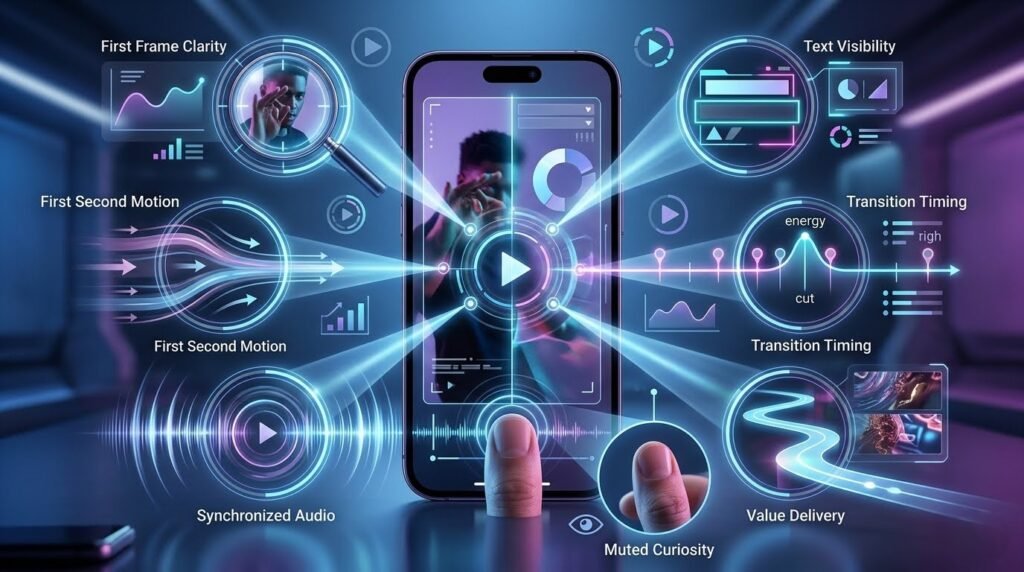
Value delivery does the opening create a specific question or imply a specific payoff that the content delivers on? An opening that promises more than the content provides creates exits at the moment of disappointment.
Viewer curiosity after watching only the first three seconds with the sound off, does the opening create a reason to unmute and continue? If muted autoplay doesn’t create curiosity, the visual hook isn’t working independently of the audio.
HookTransition.com or transitional hooks.com provides downloadable transitional hooks, pattern interrupt openers, and reel hooks with no copyright concerns organized by transition hook type and formatted for vertical short-form content. Running this audit and identifying which opening element is failing becomes faster when tested assets are ready to swap in rather than sourced from scratch each time.
Retention Problems
Most retention problems aren’t algorithm problems. They’re opening problems specific, diagnosable issues in the first three seconds that send viewers away before the content gets a chance to prove its value.
The stop the scroll video isn’t built in the middle of the edit. It’s built at the front with the right visual energy at frame one, the right motion in the first second, and the right hook mechanism matched to the content’s purpose and emotional register.
Run the audit. Identify the failure point. Replace it with something that earns the next three seconds. The algorithm responds to retention. Fix the opening and the distribution often follows.


