Plenty of creators still open their videos with a branded animation. Logo reveal, brand colors, a short musical sting three to five seconds of identity-building before the content begins.
That instinct comes from a legitimate place. Traditional video marketing spent decades establishing the intro as the professional standard. Television commercials opened with brand presence. YouTube channels built recognition through consistent animated openers. The intro signaled that what followed was worth watching.

Short-form platforms changed the equation completely. TikTok, Instagram Reels, and YouTube Shorts are environments where the viewer hasn’t committed to anything yet. They’re mid-scroll, thumb moving, making retention decisions in under two seconds. A branded animation in that environment doesn’t signal professionalism; it signals that the content hasn’t started yet. And content that hasn’t started yet gets scrolled past.
Hook video clips operate differently. They put the viewer inside the content immediately mid-motion, mid-tension, mid-moment before any skip decision has formed. The debate between intros and transitional hook isn’t really about branding versus retention. It’s about understanding which opening serves the viewer’s behavior in the environment where the content actually lives.
What Is the Difference Between a Hook Clip and an Intro Animation?
An intro animation is a produced visual sequence usually three to ten seconds that establishes brand identity before the main content begins. Logo animations, motion graphics, brand color sequences, consistent musical stings. The purpose is recognition. A viewer who sees the same animation across multiple videos learns to associate it with a specific creator or brand.
A hook clip is the opposite in almost every way. It’s a short opening sequence usually one to three seconds designed to interrupt passive scrolling and create immediate engagement before brand identity is established. The purpose is attention. A viewer who sees a strong hook video for short clip doesn’t think about the brand. They think about what they just saw and what’s coming next.
The confusion between them comes from placement. Both sit at the front of a video. Both represent a deliberate choice about how the content begins. But their functions are fundamentally different and they serve different viewer states.
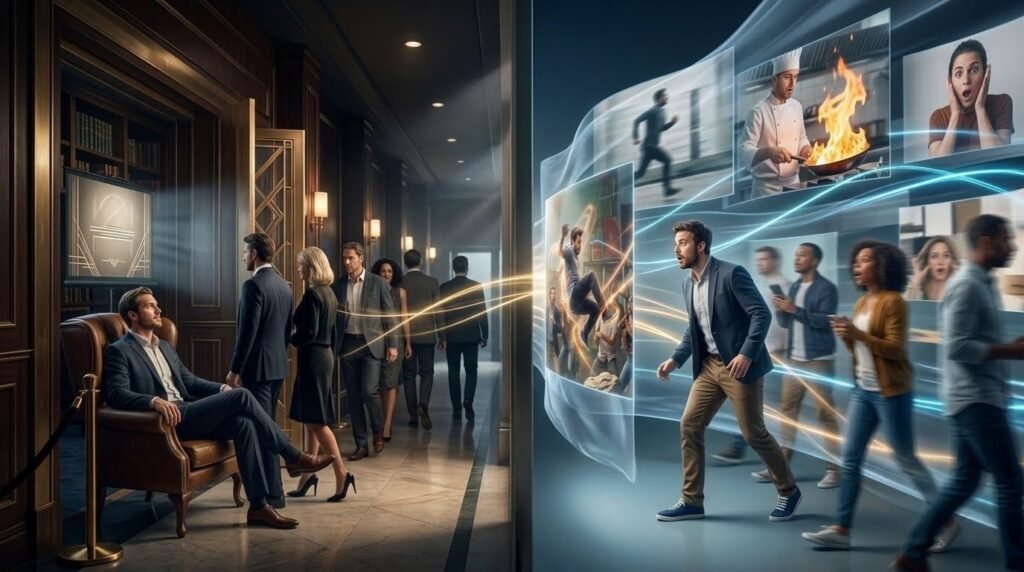
Intro animations address a viewer who has already decided to watch. They reward that decision with a moment of brand consistency. Hook clips address a viewer who hasn’t decided anything yet. They interrupt the scroll before the decision gets made.
Most short-form content reaches viewers in the undecided state. The viewer is scrolling. The video appears. They haven’t chosen to watch, they haven’t chosen anything. An intro animation assumes a decision that hasn’t happened. A transition hook clip makes the decision happen.
Where intros fit: at the start of content a viewer has actively sought out a YouTube channel they subscribe to, a webinar they registered for, a presentation they’re attending. Where hook clips fit: anywhere the viewer encounters the content without actively choosing it first, which is most short-form reach.
How Viewers React to Each Opening Style
Retention data tells the story clearly on short-form platforms. Videos that open with branded animations consistently show steeper early drop-off than videos that open with immediate content. The animation runs, viewers leave, and the content that follows gets seen by whoever remained which is usually a fraction of the initial audience.
The reason is viewer expectation. Short-form audiences expect content to start immediately. A visual delay even a polished, well-produced one signals that the value hasn’t arrived yet. On a platform where the cost of leaving is zero and the alternative feed is infinite, waiting for value isn’t a behavior most viewers practice.
Hook clips create the opposite reaction because they match the expectation. Something is already happening. Visual momentum already established. A question or tension already present. The viewer’s brain doesn’t register a delay because there isn’t one; the content is already in motion at frame one.Hook Clips can help to learn how to use instagram for business.
Emotional engagement follows from that difference. A branded animation produces aesthetic response at best recognition, pleasant familiarity for returning viewers. A strong transition hook clip produces curiosity, tension, or surprise states that actively hold attention rather than acknowledge it.

Brand recognition is the one area where intro animations have a genuine advantage. Returning viewers who see a consistent animation do develop recognition over time. The question is whether that recognition benefit justifies the retention cost on short-form platforms where most reach comes from new viewers who have no prior familiarity with the brand. For most creators, the math doesn’t work in the animation’s favor.
For UGC video hook clips and ecommerce content specifically, animations create an additional problem: they signal advertising before the hook transition has had a chance to establish trust. A viewer who identifies the content as an ad in the first second activates skepticism that a UGC-style hook was specifically designed to avoid.
When Intro Animations Still Make Sense
The case for intro animations is more specific than most creators realize. There are genuine use cases where they serve the audience effectively; they’re just rarely the short-form scroll environment.
Corporate presentations and internal training videos operate in environments where the viewer is a captive audience with a professional obligation to watch. Brand consistency signals organizational legitimacy in those contexts. An animation that would kill retention on TikTok builds credibility in a boardroom presentation.
Long-form YouTube videos, tutorials, documentaries, explainer series attract viewers who have actively chosen the content and expect a degree of production formality. A consistent intro builds the sense of a produced series rather than a casual post. Viewers who subscribed specifically for this content type respond positively to that production signal.
Brand advertisements placed in broadcast or pre-roll contexts operate under different viewing conditions than short-form social feeds. A YouTube pre-roll ad has a captive audience for the first five seconds regardless of the opening. A television commercial reaches a passive viewer in a lean-back consumption state. Both environments support more deliberate brand establishment than a TikTok feed does. Capcut template is easily usable for reels.
Event recap videos and highlight content distributed to engaged audiences, conference attendees, community members, and existing customers work with intro animations because the viewer relationship is already established. The animation reinforces an existing brand connection rather than trying to create one with a stranger.

The common thread across all of these: the viewer has either already chosen to watch or has been placed in a viewing context where the choice isn’t immediate. Remove that condition and the animation stops serving the viewer.
Why Hook Clips Dominate Short-Form Platforms
TikTok’s algorithm weights early retention heavily. A video that holds viewers through the first two seconds at a strong rate gets distributed more widely than a video that doesn’t, regardless of how strong the content is after that point. An intro animation runs for three to five seconds before the content begins which means the algorithm is measuring retention through the animation rather than through the hook transition. Most animations lose a significant audience in that window.
Instagram Reels and YouTube Shorts operate under similar conditions. Both platforms track early engagement signals and use them to make distribution decisions. Both penalize content that loses viewers before the content proper has begun.
Hook video clips solve this at the source. Fast transitional hooks, mid-action openers, suspense clips, pattern interrupt videos create immediate visual engagement that the algorithm reads as strong early retention. The distribution benefit follows from that measurement.
For ecommerce ads specifically, hook clips produce stronger thumb-stop rates than branded animations. A short video transition for ads before the product appears delays ad identification and reaches the viewer in a more receptive state. Branded animations do the opposite; they confirm the ad status immediately, which activates the skip reflex before the product message lands.
Educational creators benefit from curiosity-based hook clips that create a question the content answers. Opening on the implication of the lesson as a result, a counterintuitive statement, a partial reveal holds viewers through to the explanation more effectively than opening on a branded sequence that signals a lesson is about to begin.
For service businesses posting on Instagram Reels, problem-first hook clips outperform branded intros consistently. Opening on the frustration the service resolves creates identification before the brand appears. The brand earns attention by solving something; it doesn’t deserve attention just for being there.
Replacing Traditional Intros With Better Hook Workflows
Removing the intro animation is the first step and the most uncomfortable one for creators who built their content identity around it. The discomfort is understandable; the animation felt like professionalism. Removing it feels like losing something.
What actually gets lost is early retention cost, not brand identity. Brand elements don’t disappear, they just move. A logo or brand color element placed at the five-second mark, after the hook has established engagement, reaches a viewer who has already decided to stay. The same element at frame one reaches a viewer who hasn’t decided anything and may leave before the branding registers anyway.
Start the video at the most interesting moment. Not the beginning of the story, the most compelling moment in the whole piece. For a product video, that’s the product in its most impressive use. You can use an educational video, that’s the most surprising implication of the lesson. For a UGC campaign, that’s the strongest reaction or the most relatable problem.
Build branding into the content rather than in front of it. A consistent color grade, a recognizable editing style, a signature way of structuring content these build brand recognition without occupying the opening seconds that retention needs.
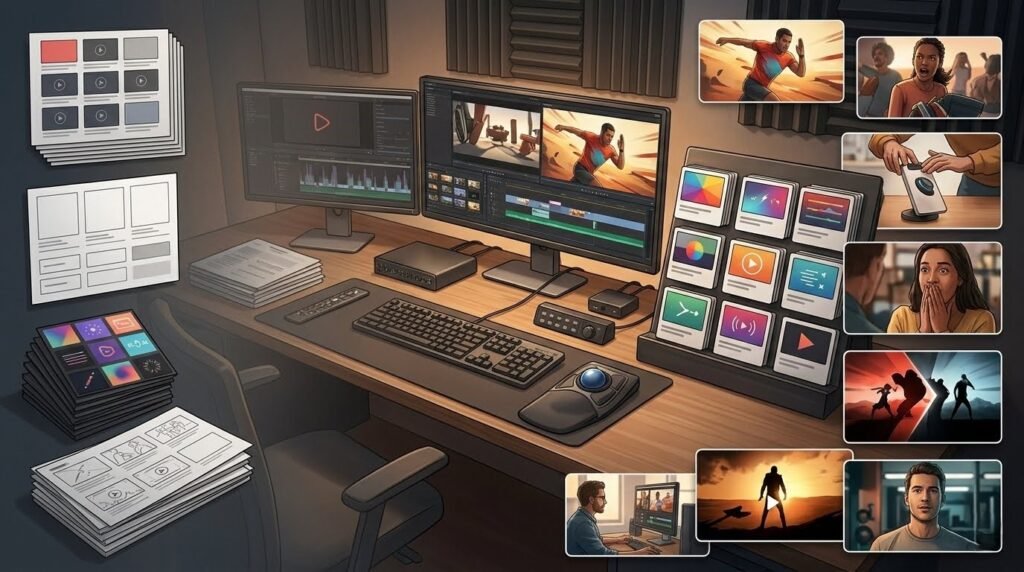
HookTransition.com provides a library of transitional hooks and hook video clips free from the licensing complications that make general stock footage risky for commercial use. For creators building a workflow around hook-first content rather than intro-first content, having a library organized by hook type suspense, UGC-style, pattern interrupt, fast transition makes the switch from animation to hook practical rather than just theoretical.
Test the change across four or five videos before drawing conclusions. Compare early retention curves against previous animation-led content. The data almost always makes the case more convincingly than any argument does.
Intro Animations Purpose
Intro animations had a purpose and that purpose made sense in the environments they were designed for. Those environments aren’t TikTok, Instagram Reels, or YouTube Shorts and using a tool designed for one context in a completely different context produces predictable results.
Hook video clips exist because short-form platforms created a specific problem that intro animations actively make worse. The viewer hasn’t decided to watch yet. The opening has to make that decision happen. An animation that assumes the decision has already been made loses viewers before the content begins.
Move the branding. Lead with the hook. Check the retention graph. The argument resolves itself in the data within a week.


