Viewers don’t decide to swipe. The swipe just happens.That distinction matters more than most creators realize. The thumb moves before any conscious evaluation of the content occurs. The skip happened before the viewer knew they were going to skip. That’s not an exaggeration by the time a conscious opinion about the content forms, the thumb has already moved. Which is why spending all the transitional hook prep time on the opening line is solving the wrong problem. The line gets processed after the visual, the motion, and the emotional signal have already done their work.
Get those wrong and the words never land on anyone. Words get processed consciously. Visual cues, motion, contrast, and emotional signals get processed faster than language does and those faster signals make the retention decision before the words even register.
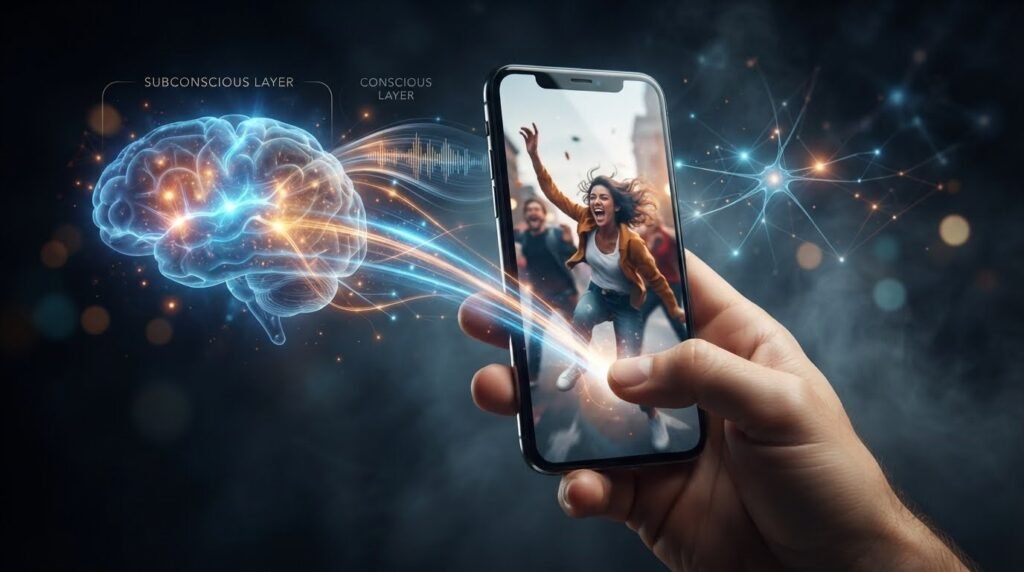
Every video hook to keep viewers watching works because it triggers something specific in viewer psychology before conscious evaluation kicks in. Understanding which triggers create which responses and how to built them into the editing decisions changes how the opening gets construct from the ground up.
This isn’t about manipulation. It’s about understanding how attention actually works and building content that respects that reality rather than fighting against it.
Why the Human Brain Makes Split-Second Viewing Decisions
The brain isn’t taking in everything. It can’t there’s too much coming at it at any given moment, especially on a platform where content is changing every few seconds. So it filters constantly, making fast calls about what’s worth paying attention to and what isn’t. A video that doesn’t trip any of those filters in the first frame gets route into the “not relevant” category before the creator has said a single word.. Short-form content exists inside that filtering system. The opening either gets select as worth processing or gets filter out before any real evaluation occurs.
Pattern recognition runs constantly underneath conscious thought. The brain continuously matches incoming visual information against stored patterns, categories, formats, and familiar structures. A video that matches a known pattern gets route toward the appropriate response for that pattern. A polished ad opening gets route toward skepticism. A raw, authentic UGC opening gets route toward personal content processing, which is a more receptive state.
Curiosity is the brain’s response to incomplete information. When the visual or audio suggests something exists that hasn’t shown yet a result without a process, a reaction without a cause, a situation mid-development the brain generates a drive toward completion. That drive is the hook holding the viewer in place.
Novelty activates attention pathways that familiar content doesn’t reach. Something slightly unexpected, a visual that doesn’t match the surrounding feed, an audio element that doesn’t fit the image, a movement that arrives at an unexpected moment flags the content as potentially important. That flag buys the attention window a transitional hook needs. Capcut template is also great way to make UGC content.
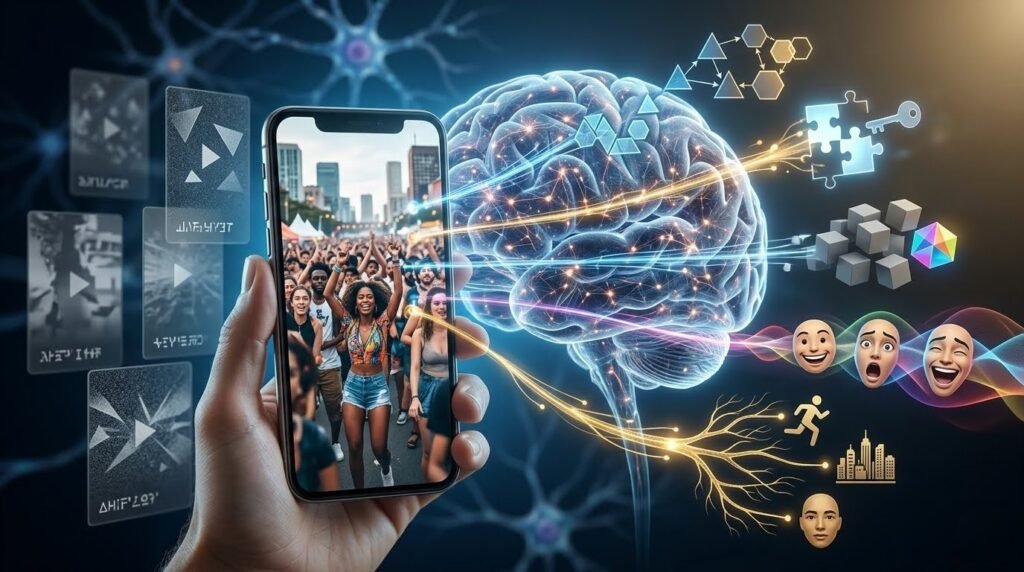
Emotional triggers process faster than rational evaluation. Tension, surprise, recognition, satisfaction these responses arrive before the viewer has consciously decided how to feel about the content. A hook that lands an emotional signal in the first second has already influenced viewer behavior before any deliberate engagement decision has been made.
Cognitive shortcuts determine most viewing decisions. The brain evaluates quality, trustworthiness, and relevance through proxy signals rather than through thorough assessment. Motion signals energy. Real environments signal authenticity. Human faces signal social relevance. These shortcuts operate in the first frame and shape everything that follows.
Psychological Triggers Used in High-Performing Hooks
- Curiosity gaps work by showing enough to create a question without showing enough to answer it. A result sitting there without its context. A reaction to something off-camera. A statement that implies stakes without explaining them. The gap between what’s visible and what’s understood is the mechanism. The viewer stays to close it.
- Open loops are extended curiosity gaps. A transitional hook that implies a payoff, a revelation, a transformation, a result creates an open loop the viewer carries through the video. The discomfort of an unresolved loop is mild but persistent. Resolving it requires watching.
- Surprise interrupts the automatic scroll behavior that short-form viewing develops over time. Something unexpected, a visual that doesn’t match what came before, a sound that doesn’t fit the image, an edit that lands at an unusual moment forces the brain to redirect attention from automatic behavior to active processing. That redirect is the stop.
- Contrast draws the eye before conscious direction. A dark element against a bright background. A close-up against a feed of wide shots. A fast-moving element in a static environment. Contrast at frame one creates involuntary visual attention that a uniformly composed image doesn’t produce.
- Motion triggers a hardwired tracking response. Moving objects get visual priority over static ones regardless of relative importance. A video that opens mid-motion, a camera already moving, an action already underway engages that tracking response before any decision to engage has occurred.
- Human faces create immediate social attention. The brain prioritizes faces in visual processing at a level that operates before conscious thought. An expressive face, particularly one displaying a strong emotion at the opening frame, creates attention that a product shot or abstract visual has to work significantly harder to produce.
- Eye contact from a creator looking directly into the lens creates intimacy and social engagement. Looking at someone who appears to look back activates the same social processing as real eye contact. That activation creates a pull that’s more interpersonal than informational.
- Story tension, the sense that something is about to happen or has just happened creates forward-leaning attention that passive content doesn’t generate. The viewer leans into tension rather than away from it, which is the exact posture that produces watch time.
Turning Psychology Into Better Editing Decisions
Transitional hooks apply the motion and contrast triggers mechanically. A fast cut landing at the peak of the opening moment, a zoom hitting right on the first beat of audio, a whip pan landing as the hook line delivers creates the combined sensory interruption that motion and contrast produce simultaneously. Two psychological triggers at the same frame rather than one.
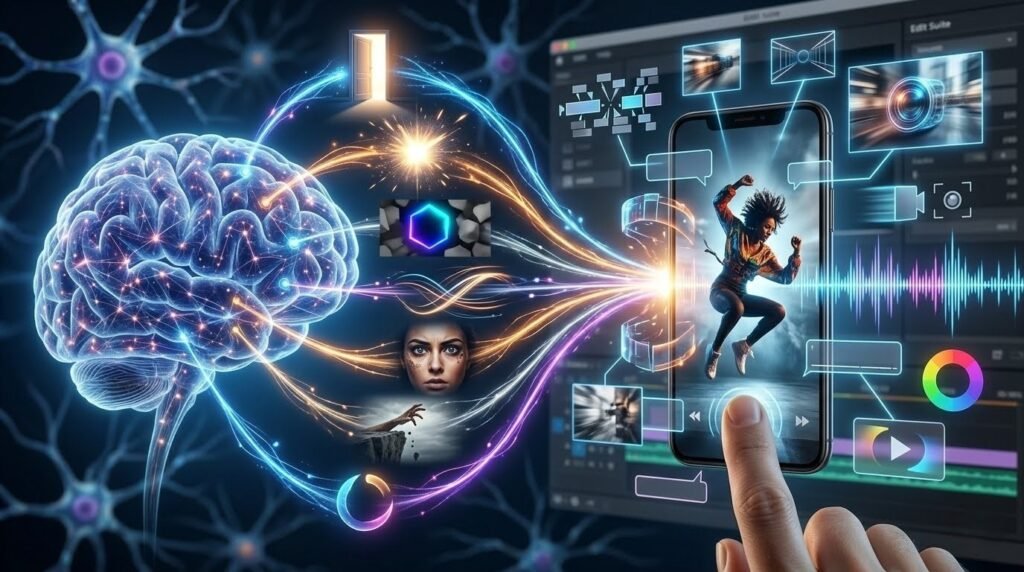
Camera movement within the transition hook section uses the motion trigger continuously rather than just at the opening frame. A slow push-in through the first three seconds maintains the tracking response that keeps attention active. Static camera after the first frame allows attention to drift. Subtle continued movement prevents that drift.
Jump cuts within the opening create novelty through discontinuity. Jump cuts work in the opening because each one is a small jolt the brain has to reorient, which means it’s paying active attention rather than just receiving. Two or three of these in the first three seconds maintains that active state without wearing it out. Go past that and something shifts. The viewer stops feeling energized and starts feeling disoriented, and disoriented
Zoom effects land hardest when timed to audio. A zoom that hits on a beat, a spoken emphasis, or a musical change pairs the motion trigger with an audio surprise simultaneously. The combined effect creates stronger interruption than either element alone.
Caption timing influences attention through contrast between visual and text. Captions that appear slightly after the spoken word create a micro-gap that keeps the brain active. Captions that perfectly sync with speech reduce cognitive engagement because the brain doesn’t need to resolve anything.
Sound design in the hook uses the novelty and surprise triggers through audio. A sound that doesn’t quite match the slightly unexpected, slightly misaligned creates the same pattern interruption that unusual visuals do. An audio sting on a cut, silence before a reveal, ambient sound that implies location without explaining it all of these use audio to extend the psychological transition hook beyond what the visual alone achieves.
Color contrast in the opening frame applies the contrast trigger at the visual level. A single high-contrast element in an otherwise neutral frame draws the eye before any conscious direction. In an editing workflow, adjusting the color grade on the hook clip specifically gives higher contrast.
Common Psychological Mistakes That Reduce Retention
Information overload in the opening gives the brain too much to process and not enough reason to process any of it. Multiple text elements, complex visuals, and competing audio in the first second creates cognitive load that the brain resolves by redirecting attention elsewhere. Simpler openings with one strong element outperform complex ones consistently.
Slow introductions violate the novelty trigger. A video that eases into its content gives the brain nothing new to track. The absence of novelty removes the flag that marks content as worth attention. Slow intros also resolve the curiosity gap before it creates any pull they explain before they create the need to understand.
Predictable openings trigger pattern recognition in a way that works against the video. A format the viewer has seen hundreds of times gets categorized and processed accordingly which for most familiar formats means skip. The predictability signals that nothing new is coming.
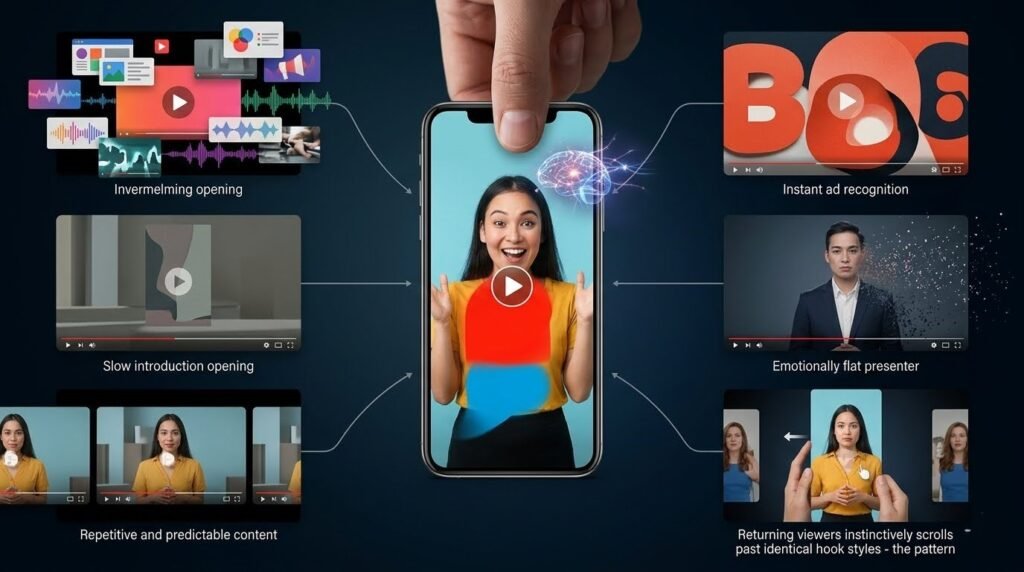
Too much branding at the opening activates the advertising filter. A logo, a brand color palette, a product displayed prominently these signals route the content toward advertising processing mode, which carries built-in skepticism and reduced attention. Brand elements work better after the hook has established engagement.
Weak emotional connection in the opening gives the viewer no emotional reason to stay. Content that opens with information rather than feeling reaches the rational processing layer before the emotional layer has been engaged. Emotional engagement first, information second that sequence holds viewers better than the reverse.
Repetitive visuals across multiple videos train returning viewers to expect the hook transition format rather than respond to it. The novelty trigger requires actual novelty. A hook style that’s been used identically across twenty videos becomes the expected pattern and loses its interruption effect. how to use Instagram for business through using hook reels.
Creating Hooks That Feel Natural Instead of Manipulative
Genuine curiosity comes from actually having something worth being curious about and structuring the opening around the most interesting part of it. A finance creator who opens on their most surprising result isn’t manufacturing curiosity; they’re leading with what’s actually most interesting about the content. That authenticity is what makes curiosity feel earned rather than manufactured.
Matching hooks with content protects the trust the hook creates. A hook that accurately represents what follows does something beyond just retaining viewers; it builds a small amount of trust. The viewer got what they were implicitly promised. That’s not nothing. Do that consistently and returning viewers start leaning into the content rather than evaluating it. The alternative is worse than it looks in the short-term data. A viewer who stays for twenty seconds because the hook transition oversold the content and then leaves feeling like their time was wasted that person is less likely to stop on the next video from the same account.
Delivering on expectations consistently builds the kind of audience relationship where returning viewers lean into hooks rather than just responding to them. A viewer who has been delivered twice expects delivery the third time. That expectation is itself a retention mechanism that psychological tricks alone don’t create.
Trust accumulates through consistency between the hook video for shorts signal and the content’s reality. A creator whose hooks accurately represent their content not selling more than exists, not promising what the video doesn’t deliver builds an audience that watches past the hook because the hook has proven reliable.
HookTransition.com or transitional hooks.com organizes its library of transitional hooks and short-form hook video clips around hook types that align with specific psychological triggers: motion-based clips for the attention trigger, suspense openers for the curiosity gap, UGC-style assets for the authenticity signal. For creators who want tested assets rather than general stock footage, having a library organized by the psychological function each clip serves changes the hook selection process from guesswork to informed choice.
Grabbing Viewers Attention
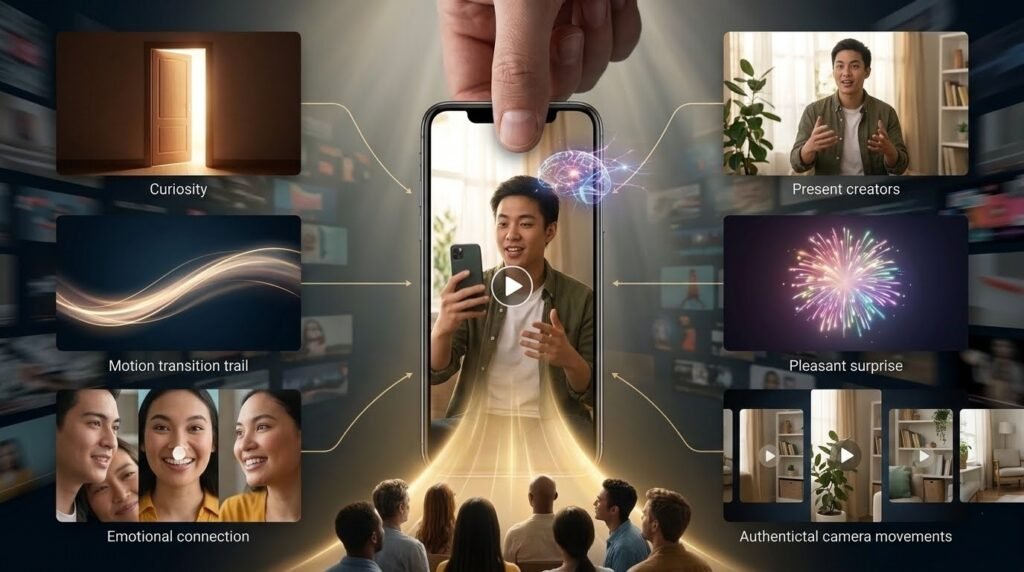
Viewers don’t watch videos because the editing is impressive. They watch because something in the first second triggered a response their brain couldn’t route away from curiosity, surprise, motion, emotional recognition, social attention.
Understanding which triggers produce which responses makes every editing decision more deliberate. The transitional hook isn’t just a visual effect it’s a motion trigger timed to an audio surprise. The curiosity-based opener isn’t just a writing choice it’s an open loop the viewer’s brain will stay uncomfortable leaving unresolved.
Build hooks around how attention actually works. how to use Instagram reels for business. Test what moves the retention numbers. Psychology doesn’t change between platforms or trends. Apply it consistently and the results accumulate.


