Spent time on a few accounts where every video opened the same way. Same dramatic zoom, same tense music, same high-energy cut regardless of whether the video was a product review, a business tip, or a personal story. The hook looked good in isolation. Against the content it sat in front of, it felt wrong half the time.
Retention graphs reflected that mismatch. Videos where the hook matched the content’s emotional register held viewers. Videos where it didn’t showed the same early drop-off regardless of how polished the opening looked.
The assumption that a strong hook transfers across every content type is one of the more expensive mistakes in short-form editing. Dramatic hooks don’t improve calm content. High-energy transitions don’t suit reflective storytelling. A suspense opener in front of a tutorial creates a tonal promise the content can’t keep.
The right hook isn’t the most impressive hook, it’s the one that matches the video’s purpose, pacing, and emotional register well enough that the viewer doesn’t notice the transition between the opening and the content. That match is what produces retention. Understanding how to make it deliberately, across different content types, changes how hook decisions get made at the editing stage.
Why Every Short-Form Video Needs a Different Type of Hook
Viewers carry expectations into every video based on the content category they think they’re watching. Those expectations form in the first second from the visual energy, the audio tone, the pacing of the opening. When the hook matches those expectations and then exceeds them slightly, viewers stay. When the hook creates expectations the content doesn’t meet, they leave at the moment the mismatch becomes obvious.
Content intent shapes which hook mechanism works. Educational content needs curiosity; the hook should create a question the content answers. Product content needs desire or authenticity; the hook should create want or trust before the product appears. Storytelling content needs emotional recognition; the transition hook should create a feeling the viewer can project their own experience onto.
Emotional triggers operate differently across content types too. Tension works for business and finance content because implied stakes create urgency around information. Authenticity works for UGC and product content because trust is the prerequisite for purchase decisions. Humor works for entertainment content because the emotional reward is immediate. Matching the emotional trigger to the content type determines whether the hook feels like a natural beginning or an awkward introduction.
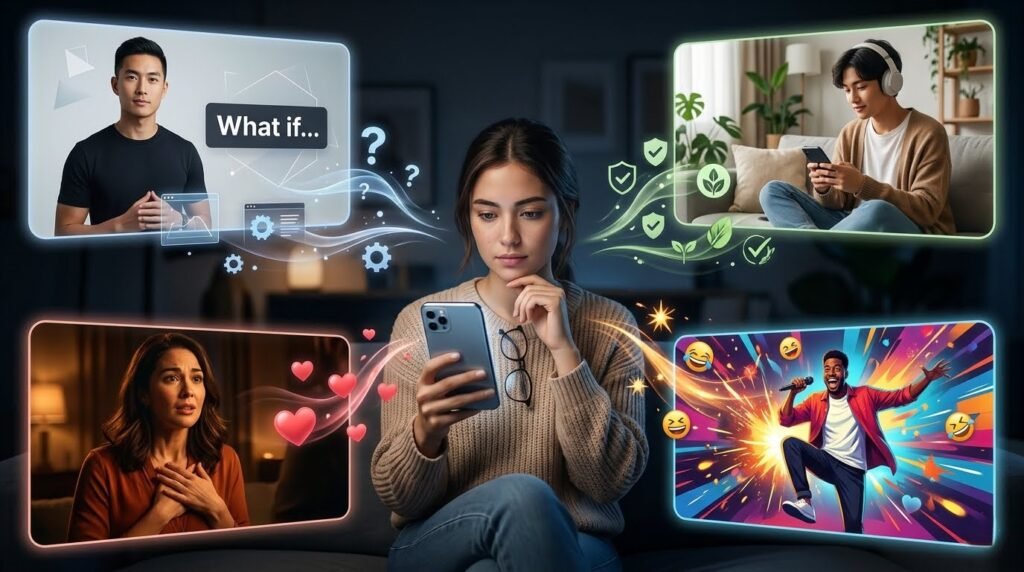
Visual pacing creates the same issue. A fast, high-contrast transitional hook in front of slow, reflective content creates cognitive dissonance. A gentle, curiosity-building opener in front of fast-paced tutorial content feels too slow to be a setup. The hook’s pacing should be slightly faster than the content’s pacing enough to create energy, not so much that it oversells what follows.
Choosing the Right Hook for Different Content Types
Educational Videos:
Curiosity hooks work best here. Open with the result or the implication before any explanation: a metric, an outcome, a statement that implies the viewer is missing something worth knowing. The hook creates the question; the content answers it. Avoid suspense openers for educational content. A dramatic, tense opening promises stakes that a fact-based video often can’t deliver on tonally. The mismatch between a high-drama opening and an informational content structure causes viewers to feel misled, which produces exits at exactly the point the content starts delivering value. Editing recommendation: use a fast text-first transition hook bold claim on screen before any spoken audio combined with a clean transitional cut. The text creates the curiosity; the cut creates the momentum into the explanation.
Product Demonstrations:
Reveal hooks outperform everything else for product demos. Show the product mid-use rather than introducing it from a static angle. The action implies the product is worth seeing in use before any claim has been made. Skip the logo reveal as an opening. Starting on branding signals advertisement before the viewer has a reason to care, which activates the skip reflex. The product earns attention by doing something interesting first. Editing recommendation: open on a close-up of the product in action, cut on the most compelling moment of use, then pull back to show context. The sequence builds interest before it builds brand awareness.
UGC Advertisements:
Authenticity is the hook mechanism here. Phone camera, natural light, direct-to-lens delivery the opening needs to read as personal content before the brand message appears. Any production signal in the first second breaks that condition. Start mid-sentence rather than at the beginning of a thought. “…and I genuinely didn’t expect it to work this well” dropped in as the first audio creates relatability and implied skepticism overcome both of which hold UGC audiences better than a clean, polished intro. Editing recommendation: source UGC video hook clips that match the brand’s category authentically. A beauty brand needs natural-light, bathroom-counter energy. A fitness brand needs real-environment workout energy. The authenticity has to match the category or it reads as staged.
Storytelling Videos:
Emotional recognition transition hook work best. Open on a moment the viewer can project their own experience onto a feeling, a situation, a reaction that implies a shared experience. The emotional identification happens before the specific story context has been established. Avoid high-energy transitional hooks for storytelling content. A fast whip pan in front of a reflective personal story creates a tonal mismatch that the narrative has to work against rather than with. The opening energy should be slightly more intense than the story’s baseline without overpromising drama. Editing recommendation: open on a reaction or a physical moment mid-situation. The viewer enters the story already inside an emotional state rather than watching it build from the outside.
Before-and-After Transformations:
Jump to the after immediately. No before, no process, no timeline just the result at frame one. Every before-and-after has one moment of maximum visual impact. That moment is the hook. The mistake most creators make here is showing the before first because it feels like the logical sequence. The viewer doesn’t need a logical sequence, they need a reason to watch. The after creates that reason. The before can come second. Editing recommendation: open on the after with no caption. Let the visual land alone for one second before text appears. The absence of context in that first second creates the curiosity gap that pulls viewers into the explanation.
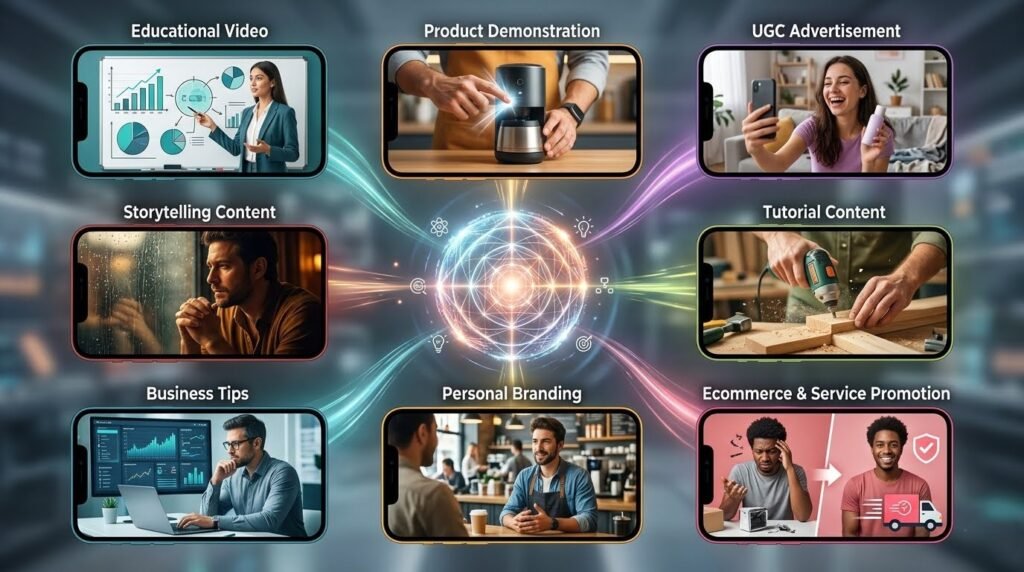
Tutorials:
Mid-action starts outperform everything else for tutorials. Open already inside the technique, the tool, or the process not building toward it. The viewer scrambles for context and keeps watching to orient themselves. Skip the setup entirely. “Today I’m going to show you how to…” tells the viewer the content starts in a moment. Starting inside the technique tells them it’s already happening, which creates immediate engagement. Editing recommendation: identify the most visually interesting moment in the tutorial’s middle section and use that as the opening frame. Cut to the beginning of the process after the hook transition has established that the outcome is worth learning.
Business Tips:
Suspense and curiosity work equally well here, depending on the specific content. If the tip involves a mistake or a counterintuitive approach, suspense implying stakes before explaining them creates stronger pull. If the tip is straightforwardly valuable, a curiosity hook showing the outcome works better. Avoid generic motivational openings for business content. Abstract inspirational visuals don’t create the specificity that business audiences respond to. Concrete implies real experience; abstract implies theory. Editing recommendation: open on something concrete and specific rather than something atmospheric. A screenshot, a number, a visible decision point, something that implies the tip comes from a real situation rather than a general principle.
Personal Branding Content:
Recognition hooks work best for personal brand content moments the creator’s target audience has definitely experienced, shown or described in a way that creates immediate identification. The hook creates connection before it creates content. Avoid opening on the creator’s face in a static frame. This works for established creators with audiences who recognize them immediately. For anyone still building that recognition, a static face-to-camera open doesn’t create pull; it creates a decision point that often resolves to a swipe.
Ecommerce Videos:
Fast transitional hooks paired with product reveals work consistently. The transitional hook creates the stop; the immediate product appearance creates the want. Short video hook transition for ads that move from a neutral opening clip to a product in use within the first two seconds outperform ads that build toward the product reveal.
Service Promotions:
Problem-first hooks work best. Open on the frustration the service resolves visually, emotionally, or through a specific relatable statement before the service appears. The problem creates identification; the service creates relief.
Matching Hook Speed, Motion, and Emotion
Fast movement works for content where the value proposition is energy, efficiency, or transformation. Slow movement or intentional stillness works for content where the value proposition is depth, authenticity, or trust.
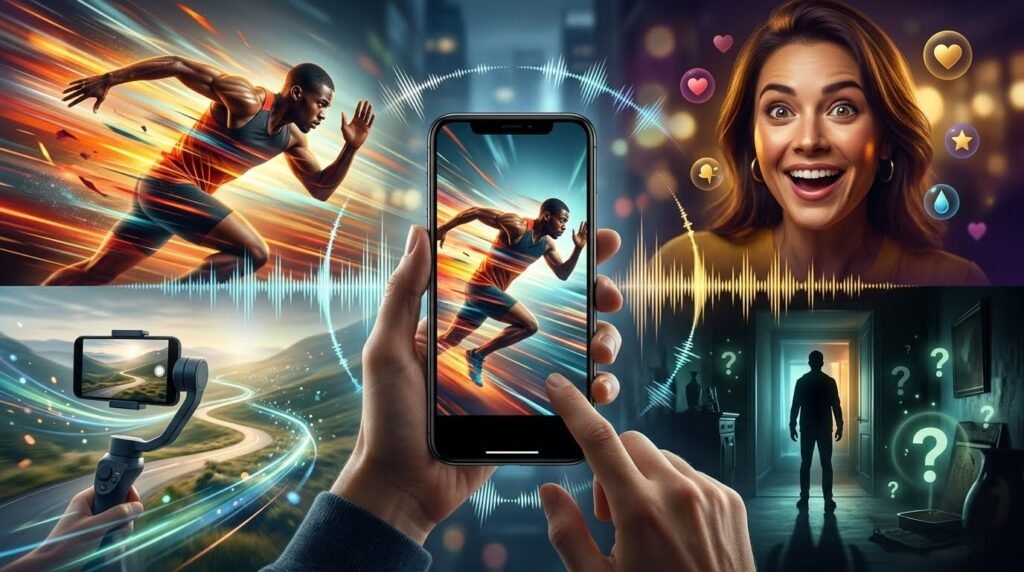
High-contrast visuals create pattern interruption across any content type. Dark opening against a bright feed or a close-up against a feed of wide shots creates the involuntary pause that any stop the scroll video needs. Visual contrast is a hook mechanism that works independently of the content’s emotional register.
Audio timing either amplifies or undermines the visual hook transition. A bass hit landing on the exact frame of a zoom creates combined sensory interruption that holds better than either element alone. Audio that starts slightly after the visual transition creates a small mismatch that the brain tracks and tracking means watching.
Curiosity-driven hooks work across more content types than any other mechanism because the desire to resolve incomplete information is universal. The specific form the curiosity takes a visual gap, an unfinished sentence, a result without context changes by content type, but the mechanism transfers.
Common Hook Selection Mistakes
Choosing hooks based on trends rather than content match is the mistake that produces the most consistent underperformance. A trending transition style catches attention on videos where it fits the content’s energy. On videos where it doesn’t, it creates a mismatch that hurts retention regardless of how popular the effect is elsewhere.
Overusing dramatic effects removes their stopping power. Pattern interruption only works when the pattern being interrupted is the expected one. A dramatic zoom that appears on every video from an account stops being an interrupt and becomes the expected pattern which means it no longer creates the involuntary pause it’s supposed to produce.
Ignoring audience expectations for the content category creates exits at the exact moment the content starts delivering value. The hook set an expectation the content couldn’t meet, and the viewer leaves at the moment that mismatch becomes obvious.
Poor transition timing breaks the connection between hook and content. The cut from the hook clip to the main content should land at the moment of highest hook energy not before it builds and not after it resolves. The timing of that cut is as important as the choice of clip.
Repeating the same opening style across an entire content library trains returning viewers to expect the hook rather than respond to it. Rotate across at least three or four hook styles to maintain the element of visual surprise that makes hooks work.
Building a Flexible Hook Library for Every Project
A library organized by purpose rather than appearance serves different content types better than a general collection. Create separate categories for curiosity hooks, suspense openers, UGC-style clips, reveal hooks, and transitional hooks. Each category maps to the content types that use it most effectively.
Tag clips by niche compatibility which content categories each clip has worked in based on actual retention data. A clip that’s performed well in educational content and business tips shares characteristics that make it transferable between those categories. Documenting that saves future search time.
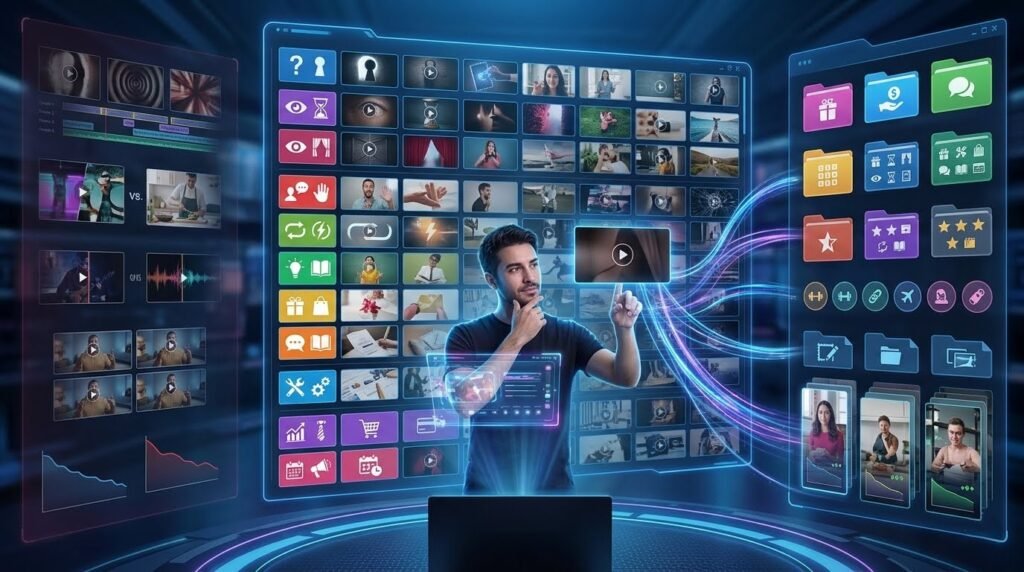
Save successful hook combinations as editing templates. A template that has the hook transition clip pre-placed, the transition pre-timed, and the text layer ready for new copy reduces the editing session for any video in that category to a few minutes.
HookTransition.com organizes its library around hook type and content function rather than general subject matter transitional hooks, UGC clips, suspense openers, and other short-form video hooks available as video hooks download, also transitional hooks.com sorted by the function they serve rather than what they look like. For creators building a library across multiple content types, starting with purpose-built assets saves the time it takes to evaluate whether general stock footage fits a specific hook need.
Build a Library
The most dramatic hook isn’t the right hook for every video. The right hook is the one that matches the content’s purpose, pacing, and emotional register closely enough that the viewer moves from the opening into the content without noticing the seam.
Build a library diverse enough to cover different content types with appropriate hook styles. Organize it by purpose. Test what performs. The hook decision stops being a creative challenge for every video and becomes a fast, informed choice from a collection that’s already proven to work.


