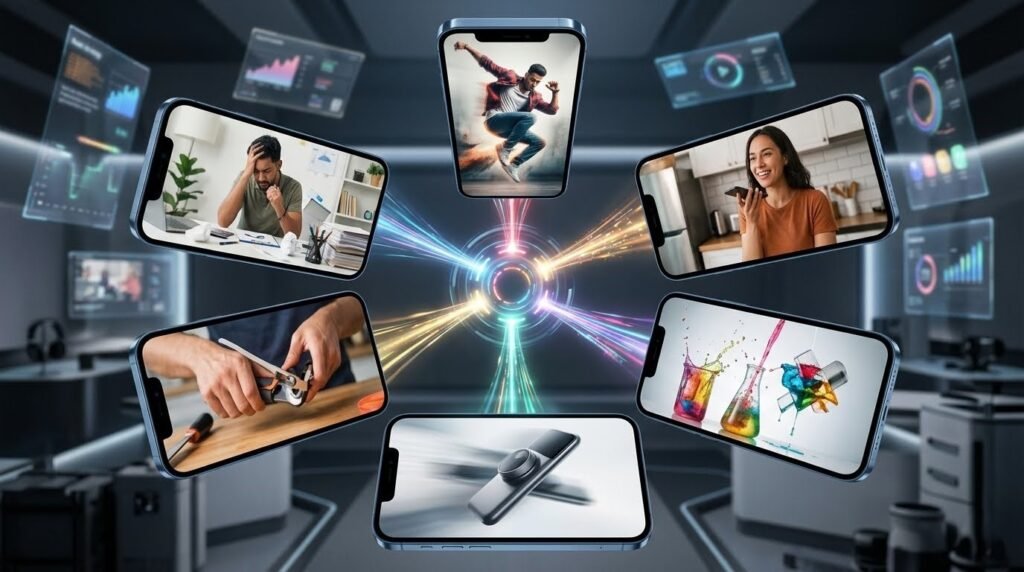
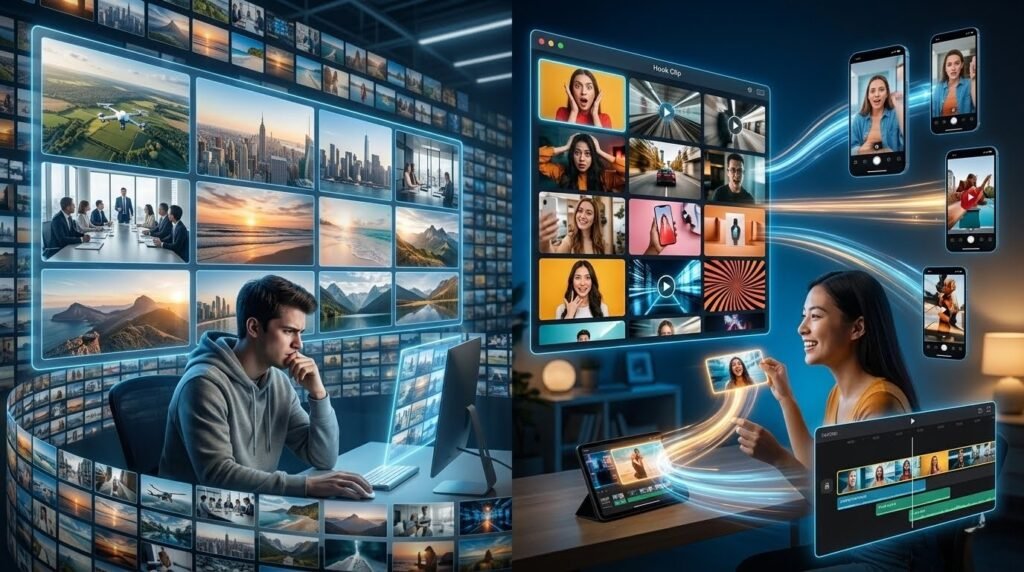
Opening a new project and heading straight to a stock library feels like a reasonable starting point. There’s footage available, it looks professional, and the search bar suggests it covers everything. Drop something cinematic at the front of the video, add the opening line, move on. The retention graph comes back showing the same cliff at the two-second mark as every other video.
The footage wasn’t bad. It just wasn’t doing the job a hook clip needs to do. Stock footage and hook clips look similar in a file browser both are short video clips, both can be drop into a timeline. But they were build for completely different purposes, and using one to do the other’s job produces predictable results.
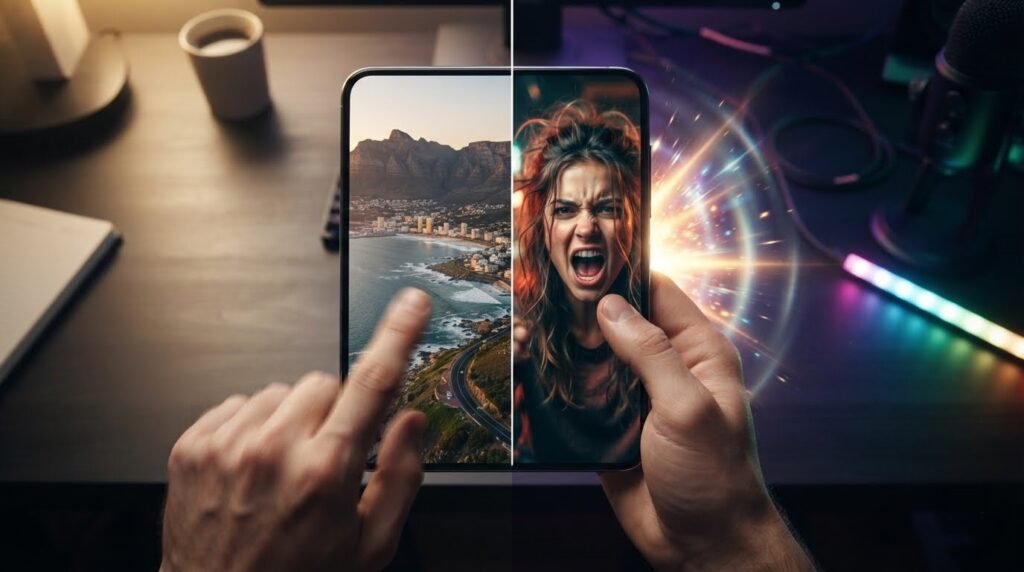
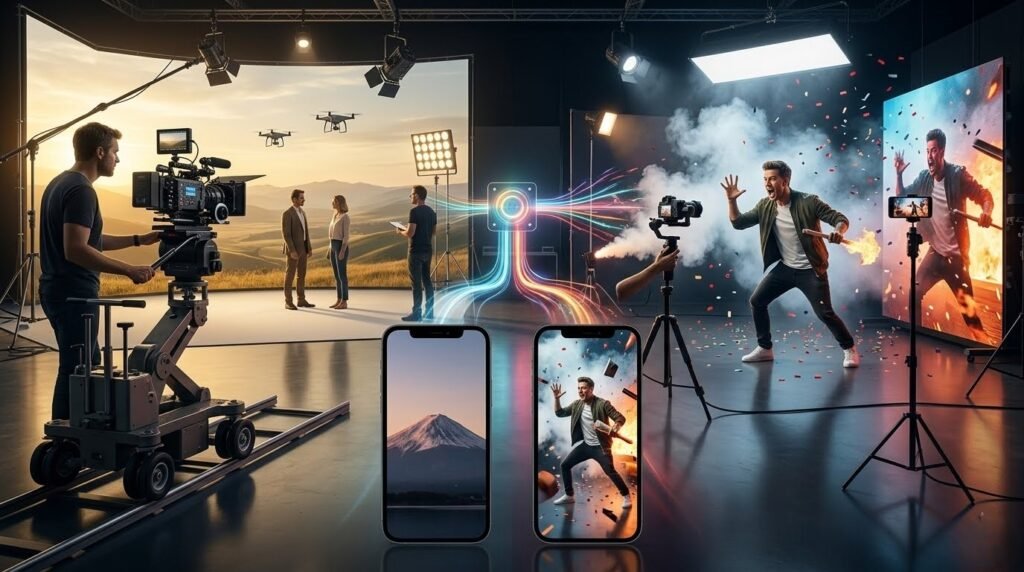
Stock footage was design to sit inside content that’s already earned attention. It illustrates, supports, and adds visual texture to a video someone has already decided to watch. Hook clips were designed to earn attention in the first place to interrupt a passive scroll before any decision to watch has been made.
Why Most Stock Footage Fails in the First Three Seconds
Stock footage is built for patience. Wide establishing shots, slow push-ins, scenic landscapes held for several seconds this footage assumes a viewer already committed to watching. The composition is deliberate. The pacing is consider. The visual quality is often genuinely high.None of that helps when the viewer hasn’t decided to watch yet.
On tiktok, Instagram Reels, and YouTube Shorts, the viewer is mid-scroll when a video starts playing. Their thumb is already in motion. The first frame needs to interrupt that motion before any evaluation happens, not reward a viewer who’s already stopped, but create the stop itself.
Cinematic footage doesn’t create stops. It rewards patience with beauty, which requires the viewer to already be there. A slow pan across a mountain range or a smoothly tracked shot through a coffee shop is visually attractive in the context of a travel documentary. In a short-form feed surrounded by fast-moving content, it reads as slow and slow in that context means skippable before the second frame loads.
Pacing is the core problem. Stock footage typically builds energy over several seconds. Hook clips need maximum energy at frame one. That’s not a style preference, it’s a functional requirement of the environment the clip is place in. A viewer who sees nothing compelling in the first half-second has already started the scroll that ends the view.
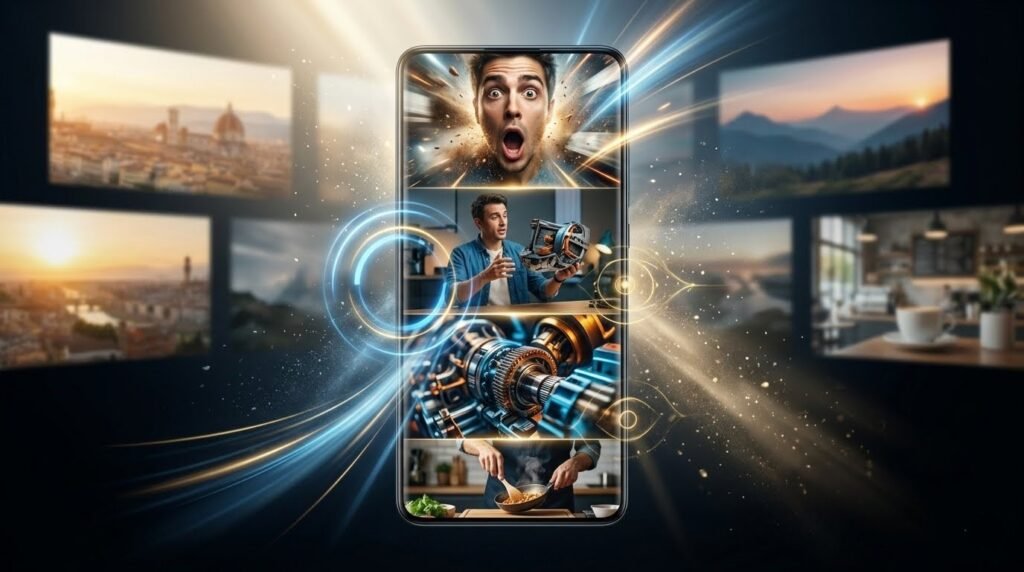
Movement matters more than scenery in a hook transition context. A shaky handheld clip of something ordinary but already in motion holds a short-form audience better than a beautifully composed static shot of something visually impressive. The eye tracks movement involuntarily. Scenery requires a decision to appreciate it. In a two-second window, involuntary beats are deliberate every time.
What Makes a Great Hook Clip Instead?
Hook clips that actually stop the scroll share characteristics. These have stock footage rarely has, not because stock footage is low quality, but because those characteristics weren’t the goal when the footage was shoot.
Fast visual movement at the first frame is the most consistent differentiator. Not movement that builds or develops movement that exists at frame zero. A camera is already pushing in. An action already underway. A transition hook already mid-execution. The motion occupies visual attention before any scroll decision forms.
Pattern interruption is the second characteristic. A hook clip needs to look different from whatever the viewer was scrolling past immediately before it. High contrast between dark and light areas, an unexpected angle, a visual element that doesn’t match the surrounding feed aesthetic these create the involuntary pause that stock footage’s clean, conventional composition typically doesn’t.
Curiosity is the third. High-performing hook transition clips show something partially a result without its cause, a moment mid-situation without context, a visual that raises an obvious question. Stock footage is usually complete as a visual; it shows something fully, clearly, and without ambiguity. That completeness resolves any potential curiosity before it can create pull.
Emotional triggers operate faster than rational evaluation. A clip that produces tension, surprise, or recognition in the first second holds attention through the processing that follows. Stock footage typically produces aesthetic appreciation, which is a slower and cooler response that doesn’t hold a scrolling viewer the same way.
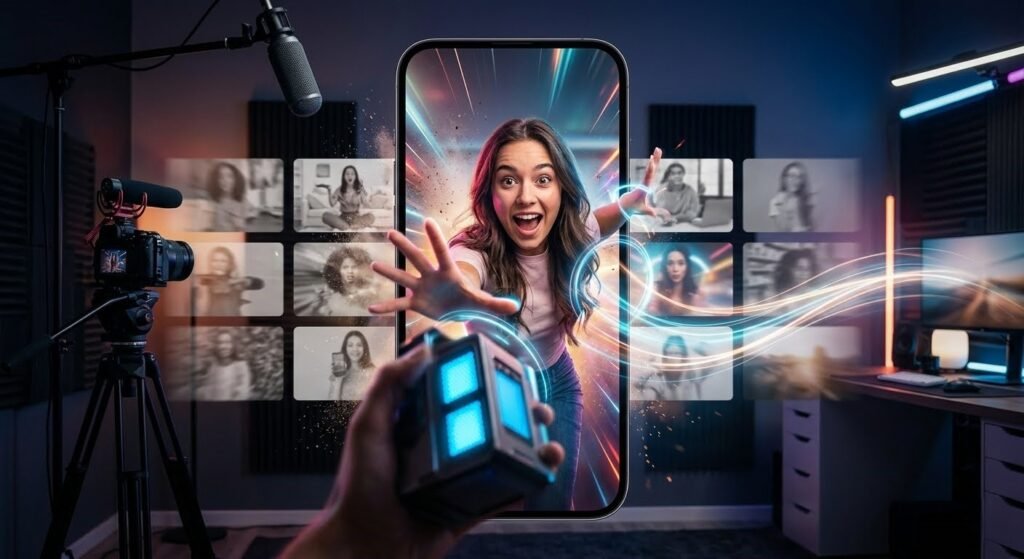
Strong transition potential is the final differentiator. Hook clips that work as short video transitions for ads have a clear peak moment, a specific frame where the visual energy is highest and a cut produces maximum impact. Stock footage often doesn’t have that peak because it wasn’t shot to cut at a specific frame.
Comparing Generic Stock Libraries and Dedicated Hook Libraries
The search experience exposes the difference immediately. Type “hook clip” or “pattern interrupt” into Pexels or Pixabay. The results return generic footage that matches the words in a literal sense without understanding the functional requirement. A search for “suspense” returns moody establishing shots. A search for “fast transition” returns time-lapses. The library is returning what those terms most commonly match across general use.
Clip composition differs at the source level. Stock footage gets shoot for versatility wide, slow, adaptable to multiple contexts across different types of projects. Hook clips get shoot with frame-one energy as the specific goal, which changes camera distance, movement speed, subject positioning, and timing fundamentally. Most stock footage wasn’t build with any of those constraints in mind.
Editing workflow speed reflects the organizational difference. Finding a usable hook clip on a general stock site often takes fifteen to twenty minutes of browsing irrelevant results. A dedicated transition hook library that’s organize by Best Free Stock Video type reduces that to under a minute. Across a full week of content production, that difference adds up to hours.
Licensing clarity is cleaner in dedicate libraries for the same practical reason platforms build specifically for short-form creators address commercial use and ad use explicitly. These are burying terms in language written for broadcast and editorial contexts that most creators never read carefully enough.
HookTransition.com sits in the dedicated library category transitional hooks, UGC-style openers, suspense clips, and video hooks downloaded organized by hook type for short-form vertical content. For creators who’ve spent editing sessions hunting through the best free stock video sites for hooks and coming up with slow cinematic footage that almost works, a library built around this specific use case changes the production experience.
Choosing the Right Hook for Different Types of Content
- TikTok videos benefit most from pattern interrupt and mid-action hooks. The feed moves fast and the algorithm rewards early retention aggressively. Opening mid-motion already inside an action rather than approaching it reduces early drop-off more reliably than any other hook style on this platform.
- Instagram Reels sits between TikTok and YouTube in terms of audience patience, but still rewards fast openings heavily. UGC-style hooks perform particularly well here for ecommerce and product content because the feed includes more brand content than TikTok and authenticity signals cut through that environment effectively.
- YouTube Shorts audiences scroll slightly slower than TikTok but still make fast decisions. Curiosity hooks and reveal hooks showing a result before the process work well here because the platform attracts slightly more intent-driven viewers who respond to implied information payoffs.
- Ecommerce advertisements need movement and authenticity at frame zero. A short video transition for ads before the product appears, even a half-second whip pan, delays the ad identification reflex long enough for the product message to land with a viewer who hasn’t yet activated skeptic mode.
- UGC campaigns need phone-camera energy and direct-to-lens delivery from the first frame. The hook has to read as personal content before the brand message appears. Any clip that looks produced in the opening frame breaks that condition before it’s been established.
- Product demonstrations work well with reveal hooks showing the product mid-use rather than introducing it from a static angle. The action implies the product is worth seeing in use before any claim has been made about it.
- Service promotions benefit from problem-based UGC hooks opening on the frustration the service resolves rather than the service itself. The problem creates identification before the solution creates interest.
Building a Smarter Editing Workflow
Evaluate clips before downloading rather than downloading in bulk and sorting later. Every clip that goes into a library should map to a specific hook category gap, a type of opening that’s underrepresented in the existing collection. Downloading without purpose produces large disorganized folders full of clips that seem interesting but don’t fill a real need.
Organize by hook function immediately at the point of download. A suspense clip goes into the suspense folder. A transitional hook goes into the transitions folder. A UGC reaction clip goes into the UGC folder. This single habit prevents the disorganized accumulation that makes most creators’ asset collections effectively unusable over time.
Test one hook type consistently across multiple videos before switching. Running the same hook style across four or five consecutive videos and comparing early retention produces data that a one-off test can’t. The content topic, posting time, and audience variance all affect individual results isolating the hook as the variable requires repetition.
Replace underperforming hooks based on retention data, not instinct. A Best Free Stock Video that looks impressive in preview but consistently shows a steep early drop-off when used should get tagged and deprioritized regardless of how visually appealing it is. A clip that looks unremarkable in isolation but consistently produces better early retention should get tagged as tested and reliable.
Build the collection incrementally rather than trying to download everything needed upfront. A library that grows by two or three well-chosen clips per week, added deliberately and categorized immediately, becomes more useful than a large bulk download that never gets organized properly.
Review and refresh regularly. Hook clips for viral hooks for TikTok that worked six months ago may have become recognizable as templates, which strips them of the pattern interrupt quality that made them effective. Fresh additions matter more in the pattern interrupt and trending transition categories than in the suspense and curiosity categories, which age more slowly.
Stock Footage and Hook Transition Clips
These clips are not interchangeable, even though they occupy the same file format and sit in similar-looking libraries. Stock footage does its job well when placed inside content a viewer is already watching. Hook clips do a completely different job earning the first few seconds of attention from a viewer who hasn’t committed to watching anything yet.
Treating them as equivalent is why retention graphs keep showing the same early drop-off regardless of how much effort goes into everything after the opening. The opening needs a clip built for that specific purpose: fast, energetic, curiosity-creating, transition-ready, not footage built for general visual support.
Build a library around clips that were made for hooks. Test them against retention data. Replace what doesn’t perform. The opening stops being the weak point in the editing process and starts being the thing that makes everything else get seen.