Watch enough high-performing short-form content across TikTok, Instagram Reels, and YouTube Shorts and a pattern emerges. The creators posting consistently strong retention numbers aren’t reinventing their approach for every video. They’re following a process of specific decisions made in a specific order that produce reliable openings without requiring a fresh creative breakthrough each time.
That process is what separates creators who grow consistently from creators who occasionally go viral but can’t replicate it. Viral moments come from lucky alignment between content, timing, and audience. Consistent growth comes from a system that produces strong openings reliably enough that luck becomes less relevant.
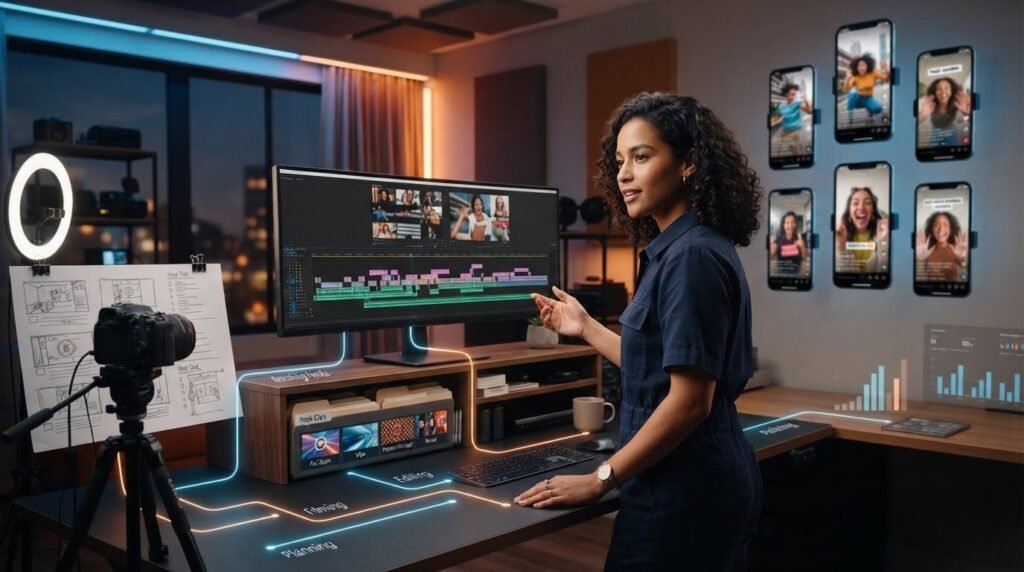
A repeatable transitional hooks system does three things simultaneously. The time savings show up immediately. Hook decisions that use to involve opening three stock sites, downloading six clips, previewing all of them, and still feeling uncertain about the choice that the whole process compresses into pulling the right folder and picking from clips that have already tested. The retention improvement follows from the same source: using something and it creates consistency across content, the kind of recognizable energy that builds audience expectations over time.
Building that system requires understanding why random approaches fail, what the core components are, and how to organize them into a workflow that runs the same way for every new video.
Stop Guessing Every Time You Edit
Most creators approach the hook transition differently every time they edit. Some days it’s a bold claim. It’s a fast cut borrowed from a trending video. Some days it’s whatever seemed interesting when the timeline opened. The results are predictably inconsistent, occasionally strong, frequently forgettable, with no clear understanding of what the difference was.
The hidden cost isn’t just inconsistent retention. It’s time. A creator who searches for a new hook approach for every video spends fifteen to twenty minutes per video on that search alone. Across five videos a week, that’s nearly two hours weekly on decisions that a system could reduce to minutes.
Inconsistent workflows also produce inconsistent data. Testing different hook styles, content lengths, captions, and audio across every video makes it impossible to isolate what’s actually affecting retention. Everything changes simultaneously and nothing gets learned. A repeatable system holds all other variables steady, which makes hook transition testing produce actual signal rather than noise.
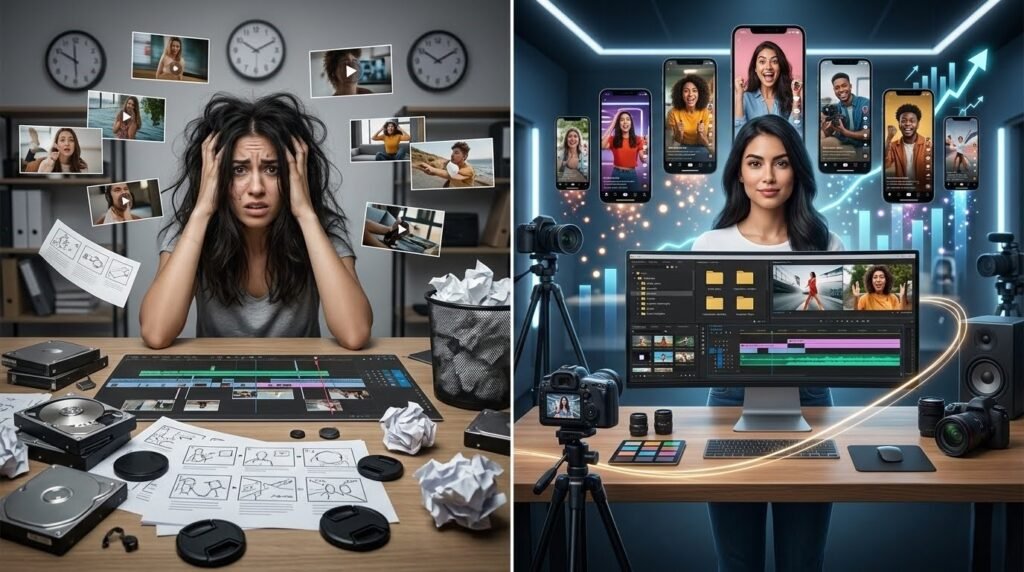
Inspiration produces a hook that seemed good at the time. A system produces a hook that’s work before and has the retention data to show it. Those aren’t the same thing and the difference shows up in the analytics every time. A creator who’s run the same hook style across multiple videos and tracked what happened each time isn’t guessing they’re applying something they already know works for their specific audience. The system accumulates evidence. Inspiration accumulates feelings.
Audience retention improves with system consistency for a less obvious reason too. When an account’s openings maintain a consistent energy and pace across videos, returning viewers develop expectations that the content meets. That expectation is itself a retention mechanism the viewer leans in before the hook has finished because experience tells them it’s worth leaning in for.
The Core Components of a Repeatable Hook System
Transitional hooks are the mechanical backbone of any repeatable opening system. A whip pan or a fast cut landing right at the peak of the opening moment does something a static hook can’t; it keeps the video physically moving through the moment where most exits happen. The viewer doesn’t get a natural pause to reconsider. The transition closes that gap. And it doesn’t compete with the verbal or visual hook, it just adds a layer of motion underneath it so both elements are working at the same time rather than sequentially.
Pattern interrupt openers work as a universal scroll-stopping tool across almost any content type. A jarring audio cut, a visual that breaks the expected feed aesthetic, a color shift creates involuntary attention before any category evaluation occurs. Keep a rotating selection of pattern interrupt clips in the library specifically because familiarity erodes their effectiveness over time.
UGC video hook clips serve a specific function in the system; they establish authenticity before brand messages appear. Phone camera energy, natural light, direct-to-lens delivery. These belong in a separate library category from motion-based clips because they serve a different viewer psychology and a different content category.
Motion-based openings, fast pans, handheld pushes, rapid camera moves communicate energy before any content is delivered. Motion-based openers suit content where pace is part of the point fitness videos, lifestyle content, product reveals where the energy of the clip signals that the video itself is going to move. Suspense is a different tool for a different job.

Business and finance content, self-improvement material, anything where the viewer needs a reason to care before the information lands suspense creates that reason by implying something is at stake before explaining what it is. Keeping these separate from general motion clips they require specific sourcing and licensing care since dramatic footage is frequently pulled from copyrighted material.
Fast zoom transitions function as an add-on layer rather than standalone hooks. They amplify the peak moment of whatever hook type they’re pair with. Keep them in a transitions subfolder rather than a primary hook transition category.
Text-first hooks work for sound-off viewing environments. A single bold line hitting the screen before any spoken audio reaches muted autoplay viewers immediately. Keep a set of text animation styles consistent so the visual language stays recognizable across content.
Planning the Hook Before Recording
The most expensive hook mistake happens before the timeline opens. Filming the full video, editing it together, then trying to figure out what the opening should be, this sequence produces hooks that feel retrofitted because they are. The content was design without an opening in mind and now needs one attached.
Flipping the sequence changes the result. Decide on the hook transition type before scripting anything. The hook clip and the content after it need to feel like they belong to the same video. A suspense clip that opens on tension and then cuts to casual, upbeat delivery breaks whatever the opening built the viewer expected the stakes to continue and found something that dropped them. UGC is the same problem in a different direction: open on authentic phone-camera energy and then shift to anything that feels produced or scripted, and the authenticity signal the whole format depended on disappears. Planning the hook first means the content gets build to support it.
Match the hook to the video’s goal before filming. An educational video needs a curiosity hook that creates a question the lesson answers. A product demonstration needs a reveal transition hook that creates desire before the product appears. A service promotion needs a problem-first hook that creates identification before the solution appears. The goal determines the hook type; the hook type determines how the content gets filmed.
Camera movement planning reduces editing time significantly. A video filmed with the hook transition in mind knowing a zoom or a whip pan will land at a specific moment has the movement built into the footage. A video filmed without that planning requires the movement to be created in post, which takes longer and usually looks less natural.
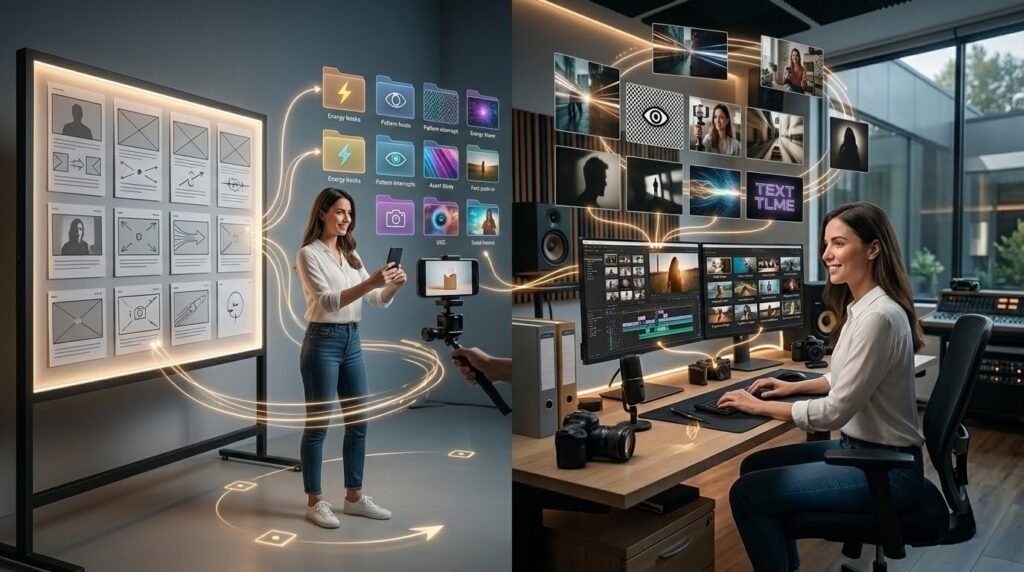
Recording with editing in mind applies specifically to the opening five seconds. Film the transition hook moment deliberately, the reaction, the result, the mid-action drop-in as a separate take if necessary. The hook footage and the main content footage don’t have to come from the same continuous recording.
Creating a Reusable Hook Library
Folder organization is the difference between a library and a pile. Top-level folders by hook type: transitional hooks, pattern interrupts, UGC-style clips, suspense hooks, reveal hooks, text animations. Inside each type folder, organised by energy level high energy clips at the top, slower builds below. This structure means the first decision what type of hook does this video need immediately narrows the search to the right folder.
Naming conventions prevent the duplicate and lost-asset problems that make most creators’ downloads folders unusable over time. Name files by type, energy level, and source. Something like “transition-whipan-high-HT-01” takes five seconds to read and tells everything needed about the clip without opening it. Default file names like “clip-0047” say nothing and slow down every future session.
Performance tags add the most valuable layer, the one that turns a general asset collection into a tested library. Tag clips that produced measurably better early retention with the content type and approximate improvement. An untagged clip that looks good in preview is just a guess. A clip with a note attached what content type it was used in, roughly what the retention looked like, which platform it was formatted for is a decision with a track record behind it.
That distinction gets more valuable the longer the library exists. One other thing worth building into the folder structure from the start: platform differences. A clip that works at the TikTok safe zone might have the key visual element cropped out on Reels because the UI overlays sit differently.A clip formatted and tested for TikTok might need cropping adjustments for Reels. Keeping platform-specific versions in subfolders removes that check from the publishing workflow.
Editing templates saves the hook placement work. Capcut templates remove the setup work from every subsequent session. Build the transition hook clip into the timeline once position it, time the transition, set up the text layer and save that as a starting point. The next video that uses the same hook style opens on a timeline that’s already partially built rather than blank. Three videos batched from the same template in one afternoon is a realistic production pace. Three videos built individually from scratch in the same afternoon usually aren’t, because the setup time alone eats into the editing time before any real work has started.
HookTransition.com organizes its library of transitional hooks examples and hook video clips free from general stock complications by hook type rather than subject matter, a practical starting point for creators building a library who need pre-categorized, copyright-safe assets rather than general footage that requires evaluation before use.
Testing and Improving Your Hook System
Testing hooks produces useful data only when one variable changes at a time. Keep the main content identical and change only the opening across two versions. Post both and compare two specific numbers: the two-second view rate and the percentage of viewers past the ten-second mark. Those two numbers tell whether the hook created the opening engagement and whether it carried momentum into the content.
Measuring audience retention requires patience. Check retention data at least forty-eight hours after posting. Retention curves from the first two hours reflect too small a sample to produce reliable conclusions. A video that looked like it underperformed at hour two often shows a different retention profile at hour forty-eight when more viewers have seen it.
Replacing weak hooks doesn’t mean deleting them. Archive hook clips that consistently showed steep early drop-off rather than removing them entirely. A hook that underperforms with one audience or content type sometimes works well with another. Label the underperforming clip clearly noting the content type and the result so the library captures the negative data as well as the positive.
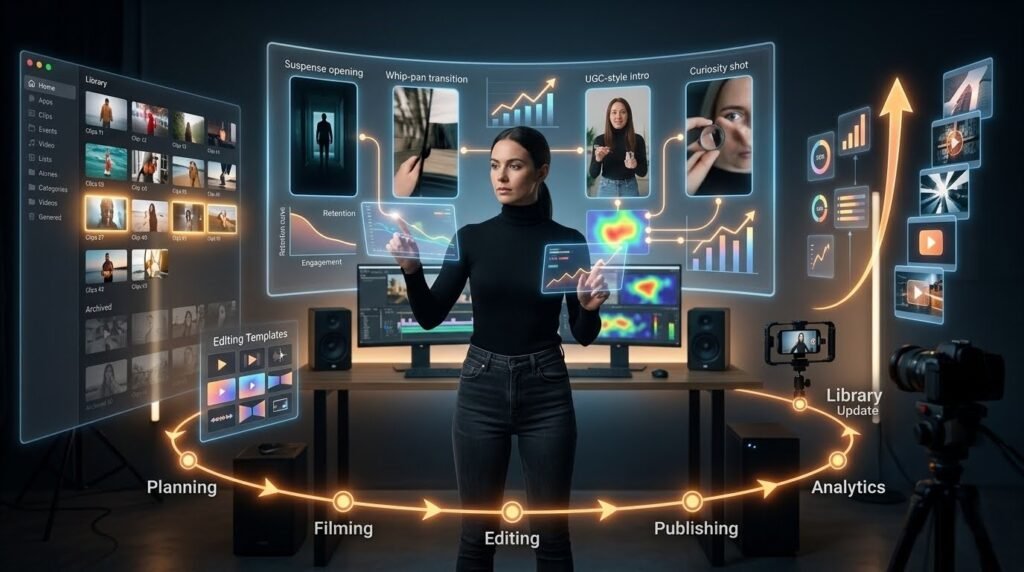
Tracking winning formats across tests builds a creator-specific picture of what works for a specific audience. A finance creator might discover that curiosity hooks consistently outperform pattern interrupts for their audience. A beauty creator might find UGC-style openers hold twice as well as motion-based clips for their product content. That creator-specific data is more valuable than general hook advice because it reflects actual audience behavior rather than theoretical effectiveness.
Building a feedback loop means treating each published video as the first input in the next video’s decision. The retention graph from today’s post shapes the hook selection for the next one. Over time, the library gets smaller not in total clips, but in the number of clips that actually get used because the high performers get selected consistently and the underperformers stop competing for selection.
Build Once, Improve Forever
A repeatable transitional hooks system doesn’t require rebuilding. It requires adding tested clips, removing outdated ones, updating templates when platform formats change, and keeping the performance data current.
Every video run through the system generates information that makes the next video better. The retention graph from today’s post tells something specific about what opened well or failed to hold. That information belongs in the library, not in an analytics dashboard nobody revisits.
Creators who build this system and maintain it consistently reach a point where the opening decision takes minutes and the hook performs reliably without requiring a new creative insight every time. That’s the compound return on the initial setup investment every future video benefits from the work done building the library that preceded it.


