Most creators approach every new video the same way. Film the content, edit it together, figure out the opening last. The opening becomes whatever feels right in the moment, sometimes a bold line, sometimes a question, sometimes just starting where the footage started. Then the retention graph comes back showing a cliff at the two-second mark and the whole cycle starts over with the next video.
The creators who consistently stop the scroll aren’t finding the right opening by instinct. They’re following a repeatable process of specific decisions made in a specific order that reliably produce openings strong enough to interrupt passive scrolling before any deliberate viewing decision has formed.
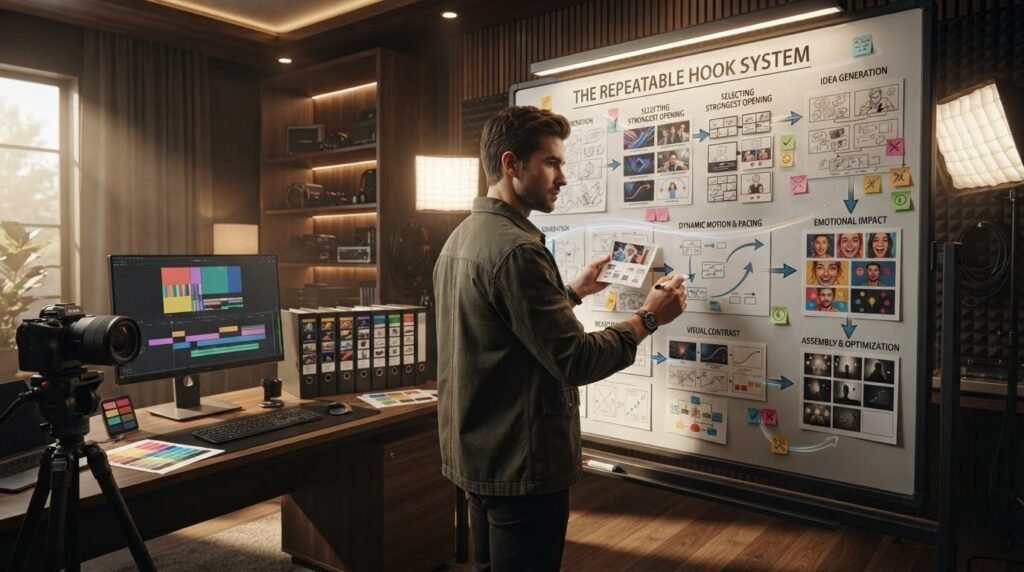
That process isn’t complicated. It requires understanding what the opening actually needs to do, which elements create the stop, and how to build those elements into every video rather than hoping they appear naturally. Short-form content rewards consistency more than brilliance. A creator with a reliable opening system publishes better content faster than a creator relying on inspiration. This guide builds that system from the ground up.
Why the First Three Seconds Decide Everything
Scrolling on TikTok, Instagram Reels, and YouTube Shorts runs mostly on automatic behavior. The thumb moves through content in a rhythm that doesn’t pause for evaluation, it pauses for interruption. Something has to break the rhythm before any deliberate viewing choice occurs.
That break has to happen in the first two to three seconds. After that window, the scroll momentum has already carried the viewer past the video. The content that follows regardless of quality never gets seen.
Watch time and audience retention trace directly back to this window. TikTok measures two-second view rates and completion rates as primary distribution signals. Reels track early engagement to determine reach. YouTube Shorts uses retention data to decide which videos the algorithm surfaces to new audiences. All three platforms reward content that holds viewers from the opening. All three penalize content that loses them there.
The relationship between the opening and watch time isn’t linear. A video that holds eighty percent of viewers through the first five seconds has a fundamentally different retention profile than a video that drops to forty percent in the same window even if both videos deliver identical content from second six onward. The opening sets the retention ceiling that the rest of the video works within.
Algorithms respond to retention signals in the first minutes after posting. A strong opening that produces high early retention in that initial window triggers distribution before the video has enough total views to demonstrate quality through other metrics. The opening is the first thing the algorithm measures and the fastest thing it responds to.
The Five Building Blocks of a Scroll-Stopping Opening
A powerful first frame creates the stop. Whatever appears at frame zero carries the entire weight of interrupting the scroll before any other element has had a chance to contribute. High contrast, an expressive face, an action already underway, or a visual that doesn’t match surrounding content any of these creates the involuntary visual attention that the first frame needs to produce.
Immediate movement converts the stop into continued attention. The eye tracks motion automatically. A video already in motion when the viewer’s eye lands on it occupies visual attention before any decision to watch has formed. Static first frames require the viewer to choose to look. Moving the first frames doesn’t give that choice.
Curiosity-driven messaging creates the forward pull that keeps viewers past the first second. A result without its context. A statement that implies stakes without explaining them. A question the content obviously answers. The message doesn’t need to be clever, it needs to leave something unresolved that watching resolves.
Clean transitions maintain momentum through the opening window. A whip pan, a fast cut, a zoom landing on the first beat of audio, these transitional hooks carry energy from the hook clip into the main content without creating a natural exit point. The transition is the bridge that keeps motion continuous through the most vulnerable part of the video.
Fast value delivery confirms the implicit promise the hook made. Within the first ten seconds, the viewer should receive some information, entertainment, recognition, or evidence that the payoff exists. Fast value delivery is what converts a viewer who stopped scrolling into a viewer who stays through completion.
Every successful stop the scroll video opening combines all five. Remove any one and the remaining four work harder to compensate.
Choosing the Right Hook for Your Content
Educational content needs curiosity hooks that lead with the implication before the explanation. A finance creator opening on their most surprising metric a number, a result, a counterintuitive outcome creates a question the lesson answers. The lesson becomes the payoff rather than the subject. Mistake to avoid: opening with context before creating the desire to understand the context.
Product demonstrations work best with reveal hooks the product mid-use at frame one rather than a static product introduction. The action implies the product is worth watching before any claim has been made. Editing tip: find the single most visually impressive moment in the product’s use and open it. Pull back to establish context after the hook has created interest.
UGC videos need authenticity from the first frame. Phone camera energy, natural light, direct-to-lens delivery these signals establish personal content before any brand message appears. Opening on a reaction or a problem-first moment works better than opening on a product. Mistake to avoid: any production signal in the opening second that breaks the personal content categorization.
Ecommerce advertisements need movement and pattern interruption before the product appears. A short video transition for ads at frame zero delays ad identification long enough for the product message to reach a viewer who hasn’t activated skeptic mode. Editing tip: even a half-second transitional clip before the main creative starts measurably improves thumb-stop rates.
Storytelling content needs emotional recognition to hook a moment or feeling the viewer has experienced, shown or described before any narrative context arrives. The identification happens before the story is understood. Mistake to avoid: high-energy transitional hooks that create tonal mismatch with reflective content.
Business tips work with suspense when the tip involves a mistake or counterintuitive approach, and with curiosity hooks when the tip is straightforwardly valuable. The opening should match the emotional register of the information being delivered.
Service promotions work best with problem-first hooks. The frustration the service resolves creates identification before the service is introduced. The problem earns the right for the solution to appear.
Editing Techniques That Increase Early Retention
Transitional hooks are the mechanical layer that makes every other hook type stronger. A fast cut or zoom landing right at the peak of the opening moment pairs visual momentum with the hook’s curiosity or tension. The combined effect holds better than either element alone. Time the transition to the highest-energy frame in the hook clip, the grip tightest, the expression most intense, the action at its peak.
Jump cuts in the opening create novelty through discontinuity. Each cut re-engages active attention. Two or three cuts in the first three seconds maintain the active processing state without tipping into chaos. Keep each cut between different angles or slightly different framings rather than identical shots the visual change is what produces the re-engagement effect.
Motion blur on fast camera movements signals speed and energy without creating disorientation. A whip pan with natural motion blur feels kinetic. A whip pan without it feels mechanical. Most editing software applies this automatically at high shutter speeds to check that it’s enabled rather than removed in post.
Speed ramps ramping from slow motion to normal speed within the hook create a specific kind of visual surprise that pattern interrupt videos use effectively. The speed change itself is the interrupt. Use it on the most visually compelling moment in the opening clip.
Zoom effects land hardest when synchronized to audio. A zoom hitting on a beat, a spoken emphasis, or a sound cue pairs the visual trigger with an audio trigger simultaneously. The combined sensory interruption is harder to scroll past than either element alone.
Caption timing influences attention through the gap between visual and text. Captions that appear slightly after the spoken word keep the brain actively processing rather than passively receiving. Use captions in the hook section specifically they extend engagement across sound-off viewers who represent a significant portion of first impressions.
Audio synchronization across the full opening section cuts landing on beats, sound design matching visual transitions creates a coherent sensory experience that feels produced without looking produced.
A Repeatable Workflow for Every New Video
Plan the opening before filming anything else. Decide which hook style fits the content, which hook clip or opening moment creates the strongest first frame, and where the transitional cut lands. Planning the opening first means the content gets filmed to support it rather than the opening getting retrofitted onto content that wasn’t designed for it.
Select the hook clip before writing the script. A suspense clip sets an emotional register that the first spoken line should match. A pattern interrupt sets an energy level that the content needs to maintain. The clip choice shapes the content choices that follow.
Edit the opening first, separately from the main content. Get the first three seconds working before touching anything else. A clean opening that doesn’t yet connect to finished content is still more useful than a finished video with an opening that needs fixing because the opening is what determines whether anyone sees the finished content.
Test multiple openings on the same content when possible. Run two versions with different hook styles and compare retention curves at the two and five-second marks. Four or five tests across similar content builds enough data to identify which hook styles work for a specific audience rather than which hooks work theoretically.
Measure specifically. Two numbers matter: where the retention curve drops most steeply in the first five seconds, and what percentage of viewers make it past the ten-second mark. Everything else in the analytics matters less for evaluating hook performance.
Save high-performing hook clips immediately after confirming the retention data. Label by hook type and content category. HookTransition.com provides a starting library of transitional hooks, hook video clips free from licensing complications, and pattern interrupt openers organized by type useful when the personal library doesn’t yet have the right clip for a specific content need.

Review the library and refresh regularly. Hook clips for viral hooks on TikTok that produced strong results three months ago may have become recognizable patterns to returning viewers. Fresh additions maintain the interrupt effect that familiarity erodes.
Chasing Trends
Chasing trends produces inconsistent content. A new editing style, a new audio format, a new hook structure that went viral on someone else’s account these work when they happen to fit the content, the audience, and the moment. They fail when they don’t, and there’s no system for knowing which situation applies before the video is already published.
A repeatable opening system produces consistent content. The same process applied to every video planning the opening first, selecting the right hook style for the content type, applying clean transitions, testing against retention data produces openings that reliably stop the scroll without requiring a new creative insight for every video.
Master the opening. Build the workflow around it. Every video gets a fairer chance when the first three seconds consistently earn the next thirty.


