Ran into a video last year that stopped me cold. Didn’t know the creator. Had no interest in the topic. The thumbnail was nothing special. But the first frame showed something that looked like it had already gone wrong hands on a desk, a laptop half-closed, an expression I couldn’t fully read and I watched the whole thing before I registered.
That’s the part most hook advice skips. Most hook advice is built around the script. Get the line right, get the claim right, nail the opening question. Spent a long time believing that too and retention graphs kept showing the same cliff at the two-second mark regardless of how much work went into the words. Turns out the suspense hook video clips was doing something the script couldn’t see. The frame was raising questions before the voiceover had a chance to.
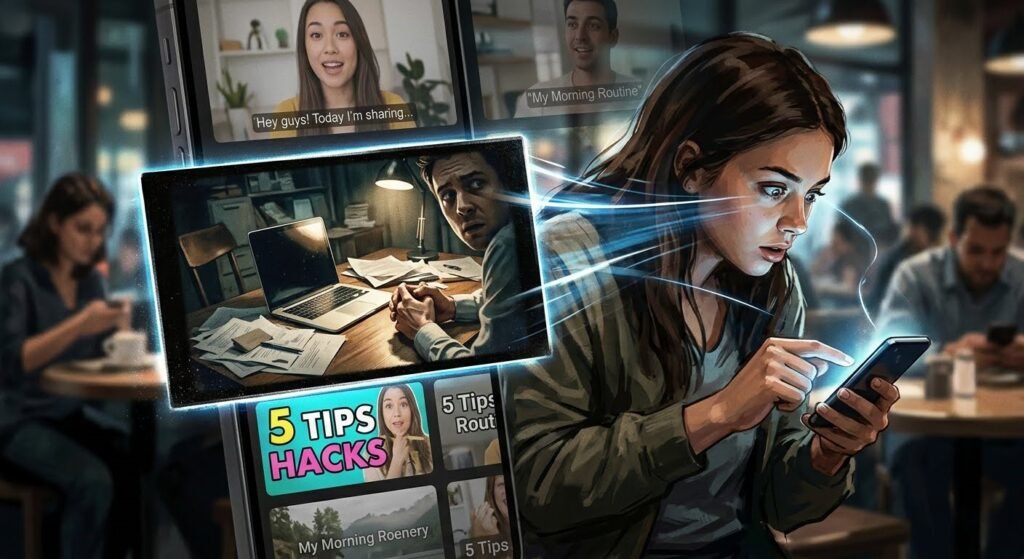
Suspense hook video clips work specifically in that window. Before language processes. Before any evaluation of the creator’s credibility or the topic’s relevance. The visual does something to the viewer’s attention that a well-crafted opening line by itself, on a static frame usually can’t.
Most creators spend a lot of time getting the words right. That matters. But for the first two seconds, the visual is doing more work than the script.
Why Curiosity Is Stronger Than Most Creators Realize
Most short-form content advice focuses on what to say in the opening. What line to deliver, what claim to make, what question to ask. The assumption is that the right words create the right reaction.Watch someone else scroll TikTok and pay attention to what actually makes their thumb stop. It’s almost never a line they read or a claim they heard. It’s usually a visual that didn’t make complete sense yet something slightly off, something mid-situation, something that registered before any words did. The verbal hook gets evaluated after the stop happens. The visual is what causes the stop.
Which is why suspense hook video clips perform with cold audiences. A viewer who has never seen your account, has no reason to trust you, and has infinite alternatives one swipe away will still pause on a video that opens with something unresolved. Not because of you. Because of the open loop. Humans have a compulsive relationship with incompleteness that no amount of exposure to short-form content has dulled.
What Are Suspense Hook Video Clips?
Think about the last video that stopped your scroll when you had no prior reason to care about it.
Chances are something in the opening frame implied a situation that hadn’t been explained yet. Not a confusing image something legible enough to register but incomplete enough that walking past it felt wrong. A result sitting there without its backstory. A reaction to something off-camera. A moment that’s clearly mid-something without showing what the something is.
That’s the basic shape of a suspense hook clip. Usually short a second or two, sometimes three and the whole point is that it raises a question before any content gets delivered. Not a spoken question, not a text overlay asking something. Just a visual that implies more than it shows.
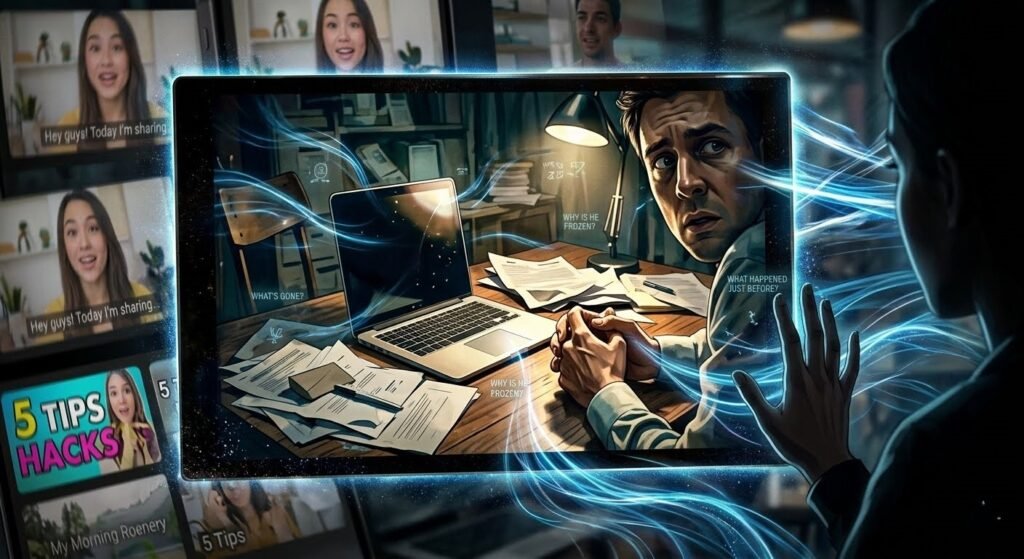
Where creators get this confused is treating these clips like b-roll. B-roll sits behind content that’s already been introduced. A suspense clip goes in front of everything it’s the reason a viewer stays long enough to hear the first line. The distinction matters because a clip that works as b-roll almost never works as a hook. It’s too explanatory, too clearly illustrating something rather than implying it.
Add a fast transition on top, a zoom landing at the highest tension point in the clip, a hard cut right where the visual is most unresolved and the viewer is tracking motion and processing an open question at the same time. Both things happening simultaneously is harder to walk away from than either one alone.
Why Suspense Works Across Almost Every Niche
The assumption a lot of creators make is that suspense is a genre thing. It works for thriller content, drama, exposé-style videos not for, say, a skincare tutorial or a finance explainer. That assumption is wrong and it costs people views.
A beauty creator opening on an extreme close-up of a skin condition before and during treatment, no caption doesn’t need to be making horror content for that visual to create curiosity. A finance creator opening on a screenshot of a number that’s clearly significant but unidentifiable at first glance creates the same pull regardless of whether the viewer cares about finance. A fitness creator opening on a moment of visible physical failure, a lift going wrong, a form breakdown stops scrolls even for people who have never touched a barbell.
The Psychology Behind Suspense and Viewer Retention
There’s a reason it’s hard to walk away from a half-told story. Something unfinished sits differently than something complete not in a dramatic way, just enough that leaving feels slightly wrong. Creators who build their openers around that feeling deliberately a visual that hasn’t resolved itself, a moment caught mid-situation are using something that works before the viewer has decided to engage. The discomfort of incompleteness does the work first. In the context of a short video, dismissing it requires actively choosing to leave. Resolving it requires watching.
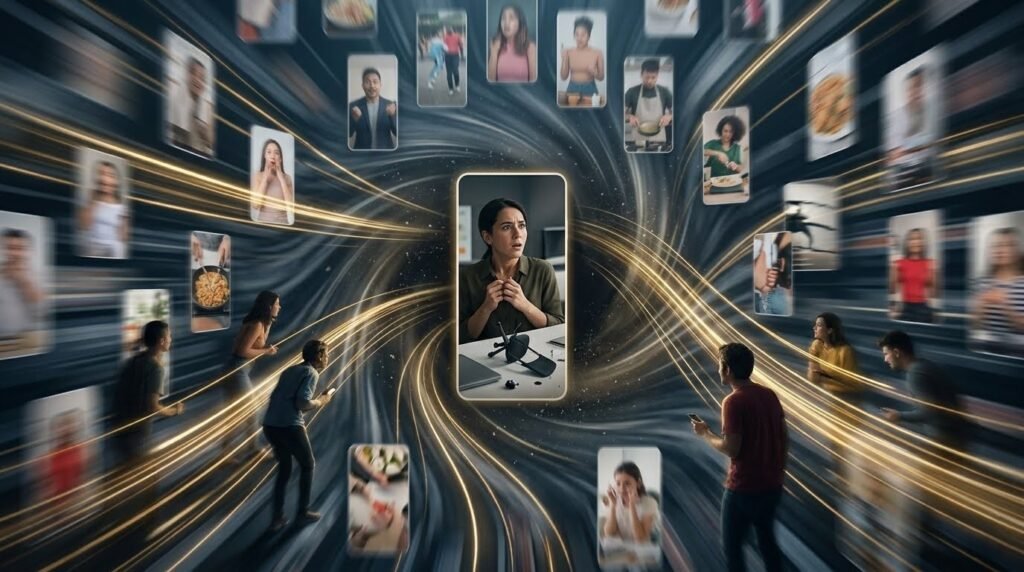
Most viewers don’t make a conscious choice to scroll. The thumb moves automatically. But watching actually staying with a video requires breaking that automatic behavior. Suspense hook video clips create exactly the condition that breaks it. The open loop from the first second is enough to interrupt the automatic scroll and hold attention until the content takes over.
The other piece is that suspense compounds as the video continues. An opening that implies something bad happened keeps the viewer watching to find out what. A reveal hook that shows a result without context keeps the viewer watching to find out how.
How Suspense Hooks Stop the Scroll
The stop the scroll moment on a suspense hook is almost always visual before it’s verbal. Something in the frame looks wrong. Or incomplete. Or like it’s happened right before something important.
A dark, tense visual on an otherwise colorful feed stands out before any conscious evaluation. A close-up that’s too close to fully understand hands doing something, a face mid-expression, a screen with numbers just out of legible range creates a pull that a clearly composed, well-lit talking head never will. The visual incompleteness triggers the need to understand, and understanding requires watching.
Pair that visual with an audio element that adds to the tension, silence, a low audio sting, ambient sound that implies a location without explaining it and the stop is nearly guaranteed. Motion on top of that, a fast cut or a push-in landing right at the tension peak, and the viewer is tracking movement and processing suspense simultaneously.
Different Types of Suspense Hook Video Clips
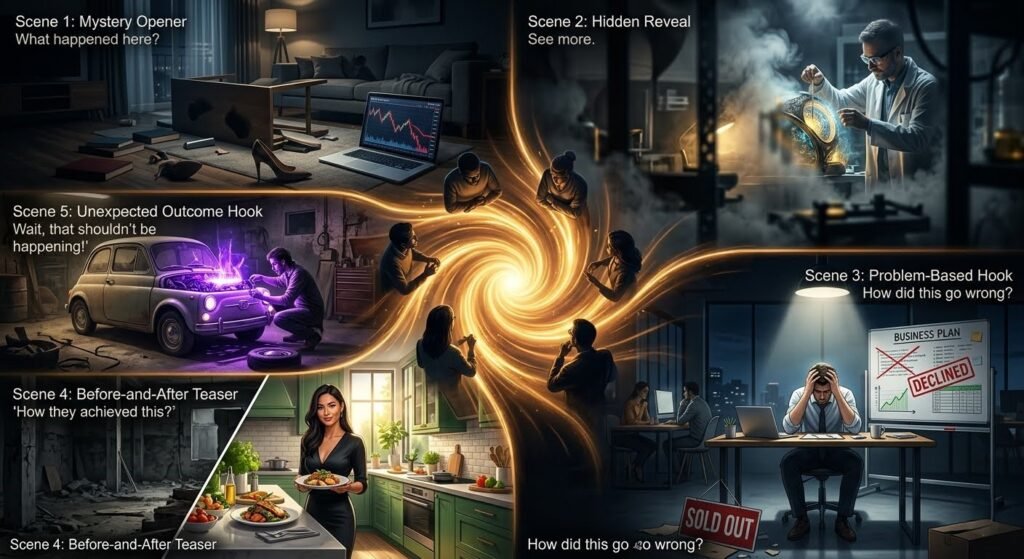
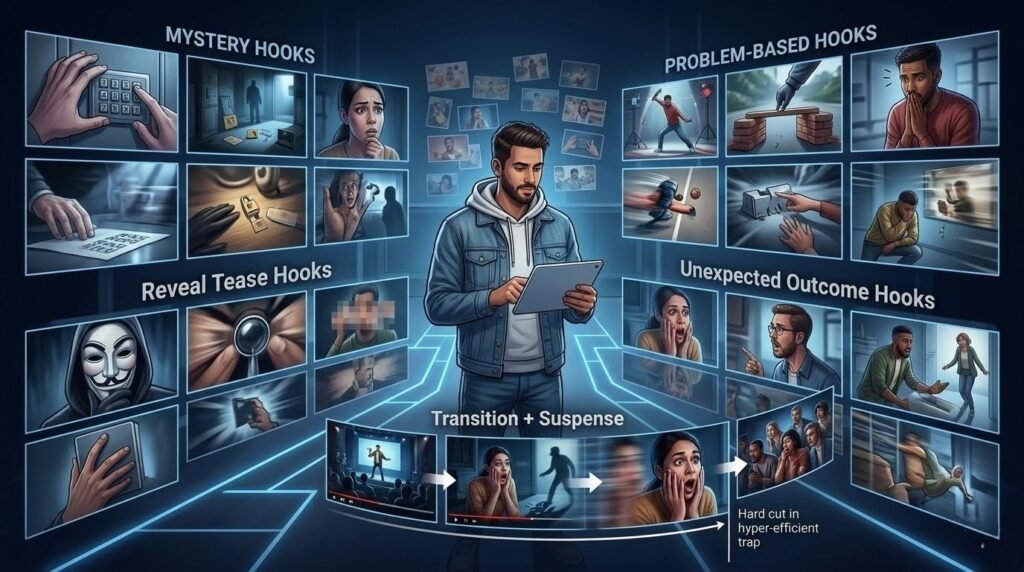
- Mystery Openers: These open in the middle of something that’s clearly already happened. Evidence without the crime. A result sitting there without the event that caused it. A fitness creator cuts in on a gym bag on the floor, equipment scattered, nothing explained. A marketing creator opens on a laptop screen with a graph direction obvious, scale not. The viewer’s mind immediately starts filling in what happened, and filling in means staying to check.
- Hidden Reveals: Something partially visible. Cropped at the edge of the frame. Blurred in the center of an otherwise sharp image. A product that’s almost identifiable but not quite. A before photo where the key detail is obscure. The visual promises there’s something worth seeing and withholds enough to make waiting feel worth it. These work particularly well in beauty, product, and transformation content in any niche where a result exists and can be partially shown. The partial show is more powerful than the full reveal because the full reveal ends the curiosity.
- Problem-Based Hooks: Open on the problem without naming it. A skin texture shot. A screenshot of a number in the red. A form breakdown mid-exercise. A comment thread going wrong. The viewer identifies the problem from the visual before any explanation arrives, which makes the explanation feel like something they sought out rather than something being delivered to them.
- Before-and-After Teasers: Jump to the after. No before, no process, no context, just the result sitting there immediately. A fitness transformation. A room renovation. A business metric that changed dramatically. A skill at a level that implies significant work happened somewhere.
- Unexpected Outcome Hooks: Open on an outcome that doesn’t match expectations. A video about a failure that led to something good. A strategy that shouldn’t have worked, shown working. A result that contradicts the common approach in a niche. Gaming creators use this constantly opening on a win condition that looks impossible before the video explains how it happened.
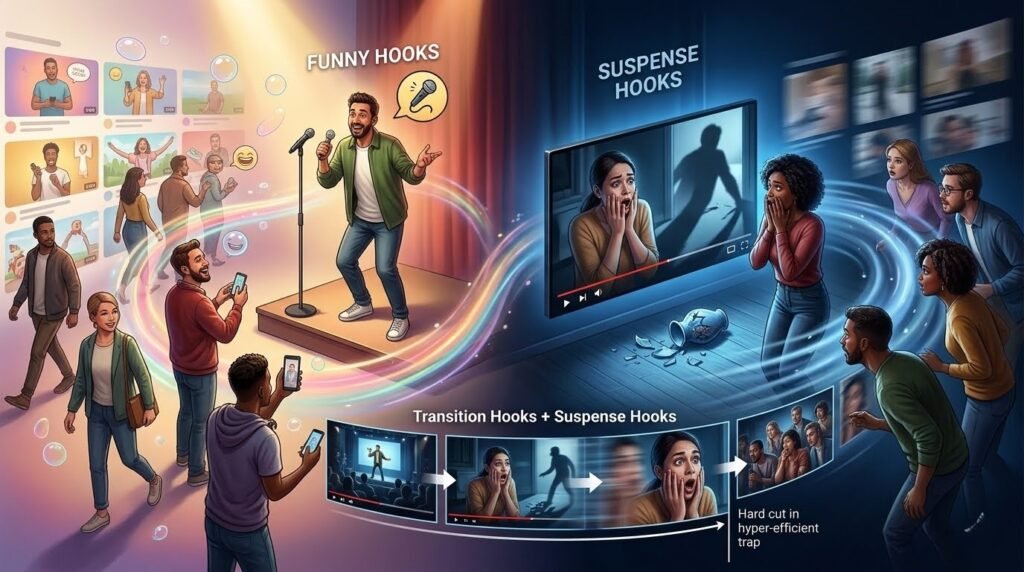
Suspense Hooks vs Funny Hooks: Which Performs Better?
Funny hooks are genuinely harder to pull off than suspense hooks and I think creators underestimate that gap.
Comedy needs the viewer to meet it halfway. The timing has to land right, the viewer has to be in a headspace where laughing is a natural response, and there has to be enough shared context for the joke to make sense on first viewing. For a creator with an established audience people who already know the personality, except the humor, are warmed up before the video starts. Funny hooks work well. Often really well.
But most TikTok reach isn’t a warm audience. Cold traffic is the hard test for comedy hooks. Someone who’s never seen the account before, half-paying attention, with no particular reason to stop getting a laugh out of that person, requires the joke to land perfectly on someone who wasn’t expecting it and didn’t ask for it. That’s a narrow target.
How to Combine Suspense Hooks With Transitional Hooks
Suspense provides the content of the hook, the unresolved situation, the tension, the curiosity gap. Transitional hooks provide the mechanics, the movement, the cut, the visual energy that makes leaving feel wrong. Together they produce something neither creates alone.
A suspense clip that sits static on a tense visual creates curiosity. Add a fast zoom that lands right at the peak of that tension, pair it with a hard cut to the first line of spoken content, and the viewer is tracking motion and processing suspense at the same time. Two simultaneous reasons to stay rather than one.
Examples of Suspense Hooks for TikTok, Reels, and Shorts
- Business: Opens on a laptop screen showing a spreadsheet, one cell highlighted in red, no context given. Creator cuts in mid-sentence: “…and that number meant we had three weeks of runway left.” Stakes are immediately clear. The viewer needs to know what happened next.
- Fitness: Close-up of a hand releasing a barbell mid-rep. The weight is dropping. No caption. Cut to the creator: “The form mistake I’d been making for two years.” The failure is shown before the explanation. Curiosity creates retention.
- Beauty: Extreme close-up of skin texture dry, uneven, clearly before a change. No product shown. Text overlay: “Day one.” Nothing else. The viewer stays for the after.
- Finance: Screenshot of a bank balance, cropped so the full number isn’t visible, but clearly either very high or very low given the digits shown. Creator cuts in: “Six months ago this was the opposite.” The implied reversal is the hook.
- Self-improvement: Creator visible from behind, sitting still in an empty room. Long pause. Then: “The day I stopped doing everything I’d been told to do.” The stillness is the tension. The context arrives with the line.
Mistakes That Kill Suspense Too Early
Explaining the suspense immediately. If the opening clip shows something tense and the first line of dialogue immediately explains what it is and why it happened, the open loop closes before it can do any work. Let the tension breathe for at least a few seconds before the resolution arrives. Opening tense and then pivoting to a completely different energy. A dark, high-stakes opening followed immediately by casual, upbeat delivery breaks the contract with the viewer. They stopped for drama and found something that doesn’t match it. The mismatch is jarring in a way that causes exits rather than continued attention.
Using suspense visuals that are too vague to create a real question. There’s a difference between mysterious and confusing. A visual that’s slightly unclear creates curiosity. A visual that’s genuinely incomprehensible creates frustration.
How to Build a Library of Suspense Hook Clips
Most creators discover their best suspense hooks by accident, a moment they captured while filming something else, an outtake, a b-roll clip that ended up being more interesting than the main footage. The problem is that accidental discovery doesn’t scale.
Building an intentional library means going out to capture tension specifically. Not documentary-style, just moments that are visually unresolved. Hands mid-task. Screens mid-process. Expressions mid-reaction. Locations mid-activity.
Clip these deliberately, separate from main filming, and store them by category: mystery, problem-based, reveal tease, unexpected outcome. For reel hooks no copyright concerns attached which matters for any commercial content or client work pre-made suspense clip libraries remove the guesswork on licensing. HookTransition.com has a growing library of suspense hook video clips and stop-scroll openers specifically built for short-form vertical content, sorted by hook type and ready to use without the copyright question mark that comes with pulling from general stock.
Short-form video retention comes down to one question
Suspense hook video clips answer that question before it’s consciously formed. The unresolved tension in the opening frame creates a pull that fires faster than evaluation does, holds across cold and warm audiences equally, and extends naturally through the rest of the video without requiring additional hooks to maintain it.
The content after the hook still has to be delivered. Suspense earns the watch time. The video has to justify it. But earning that first five seconds getting the viewer past the point where the scroll reflex fires automatically changes everything about what the content gets to do. Fix the opening. Give it something unresolved. The rest of the video gets seen.


