There’s a moment every creator knows. You post something you actually put effort into, check it a few hours later, and the view count is sitting there like a bad joke. Not because the content was wrong. Not because the topic was boring. But because nobody stopped long enough to find out what it was about. That’s the real problem with short-form Stop Scroll Video right now. It’s not a content quality problem for most creators. It’s an opening problem. The video needed to stop the scroll and it didn’t. Everything after the first two seconds was irrelevant because most people never got there.
Why People Scroll Past Most Videos
Nobody opens TikTok or Instagram with a plan to watch specific content. They open it and start moving. The scrolling is almost automatic, like flipping through pages without reading. The default state is motion and something on screen has to break that default state for a video to register at all.
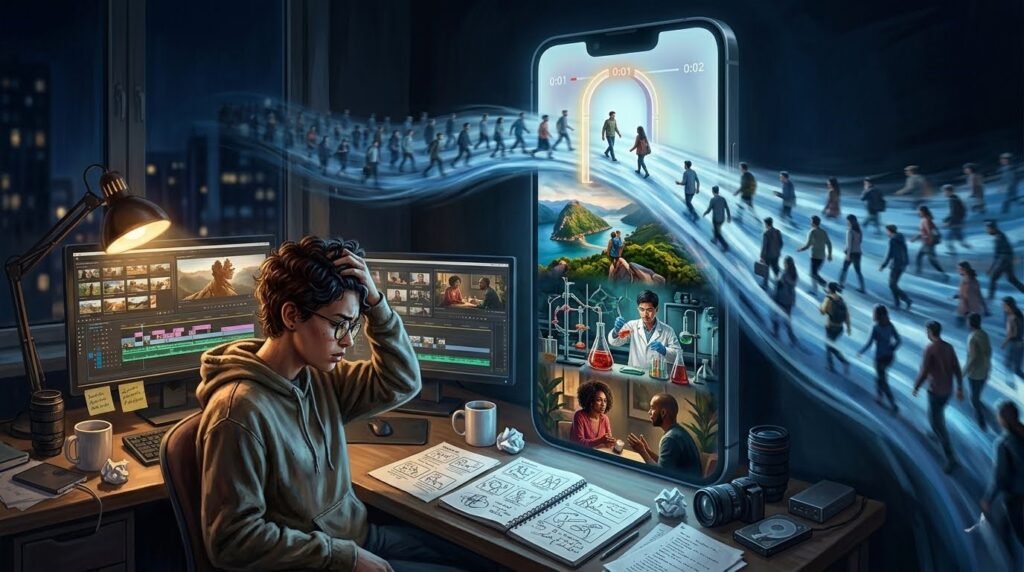
That’s a pretty tough environment for a video to survive in. It’s not competing against bad content. It’s competing against the scroll itself, which is effortless and costs nothing to continue. Most Stop Scroll Videos gain that competition immediately. Not because the creator did anything dramatically wrong but because the opening gave the viewer no interruption signal. Nothing on screen said stop. So they didn’t.
Understanding this changes how you think about building a video. The opening isn’t the beginning of your content. It’s a separate job entirely. Its only purpose is to break the scrolling reflex before anything else can happen.
The First Three Seconds Decide Everything
Platform data on this is pretty consistent across TikTok, Instagram Reels, and YouTube Shorts. The sharpest viewer drop-off happens in the first two to three seconds. After that point, if someone is still watching, they’re much more likely to make it through the whole video.
That means the opening and the rest of the video are almost operating as two different pieces of content. The opening has to earn the viewer’s presence. The rest of the video has to be worth what the opening promised. Both matter but in completely different ways. The algorithm understands this too. Completion rate and average watch time are among the strongest ranking signals on all three platforms. A stop scroll videos that holds viewers through to the end gets pushed to more people. A stop scroll videos that loses them in the first few seconds gets buried, often before it reaches even a fraction of the creator’s own followers.
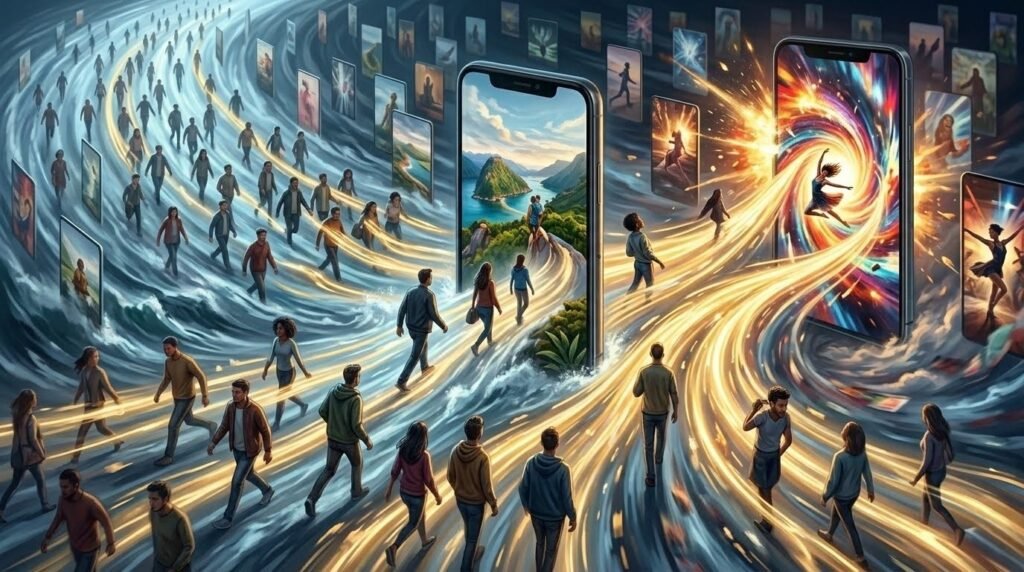
So the first three seconds aren’t just important for the viewer experience. They’re important for whether the video exists in the feed at all. Getting this wrong once is fine. Getting it wrong consistently means the algorithm stops trying to show your content to anyone.
What Makes a Video Stop the Scroll?
There’s no single answer but there are consistent patterns. Videos that stop the scroll tend to do at least one of a few things in the opening moment. They create visual surprises. Something unexpected appears on screen and the brain flags it as worth processing before any conscious decision gets made.
They create motion. A fast cut, a camera movement, something entering the frame with speed. Eyes are drawn to motion automatically and that reflex works in the creator’s favor when the opening is built around it. They create a curiosity gap. The opening shows or says something that raises a question without answering it. The viewer stays because the brain wants resolution and the only way to get it is to keep watching.
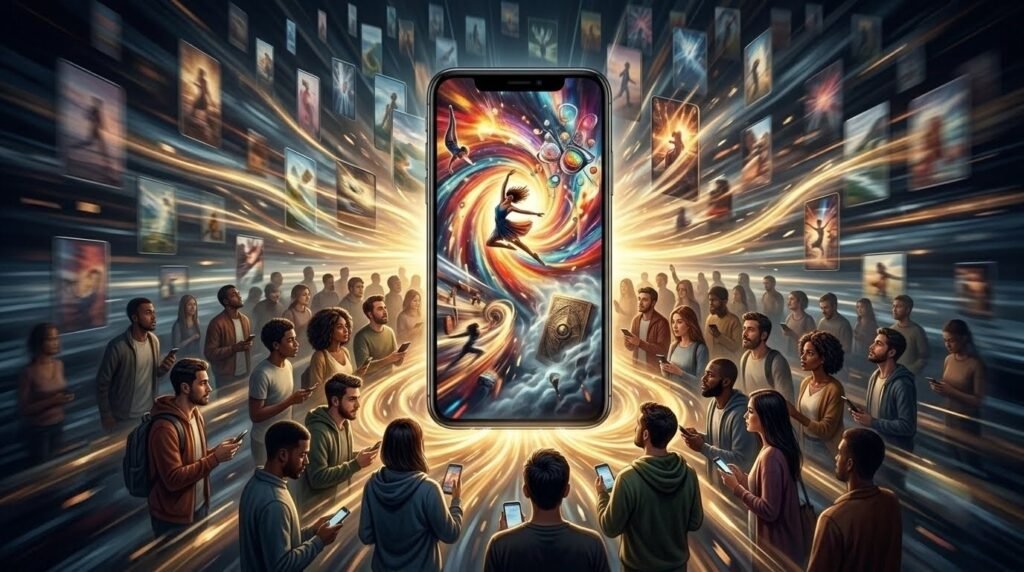
They create tension. Not dramatic tension necessarily, just the feeling that something is about to happen. That anticipation is its own reason to stay. The best stop the scroll videos don’t rely on just one of these. They stack two or three in the first few seconds and by the time the viewer notices they’ve been watching for ten seconds, they’re already too invested to leave.
Five Elements Every Stop Scroll Video Needs
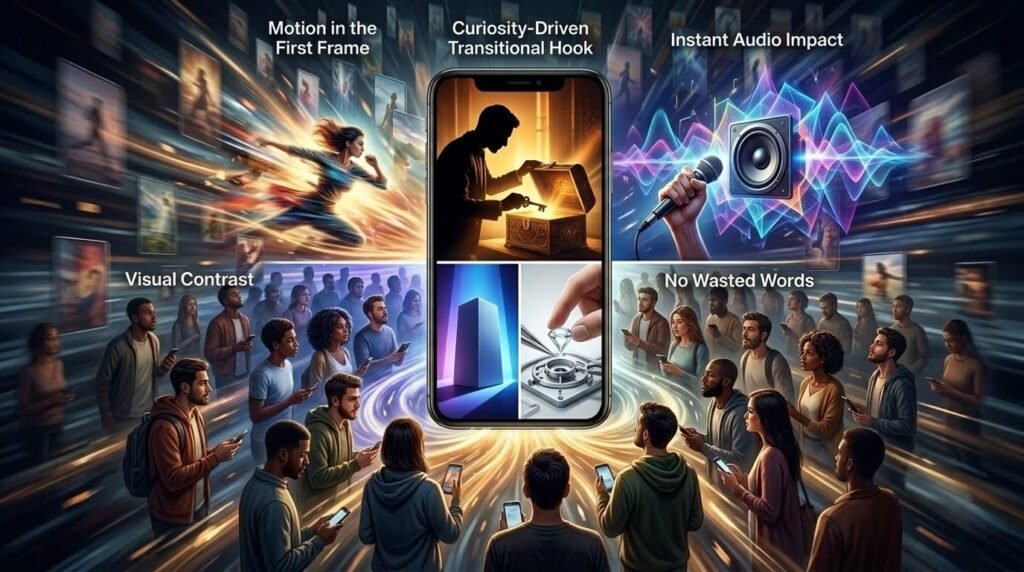
Motion in the first frame. Not movement for the sake of it but real visual energy right at the start. A zoom, a cut, a whip pan, someone walking into frame fast, text slamming in from off screen. Something that activates the eye before the brain has caught up. Static openings are invisible to scrolling viewers because there’s nothing to interrupt the movement of the thumb.
A Transitional hook that raises a question. The first line, the first on-screen text, the first few words of audio should all create a gap. Something the viewer doesn’t know the answer to yet. Something that makes finishing the video feel like the obvious next step. Not a clickbait question, a genuine one that the video actually answers.
Sound matters more than most creators give it credit for. Seriously, audio is one of the most underused tools for stopping a scroll and people just don’t talk about it enough. Think about what it feels like when a stop scroll videos opens on dead silence or some slow music fade-in your brain immediately files it as something that’s going to take a while to get going. And honestly most viewers aren’t going to sit through that buildup. They’re already gone.
What actually works is audio that hits immediately. A sound effect right at frame one. Music that doesn’t ease in, it just starts loud, full, already in motion. Or a voiceover that begins mid-sentence, like you walked into a conversation that started without you. That missing context is what makes people stay. They want to catch up. Starting from the very beginning of a sentence gives the viewer nothing to chase. Visual contrast is something a lot of creators overlook and it genuinely costs them. Here’s the thing about a feed after scrolling for a few minutes everything starts to look the same. Similar lighting, similar framing, similar color grading.
That difference doesn’t have to be dramatic. Could be a weird angle nobody else in that niche uses. Whatever it is, the eye catches it because it doesn’t match the pattern the brain was already predicting. That moment of not-quite-matching is enough to slow the scroll down. Sometimes that’s genuinely all it takes. No wasted words at the start. Every word in the first three seconds has to earn its place. Greetings don’t earn their place. Introductions don’t earn their place.
How Transitional Hooks Keep Viewers Watching
A transitional hook is a specific type of attention grabbing video opener that uses visual transition techniques: whip pans, zoom cuts, smash cuts, push-ins, motion overlays to create momentum right at the start of a video. The idea is that the transition itself becomes the hook. The motion is the thing that catches the eye.
What makes transitional hooks particularly effective is that they work before the viewer processes any information. A clever headline needs a second to be read. An interesting statement needs a second to be understood. A fast whip pan or hard zoom cut is processed visually before any of that happens. The eye catches it, the brain flags it, the scrolling pauses. That sequence happens faster than a person can consciously decide to stop.
Transitional hooks also create an implicit promise. A stop scroll video that opens with kinetic visual energy signals to the viewer that the rest of the video is going to maintain some version of that energy. That expectation keeps people watching because they’re waiting to see if the promise gets kept.
On the retention side, motion-heavy openings also tend to generate re-watches. Something that happens fast makes people feel like they missed something. On TikTok especially the loop is automatic and seamless, so watching again takes no effort at all. A second watch doubles the retention signal on that view. Over a whole video’s view count that adds up considerably. If you want to actually use transitional hooks in your videos without building every asset yourself, HookTransition.com has a library of professionally made transitional hook clips and scroll-stopping video intros specifically designed for short-form content.
Examples of Effective Stop Scroll Openers
A travel creator on Instagram Reels opens with a smash cut to extreme close-up footage of waves hitting rocks, audio slamming in at full volume simultaneously. No location caption, no intro, no context. You don’t know where this is yet and that’s exactly why you stay.
A business creator on TikTok opens mid-sentence. Not the beginning of a sentence, the middle of one. ” and that’s why most people never make money from this.” You missed the first part. The only way to find out what they’re talking about is to watch. So you watch.
A cooking creator on YouTube Shorts opens with a whip pan from an empty counter to a finished dish already plated, steam still rising, in the same motion. It goes from nothing to a finished product so fast you’re not sure what you saw. Curiosity fills the gap.
A fitness creator on Reels opens with a push-in zoom toward a phone screen showing a DM that reads “I don’t think this is possible.” Text overlay lands hard on screen a half second later. The tension between the doubt in the DM and the implied payoff of the video creates a reason to watch that’s established before a single word is spoken.
A personal finance creator on TikTok starts with on-screen text flying in from the left edge saying “I found a $47 mistake on my bank statement.” No voiceover yet. Just that text and then a cut to them sitting down like they’re about to tell you something you need to hear. The curiosity gap is immediate and specific.
Common Mistakes That Cause Instant Drop-Off
Opening with your name or channel intro. Unless you have millions of followers who actively search for your content, the first second is too early to spend on introducing yourself. The viewer doesn’t know they care about you yet. Give them a reason to care before asking them to remember who you are. Starting on a wide static shot. A person standing in a room, centered in frame, camera not moving, nothing entering or leaving the shot. There’s no motion signal to catch the eye and no visual contrast to register as different. The scroll continues. Slow build audio. Music or voiceover that starts quiet and builds up over several seconds.
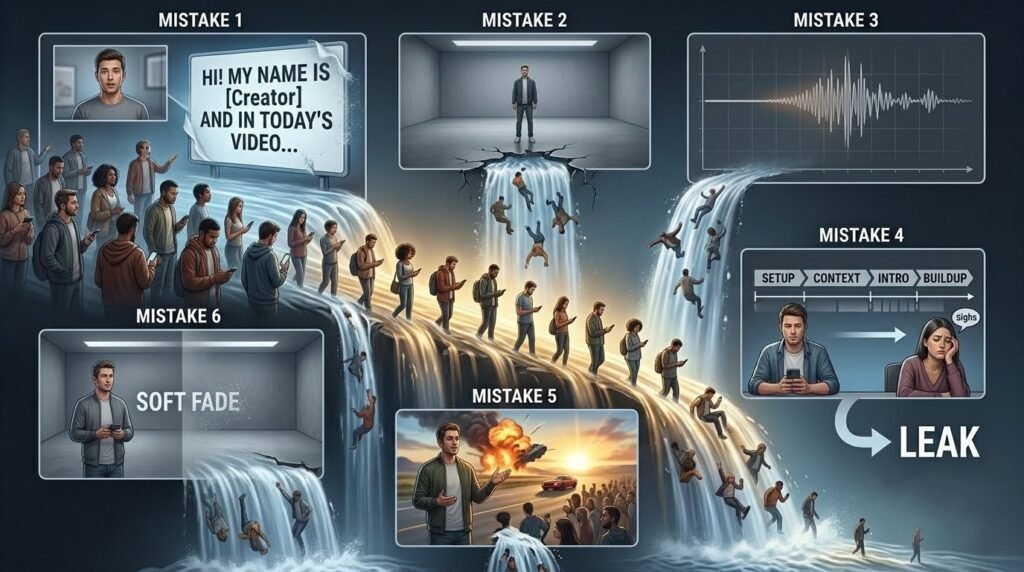
The viewer interprets the quiet start as a slow video and leaves before the build happens. If the energy is coming, lead with it. Long sentences at the start. Short-form video moves fast and the viewer’s attention in the first few seconds is thin. A sentence that runs for eight or ten words before getting to the point loses people before the point arrives. Open with something short, punchy, and incomplete enough to create a question.
Explaining the video before showing it. “In this video I’m going to show you how to” is a format that tells the viewer exactly what they’re about to see and gives them the option to decide whether they want it before you’ve had the chance to make them want it. Don’t describe the video. Start it. Transitions that are too slow or too soft. A gentle crossfade or a basic straight cut between two similar angles doesn’t carry any visual energy.
A Simple Stop Scroll Formula Creators Can Copy
This isn’t the only approach that works but it’s a starting structure that’s easy to adapt across niches.
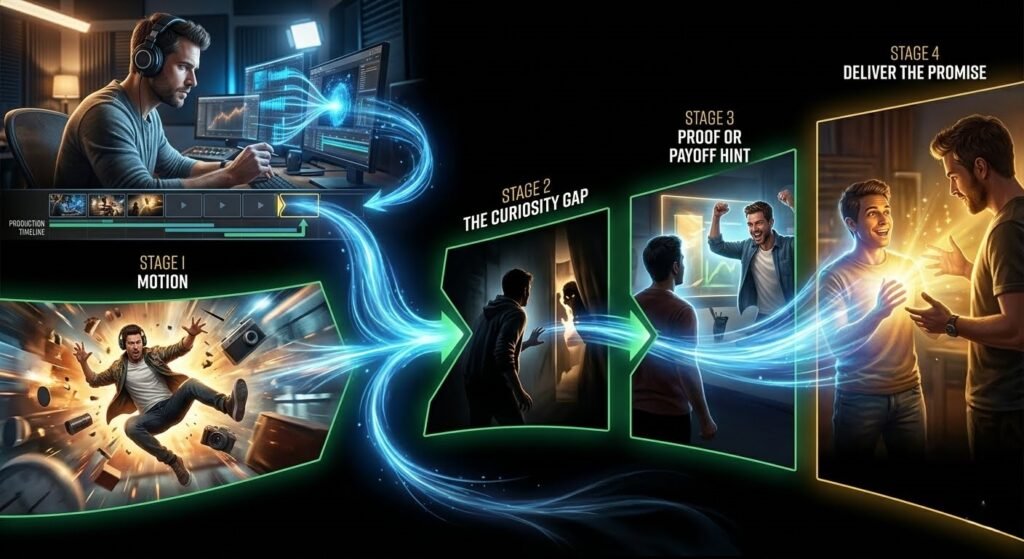
Frame one: motion. The video opens on something already moving. A fast cut, a transition, a zoom, a push-in, something entering the frame. Whatever it is, motion comes first.
Seconds one and two: the gap. A short line of text or audio that raises a question or creates tension. Something specific enough to be interesting, vague enough that the viewer can’t answer it without watching. One sentence maximum.
Seconds two to five: the proof or payoff hint. A quick visual or audio signal that the video is going somewhere worth following. A flash of the end result, a reaction shot, a piece of evidence that something real is about to be shown.
Second five onward: deliver. Don’t make people wait longer than this. The setup is done. The viewer has stayed through the Transitional hook. Now give them the thing the hook promised.
The workflow for building this starts during scripting, not editing. Write the opening last. Finish the video content first, figure out what the most interesting or surprising element is, and then build the opening around that element specifically. Most creators write the opening first and then have nothing to hook people toward because they haven’t finished the video yet.
When it comes to the visual side of the opening, test different types of transitional hooks to see what holds your specific audience. A smash cut that works perfectly for a fitness creator might not land the same way for a business creator. Retention graphs on most platforms show second by second where viewers left, and that data is the most useful feedback available for refining the opening over time of a Transitional hook.
Getting the Opening Right Changes Everything After It
Watch time is earned second by second but the first two seconds matter more than all the others combined. Not because the rest of the video doesn’t matter but because none of the rest of the video gets seen if the opening doesn’t do its job.
A stop the scroll video isn’t a different type of video. It’s the same video with a different kind of opening. One that starts with motion, creates a gap, and gives the viewer a reason to stay before asking for any of their time.
Get the door right. The rest of the video already knows what to do.


