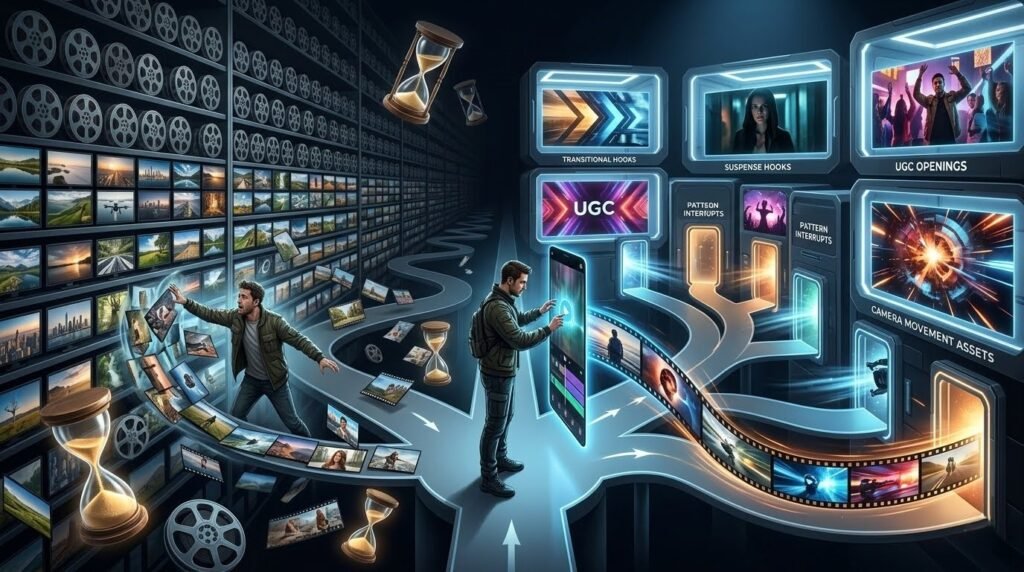
Pulled a clip off someone’s “free transitions” compilation video once. Used it in a client ad. Three weeks later I got a copyright claim that pulled the whole campaign mid-flight, and the client wanted answers I didn’t have a great way to give. That’s how most creators learn this lesson. Not from reading licensing terms in advance from getting burn once and then paying attention afterward.
Finding reel hooks with no copyright concerns attached sounds like it should be simple. It isn’t, mostly because “free” gets use to loosely across the internet and creators assume free means usable for anything. It doesn’t always. Doesn’t matter how bad the clip got there. Compilation video, someone’s editing tutorial, a movie scene chop up enough that it “feels different” none of that holds up if a claim gets file. Sometimes it’s a quiet takedown notice you barely notice. Sometimes a whole video gets pull up mid-campaign. Once, on a client project, it turned into an actual legal letter, and explaining that to a client who just wanted a thirty-second ad is not a conversation worth having twice.
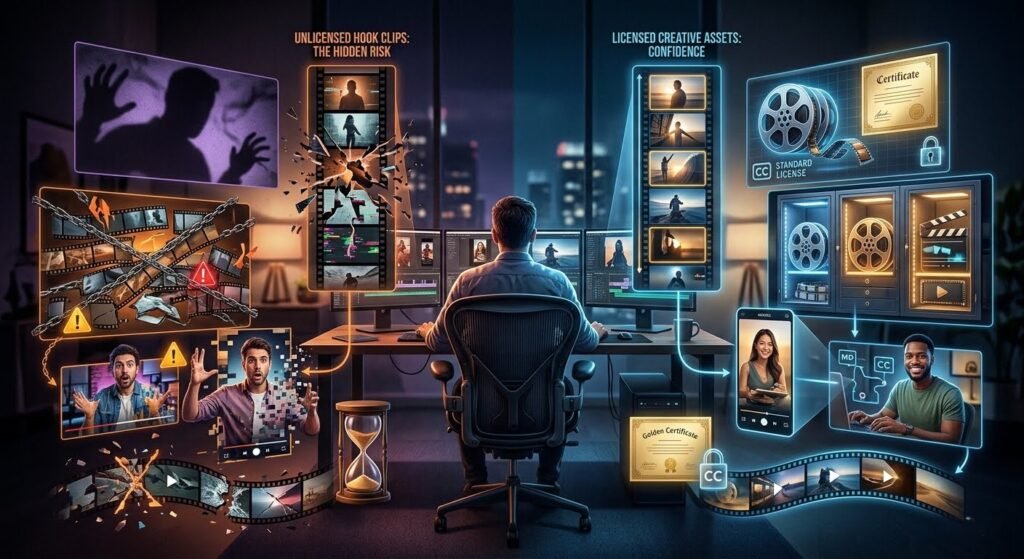
So here’s what actually matters going forward: what counts as genuinely safe to use, where to find it without guessing, and how to stop this from becoming a recurring problem every time a video needs a strong opener.
Why Copyright Matters for Short-Form Videos
Whoever made the original footage owns it. Doesn’t matter how short the video is, doesn’t matter whether anyone’s making money off it. The person who shot it or built it has rights to it the moment it exists, and using it without permission is using it without permission, full stop.
Where people actually get trip up is the line between personal and commercial use. This is because that line shows up in licenses constantly and almost nobody reads far enough to find it. A clip clear for posting on a personal account is often not clear for a paid ad or a client video. Same file, different rules, depending entirely on what it’s attach to when it goes live.
And “free” gets to stretch to mean a lot of different things depending on who’s saying it. Sometimes it means free only if you’re not a business. Sometimes it means free if you credit the source. Platforms change these terms more than people expect, too a clip that was unrestricted last year might not be this year. The only way to actually know is to check, not assume.
A few misconceptions show up constantly. Creators assume that if a clip is trending or has been repost hundreds of times. It must be fine to use popularity that has nothing to do with licensing status. They assume screen-recording something from a streaming platform makes it theirs to edit and reuse it doesn’t. Creators assume a transition effect downloaded from a random Discord server or Telegram channel has cleared for use, usually nobody actually checked.
For anyone publishing regularly, especially for client work or paid campaigns, understanding this isn’t optional. One claim can pull a video, demonetize an account, or in the case of commercial use, generate a legal dispute that costs far more than the time it would have taken to source the clip properly.
What Are No Copyright Reel Hooks?
Picture a one-to-three-second clip that’s about the length most hooks run that someone either make themselves, license out for broad commercial use, or release with terms that genuinely allow reuse without ongoing payments or restrictions tie to it. That’s roughly the territory “no-copyright hook” covers.
People mix this up with public domain a lot, which is actually something narrower works where the copyright has run out entirely deliberately given up. Most of what creators are actually using day to day isn’t public domain. It’s license content from a specific platform that’s agree to let people use it commercially, and that distinction is worth knowing because the permissions aren’t identical.
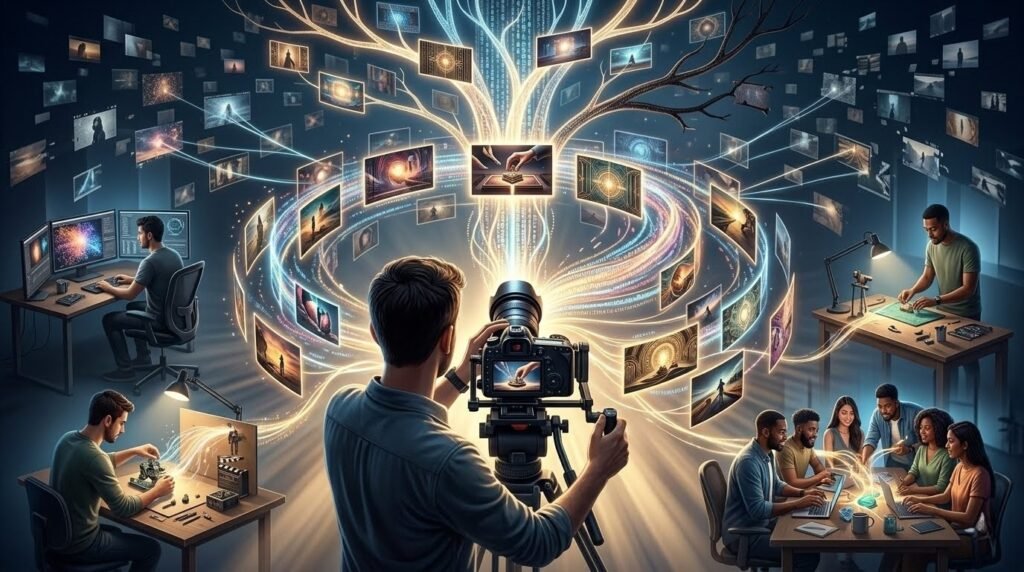
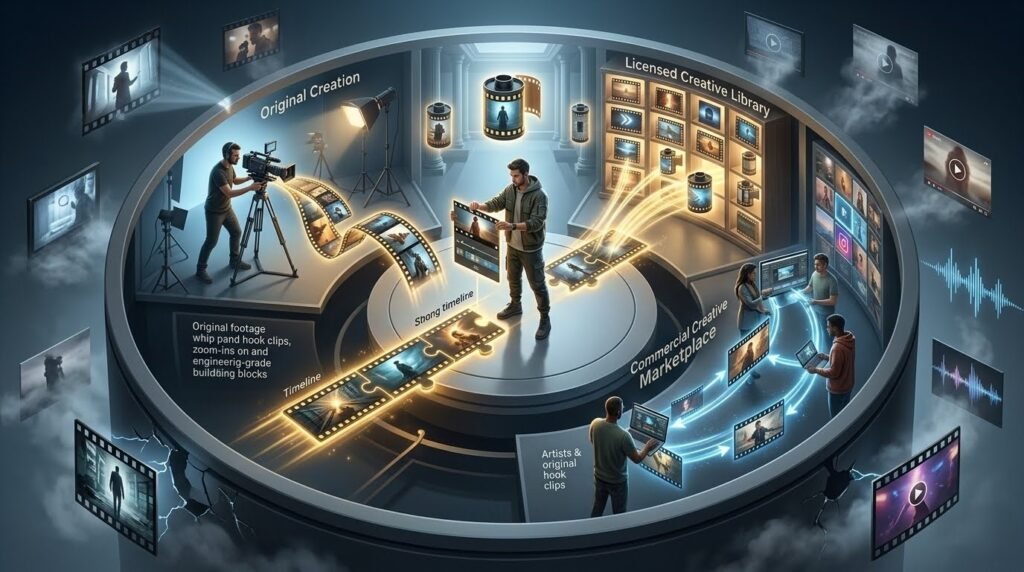
So what actually counts as safe? Footage that was shoot specifically to be license out, with commercial terms spell out clearly by whoever’s distributing it. Clips from platforms that explicitly state commercial use is cover. Original footage a creator shoots themselves. Assets purchased or downloaded from a source with documented licensing that covers the specific use case ads, client work, monetized content.
What doesn’t qualify, regardless of how it’s label online: anything pulled from copyrighted film or television. Music synced to footage without separate music licensing. Transitions or effects lifted from someone else’s published content without their permission, even if that creator didn’t watermark it.
For creators publishing daily or weekly, this matters more than for someone posting occasionally. Volume increases exposure. A single risky clip use once might never get flag. The same clip used across forty videos over six months has forty times the exposure to a copyright claim, and platforms have gotten faster at detecting reused footage through audio and visual fingerprinting.
Best Types of No Copyright Hook Clips
Transitional hooks, Fast cuts and whip pans don’t care what the video’s about, which is why they show up everywhere beauty, finance, fitness, doesn’t matter. There’s nothing niche-specific baked into a transition, so it sits at the front of almost any content equally well.
Suspense is pickier. Tense, unresolved, slightly dark footage works great for business or finance content where you want to imply something’s at stake before you’ve explained what. But this is also the category where people get burn. Most dramatic footage gets pull from movies and shows constantly because it’s exactly the kind of visual people want for tension, and exactly the kind that’s hardest to license cleanly. Worth being extra careful here specifically.
UGC video hook clips, phone-camera style, natural light, handheld energy work especially well for ecommerce and affiliate content. These are usually easier to source copyright-safe since a lot of UGC-style libraries are build from original creator submissions specifically for licensing.
Motion graphics kinetic text, animated overlays, graphic transitions work for educational and SaaS content where the hook needs to communicate information visually before the spoken content begins. Most reputable motion graphic libraries are build from scratch the designers and license cleanly.
Camera movement clips, fast pans, dolly-style pushes, handheld walking shots function as visual texture at the front of lifestyle and travel content. These are commonly available through dedicated stock platforms with clear commercial terms.
Pattern interrupt openers quick flashes, jarring cuts, unexpected visual breaks work as universal stop the scroll video tools regardless of niche. Short and simple enough that creators can often produce these themselves without sourcing externally.
Fast zoom transitions, a reliable layer to combine with almost any other hook type, are widely available through dedicate short-form asset libraries and tend to carry the clearest licensing of any category because they’re typically create specifically for that purpose.
Mistakes Creators Make When Downloading Free Hook Clips
Skipping the license entirely. Downloads a clip, uses it, never reads what the actual terms say. The terms are usually short. Reading them takes thirty seconds and saves significant risk down the line. Pulling scenes from movies or shows. Editing a movie clip into a transitional hook, even heavily modified, doesn’t sidestep copyright. Studios and distributors actively monitor for this, and detection has got significantly better through automated content matching systems.
Downloading from random social media reposts. A clip that’s repost across a dozen accounts with no clear original source is a gamble. Someone created it. That person almost certainly didn’t release it for unrestricted commercial use just because it went viral.
Assuming viral automatically means free. Popularity and licensing status are unrelated. A trending sound or visual effect being everywhere doesn’t mean the rights holder authorized that spread for commercial reuse and in audio specifically, platforms have gotten aggressive about enforcing this.
Forgetting client-specific licensing requirements. Personal-use licenses frequently exclude client work entirely. A clip that’s fine for a personal account can create real exposure when used in paid client deliverables and the agency, not the platform, usually bears that risk.
General Stock Libraries vs Dedicated Hook Libraries
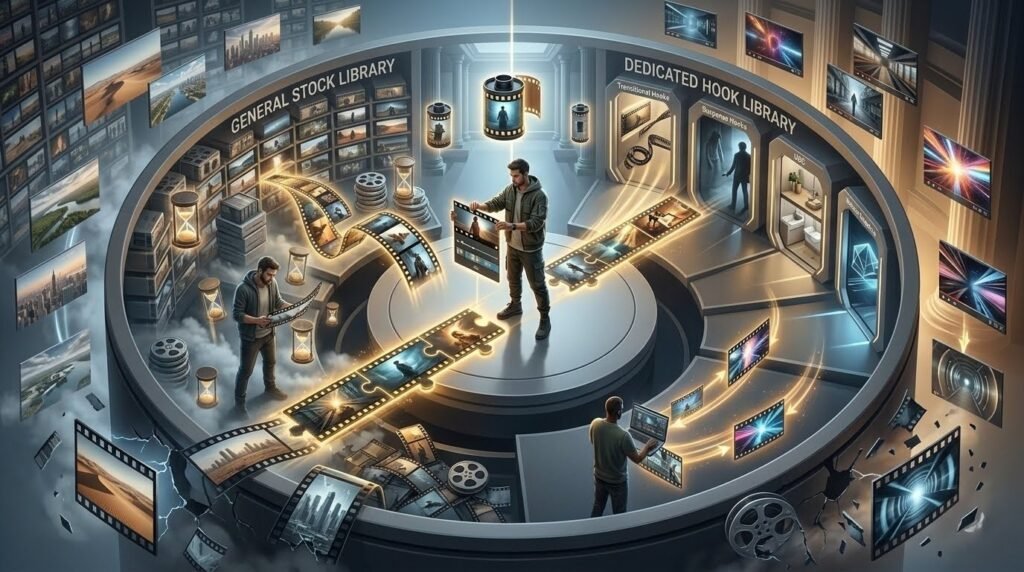
General stock platforms Pexels, Pixabay, and similar sites weren’t built with hooks in mind. The footage skews wide, slow, and cinematic. Good for b-roll, weak for openers that need to stop a scroll in under two seconds.
Search time tells the story quickly. Searching a general stock site for something hook-appropriate often means scrolling through dozens of irrelevant results before finding anything close to usable. Dedicated hook libraries organize by hook type specifically, which cuts that search time down to seconds.
Clip quality differs in a less obvious way too. General stock footage is composed for longer-form use establishing shots, background visuals. Hook clips need immediate visual energy in the first frame, which most general stock footage simply wasn’t shot to provide.
Licensing clarity is where dedicated libraries earn their value most clearly. A platform built specifically for short-form creator assets tends to spell out commercial use terms plainly, without the dense legal language general stock sites sometimes bury their terms in.
Workflow efficiency compounds across all of this. Pulling from a library organized by hook type suspense, transitional, UGC, pattern interrupt means production speed improves measurably compared to hunting through generic footage every time a new video needs an opener.
HookTransition.com was built around this exact gap. It’s a dedicated library of transitional hooks, suspense clips, UGC-style openers, and motion-based assets specifically for short-form creators organized by hook type, formatted for vertical video, and built with commercial use clarity in mind rather than general stock footage repurposed as an afterthought.
How to Organize Your Own Hook Library
Categorize by hook type first. Suspense, transitional, UGC, pattern interrupt, reveal separate folders or tags for each. When a new video needs an opener, going straight to the relevant category beats scrolling through one undifferentiated pile.
Tag by niche fit secondly. A suspense clip that worked for a finance video might transfer to business content with minimal adjustment. Tagging by what content category a clip performed well in makes future reuse faster.
Track performance where possible. Note which clips actually moved retention numbers on past videos. A folder isn’t just storage it becomes a record of what’s worked, which beats guessing fresh every time.
Separate licensed assets from self-shot footage. Keep documentation of where licensed clips came from and what the terms cover. If a client ever asks about asset sourcing, having that documentation ready avoids a scramble.
Review periodically. Platforms update licensing terms occasionally. A clip that was cleared for commercial use a year ago might have updated terms now. A quick periodic check of major sources keeps the whole library current.
Best Practices Before Publishing
Before hitting publish on anything with a downloaded clip in it, it’s worth doing a quick gut check. Does the license actually say it covers what you’re doing with it personal post, paid ad, client deliverable, whichever applies? If attribution’s required somewhere, has it actually add, or did that step get skipped in the rush to finish editing? Terms change sometimes too, so if a clip’s sitting in a folder for months, it’s worth a quick look to make sure nothing shifted since it was downloaded. And keeping some kind of note on where each clip came from even just a screenshot of the license page saves a scramble later if anyone ever asks.
For client work specifically, confirm the license covers pays advertising use, not just organic posting; these are frequently treated differently in licensing terms even on the same platform.
Copyright issues are almost always preventable with a few minutes of checking before a video goes live, not after a claim arrives. Reel hooks with no copyright concerns attach aren’t hard to find once the right sources are known; the problem is usually that creators discover the wrong sources first, often through trial and error that costs a video or a client relationship along the way.
Building a clean, organized library of properly licensed hook clips pays off twice. Production gets faster because the searching disappears. Risk gets lower because every asset has documented, verified terms behind it. Both of those things compound the longer a creator keeps publishing.