What Are Transitional Hooks and Why Do They Actually Increase Watch Time?
Four seconds that was the average watch time on a Transitional Hooks video someone I follow spent basically a whole afternoon putting together. Four seconds and then people were gone. The graph just dropped straight down at the start like it gave up. And the weird thing is the actual video was fine. Good, even. The information made sense, the audio wasn’t terrible, the editing further in was solid. Nobody saw any of that though because the opening didn’t do its job and by the time anything interesting happened the viewer was three videos further down their feed already.
That’s a specific kind of annoyance because it means the problem isn’t really the video. Most of it was good. The issue was just the door. Nobody pushed it open.
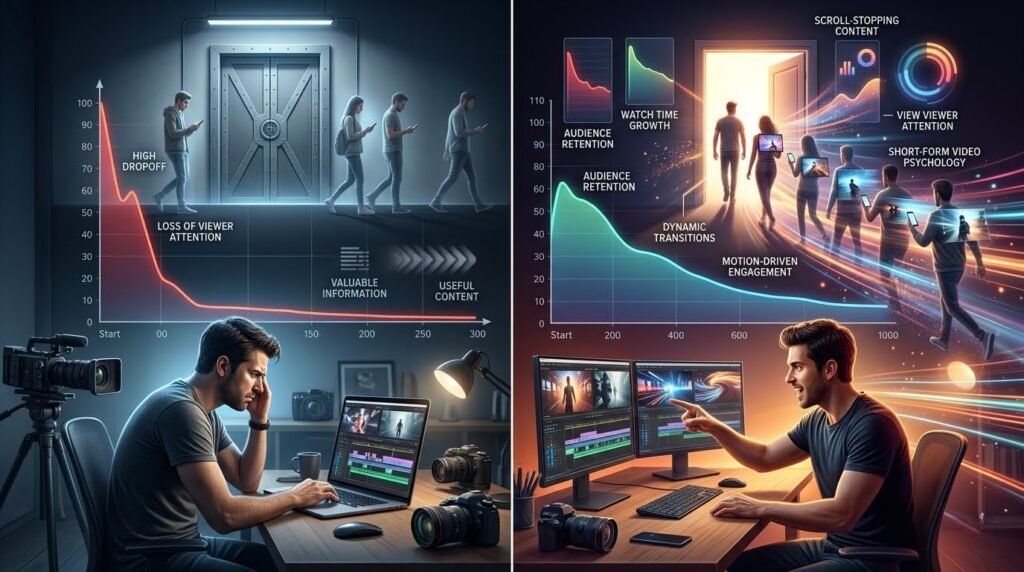
Transitional hooks are about solving that. Not in some big complicated production way, just understanding that the first two seconds of a short video are doing a completely different job than everything after and actually building those two seconds with that in mind.
Why Viewers Are Already Gone Before Your Video Gets Going
Scrolling TikTok or Reels costs nothing. That’s kind of the whole point of those apps. One tiny movement and the next video is already there. Nobody is sitting down and choosing to watch them moving through content and something has to stop them. That’s the actual situation your video is entering.
So you’re not starting from zero. You’re starting behind. The viewer is in motion and your video has to be the thing that interrupts that motion. If that doesn’t happen in like the first two seconds, it genuinely doesn’t matter what comes later because later never arrives for most people watching.
The algorithm on all these platforms is build around this exact dynamic. Completion rate, average watch time, how long people actually stayed that data determines who sees the video next. Something that bleeds viewers in the first few seconds sends a bad signal and gets shown to fewer people, which means it gets fewer chances to do better, and the numbers just stay low. It’s a frustrating loop once you’re in it.
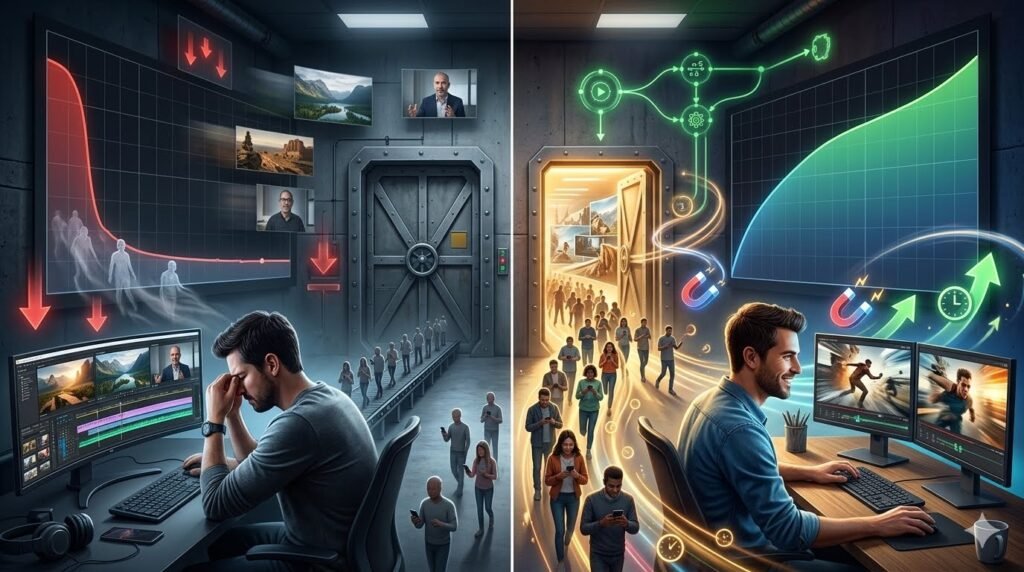
Most creators put all their energy into the content in the middle. The Transitional Hooks feels almost like a formality, just a quick greeting before the real stuff. But that framing is backwards. The hook isn’t the intro. It’s the audition. The video is auditioning for the viewer’s continued attention and it has about two seconds to pass.
So What Is a Transitional Hook Actually
A hook in the general sense is just anything that grabs attention at the start. Provocative statements, weird questions, surprising images, nothing new there, hooks have existed in advertising for decades. That’s not what makes transitional hooks different.
A transitional hook uses movement. Physical visual motion at the very start of the video, before any words are spoken, before any context is given. The point is that eyes respond to motion automatically, not as a preference but as a hardwired thing, and a transitional hook is designed to trigger that response at the first frame before the viewer has made any decision about whether to keep watching.
The movement can take different forms. A whip pan swings the camera fast often between two subjects or angles and creates that blurring motion that registers as urgent somehow. A zoom cut jumps from a wider shot to something much tighter in a single hard cut, like the lens just launched itself at the subject. A smash cut drops you into a completely different scene with zero warning, just suddenly something else is happening and you’re catching up. A push-in physically moves toward the subject with enough speed that you feel it. Motion overlays bring text or graphics into frame like these were throw, not placed.
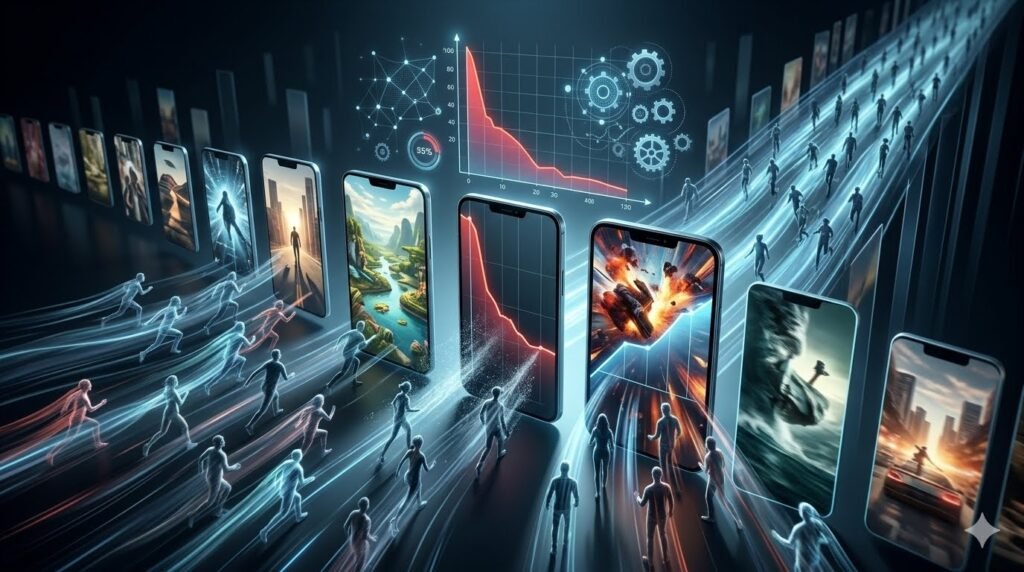
None of this requires anything fancy. Most basic editing apps can do all of it. What all these types share is that they give the viewer’s eye something to catch before the thumb completes whatever movement it was already making.
Why This Actually Works
Honestly the simplest answer is that humans notice movement before they notice anything else. That’s not a social media thing, it goes way further back than that. The visual system processes motion and flags it for attention at a level that happens before conscious thought gets involved. Movement appears, the eye goes to it. That’s the mechanism and short-form creators who build their openings around it are just using what was already there.
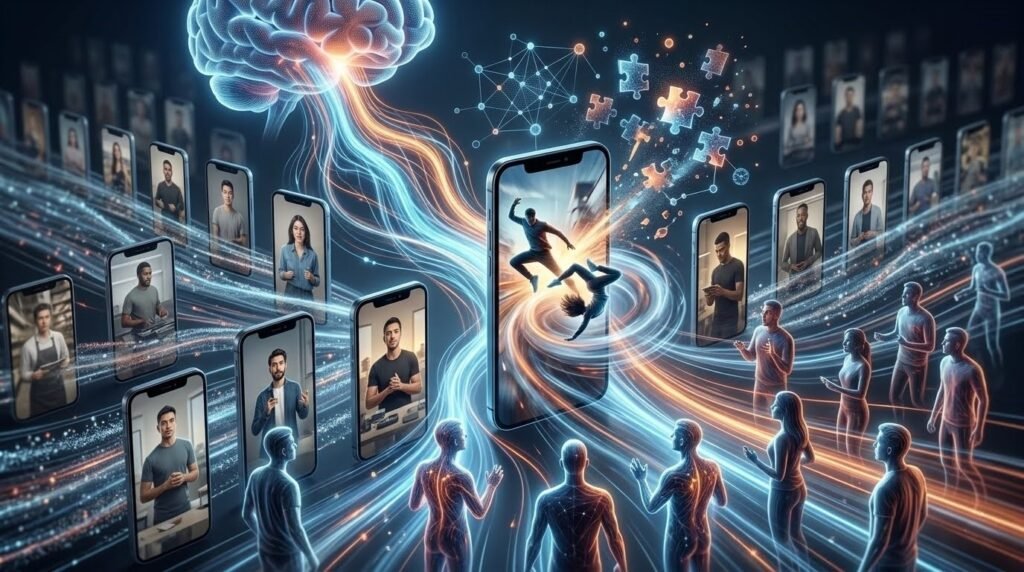
There’s also what happens when a pattern gets interrupt. If someone scrolls past several videos that all open with a person standing there talking, the brain starts to anticipate that format and kind of pre-tune it out. Then something opens with a hard smash cut or a sudden zoom and the brain actually has to stop and recalibrate for a second. That moment of recalibration is the window. That half second where the viewer is slightly confused and their eyes actually focus that’s when you have them.
Curiosity fills in the rest. A transitional hook usually drops you into the middle of something without explaining it. Mid-movement, mid-action, no setup. The brain doesn’t like unresolved things. It wants to know what’s happening. So the viewer keeps watching not because they decided to but because stopping feels worse than staying.
What It Does to Watch Time Numbers
When a video opens with a transitional hook that actually works, the early drop-off flattens out noticeably on the retention graph. Fewer people leave in the first couple seconds. The percentage making it to the halfway point goes up. And because completion rate is one of the heavier signals in how these platforms decide to distribute content, even a small improvement in the opening has a bigger downstream effect than you’d expect.
Re-watch rate doesn’t get talk about enough here. A fast motion-heavy opening often makes people watch again from the start because they feel like something happened too fast and they missed it. On TikTok the loop just starts automatically, there’s no friction to watching it again. Someone who watches twice is double the retention signal for that one view. A good transitional hook is probably the most reliable way to get that second watch.
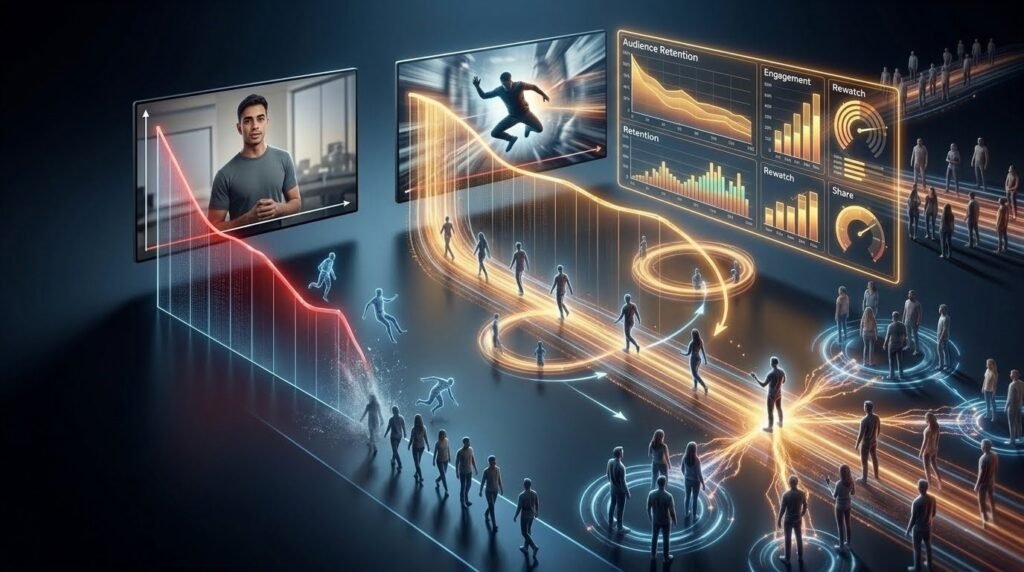
There’s a sharing effect too. An opening that lands with some kind of surprise or that disoriented-but-in-a-good-way feeling gets shared more. Shares bring in completely cold viewers who have no reason to trust the creator yet, so the Transitional Hooks has to work on them with no context at all. When it does, those views come with decent watch time and that improves the overall data.
Some Examples That Actually Illustrate This
A fitness creator on TikTok opens with a whip pan empty platform, then suddenly a barbell being unracked mid-lift. Audio slams in at the same moment. No introduction, no name, no “okay so today.” Just someone already lifting and you’re watching. Whatever advice or content follows comes later but by then the viewer is already committed.
Food creator on Reels, smash cut. Black frame and then extreme close-up of something hitting a very hot pan, oil going everywhere, that sound filling the whole frame suddenly. You don’t know what’s being cook. You stay because you want to find out.
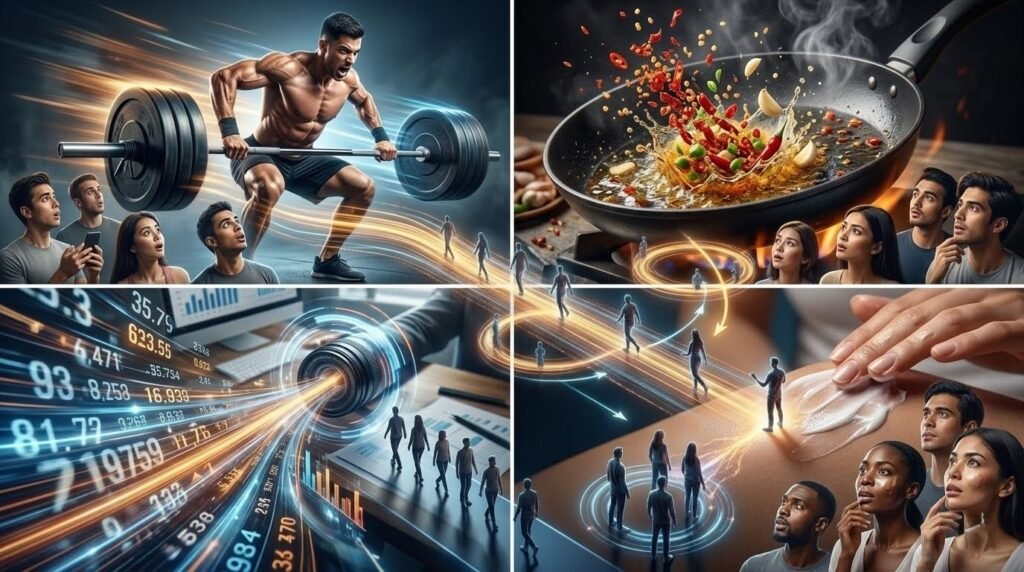
Personal finance creator on Shorts opens with a push-in toward what looks like a bank statement, text coming in hard from the left edge of frame at the same moment. The motion and the fact that you can’t quite read the numbers yet are doing two different things at once to keep you there.
Skincare UGC creator just drops in mid-application. Product already going on, fingers already moving, tight close-up, no preamble at all. That feeling of walking in on something mid-process is itself what makes you stay to see what it is.
None of them introduced themselves in the first few seconds. None of them said what the transitional hook video was about before the viewer was already three seconds deep and invested.
What Kills an Opening of Video
Standing still is the most common one. Camera static, person in frame, starts talking. It feels natural because that’s how conversations actually work in real life. But this isn’t a conversation, it’s an interruption of a scroll, and a static frame interrupts nothing.
Long setups are the same problem wearing different clothes. Anything that starts with “so I’ve been wanting to talk about this” or “welcome back you guys” is burning time the viewer hasn’t agreed to give yet. That kind of framing works when someone already follows you and is actively looking for your content. It does not work on a cold viewer who doesn’t know you exist.
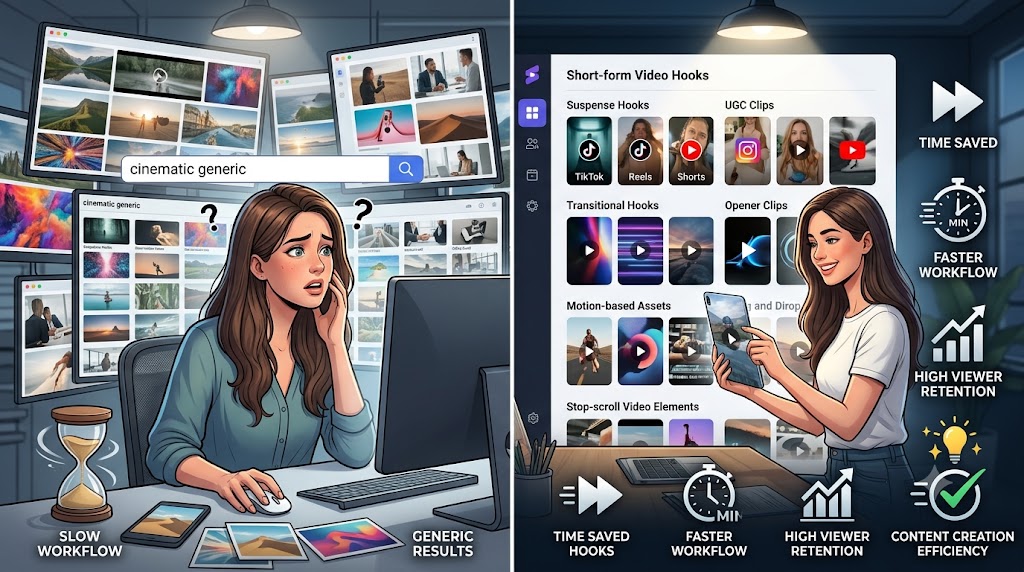
Hiding the energy is another one that costs creators a lot. Sometimes the most interesting or surprising moment is twenty seconds in but the opening looks calm and quiet and completely different in tone. The viewer doesn’t know something good is coming so they don’t wait. If the video builds to something, the opening needs to at least hint at that energy even if it doesn’t give away the content.
Transitions that are too smooth or slow don’t function as transitional hooks. A gentle fade, a dissolve, a basic cut between nearly identical angles none of that has the kinetic punch needed to catch a moving eye. The motion needs to actually feel like motion or it isn’t doing anything.
How to Start Actually Using This
Plan the hook during editing, not during filming. Most people think about the opening while they’re in front of the camera. Better to decide what the transitional hook looks like first and then film specifically to make it work.
One question worth asking before anything else gets scripted: what is the most visually alive way this could possibly open. Not the clearest. Not the most logical. The most alive. Information can come second. Attention has to come first or there’s nobody to give the information to.
Saving examples is underrated. When a video stops your scroll, actually take a second and look at what the opening did. Zoom cut? Smash cut into something already happening? Text coming in fast from off screen? Keep a folder of these. The openings that stopped you are the most useful research you have for your own audience.
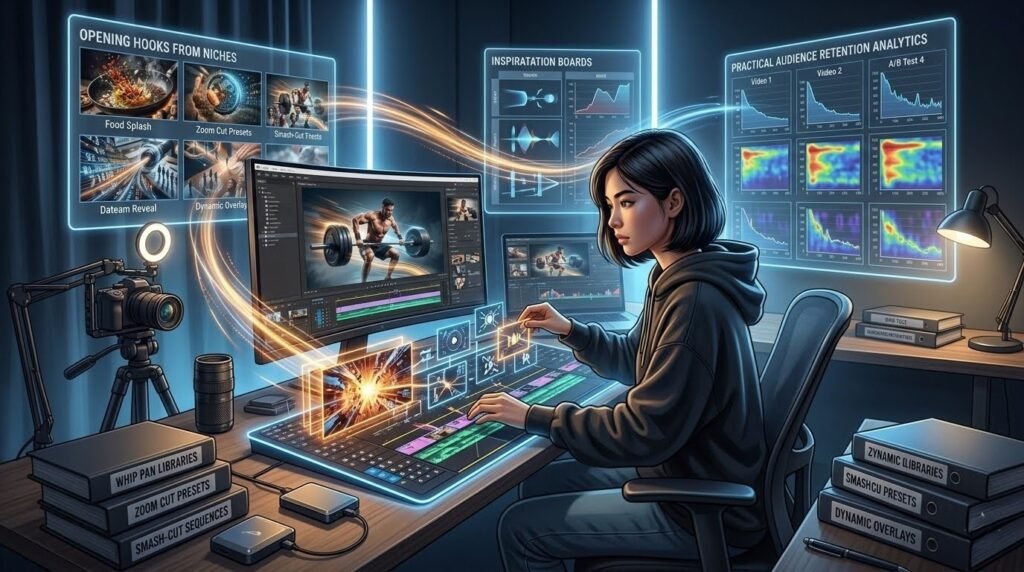
Testing matters more than any advice anyone can give. Pick one transitional hook style, use it consistently for a few weeks, then look at the retention graphs second by second. The data shows exactly where people left and whether the Transitional Hooks did anything. That’s worth more than theorizing.
If you want ready-made assets to work with actual whip pan clips, zoom cuts, smash cuts, motion overlays you can just drop into an edit HookTransition.com has a library built specifically for short-form video creators. Saves the time of building everything yourself when you just want to start testing styles.
The Door Is the Video
Watch time feels like something that happens inside the video. And it does. But it starts at the opening, and the opening is doing a different job than everything that follows it.
Transitional hooks don’t fix bad content. They give decent content the best possible shot at actually being seen by giving the viewer’s eye something to land on before the decision to scroll is made.
Motion at the right moment. That’s really what it comes down to. The scroll slows, the eye focuses, and everything else gets its chance.


